|
Leonard Bernstein: The Greatest 5 Minutes in Music Education, How John Lennon Wrote the Beatles’ Best Song, “A Day in the Life” ͏ ͏ ͏ ͏ ͏ ͏ ͏ ͏ ͏ ͏ ͏ ͏ ͏ ͏ ͏ ͏ ͏ ͏ ͏ ͏ ͏ ͏ ͏ ͏ ͏ ͏ ͏ ͏ ͏ ͏ ͏ ͏ ͏ ͏ ͏ ͏ ͏ ͏ ͏ ͏ ͏ ͏ ͏ ͏ ͏ ͏ ͏ ͏ ͏ ͏ ͏ ͏ ͏ ͏ ͏ ͏ ͏ ͏ ͏ ͏ ͏ ͏ ͏ ͏ ͏ ͏ ͏
|
| |

|
It would be a worthwhile exercise for any of us to sit down and attempt to draw up a list of our 100 favorite paintings of all time. Naturally, those not professionally involved with art history may have some trouble quite hitting that number. Still, however many titles we can write down, each of us…
|
|
|
|
| |
|
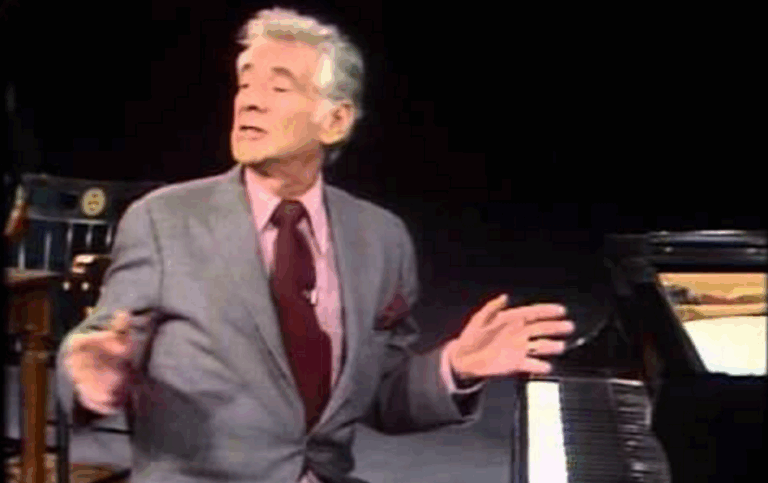
We’ve previously written about one of Leonard Bernstein’s major works, The Unanswered Question, the staggering six-part lecture that the multi-disciplinary artist gave as part of his duties as Harvard’s Charles Eliot Norton Professor. Over 11 hours, Bernstein attempts to explain the whither and the whence of music history, notably at a time when…
|
|
|
|
| |
|
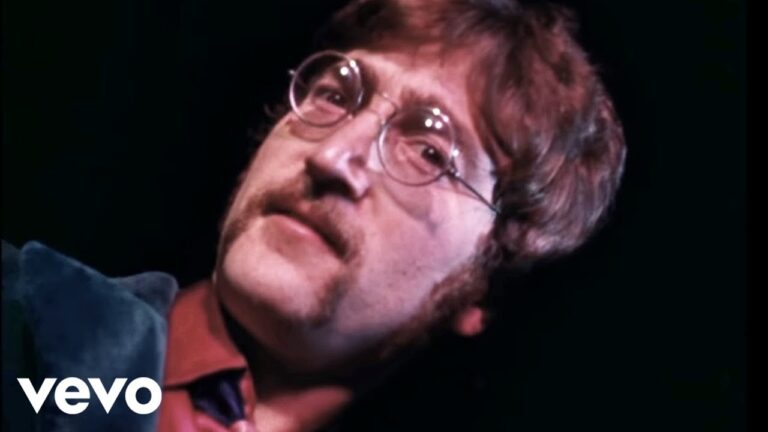
If you’re under 60, you probably heard the line “I read the news today, oh boy” before encountering the song it opens. Even after you discovered the work of the Beatles, it may have taken you some time to understand what, exactly, it was that John Lennon read in the news. The “lucky…
|
|
|
|
| |
|
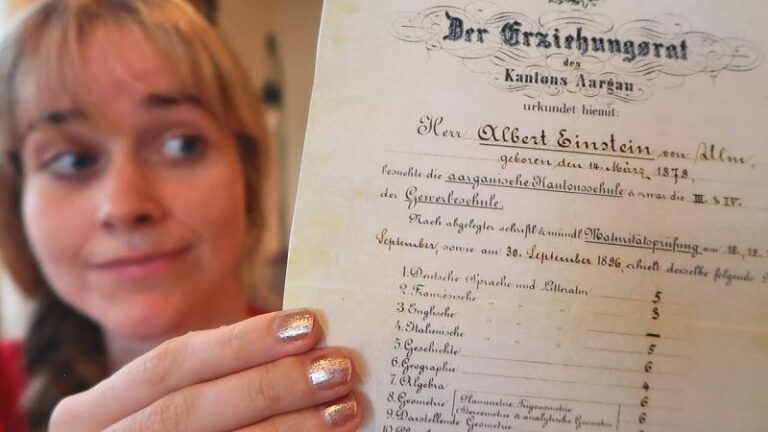
Albert Einstein was a precocious child.
At the age of twelve, he followed his own line of reasoning to find a proof of the Pythagorean Theorem. At thirteen he read Kant, just for the fun of it. And before he was fifteen he had taught himself differential and integral calculus.
But while the…
|
|
|
|
| |
|
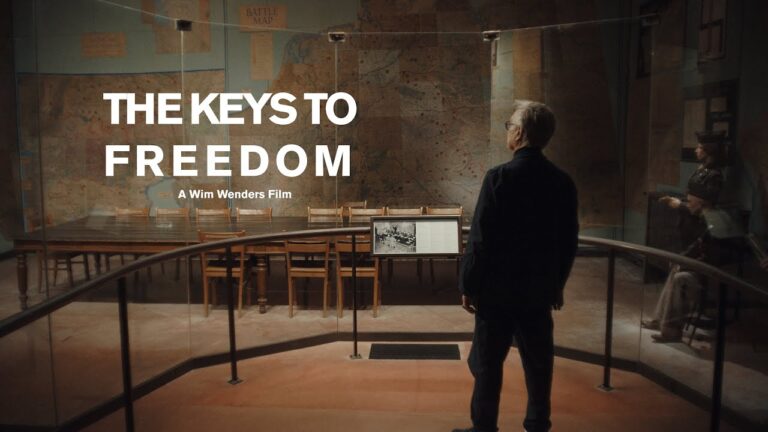
World War II officially ended on September 2, 1945. It followed, by less than three weeks, an equally momentous event, at least in the eyes of cinephiles: the birth of Wim Wenders. Though soon to turn 80 years old, Wenders has remained both productive and capable of drawing great critical acclaim. Witness, for example,…
|
|
|
|