|
Walter Benjamin Explains How Fascism Uses Mass Media to Turn Politics Into Spectacle (1935), Lessons in Creativity from Rick Rubin: Focus on Your Art, Not the Audience ͏ ͏ ͏ ͏ ͏ ͏ ͏ ͏ ͏ ͏ ͏ ͏ ͏ ͏ ͏ ͏ ͏ ͏ ͏ ͏ ͏ ͏ ͏ ͏ ͏ ͏ ͏ ͏ ͏ ͏ ͏ ͏ ͏
|
| |

|
Gladys Mae West was born in rural Virginia in 1930, grew up working on a tobacco farm, and died earlier this month a celebrated mathematician whose work made possible the GPS technology most of us use each and every day. Hers was a distinctively American life, in more ways than one. Seeking an escape…
|
|
|
|
| |

|
Image via Wikimedia Commons
In his 1935 essay, “The Work of Art in the Age of Mechanical Reproducibility,” influential German-Jewish critic Walter Benjamin introduced the term “aura” to describe an authentic experience of art. Aura relates to the physical proximity between objects and their viewers. Its loss, Benjamin argued, was a…
|
|
|
|
| |
|
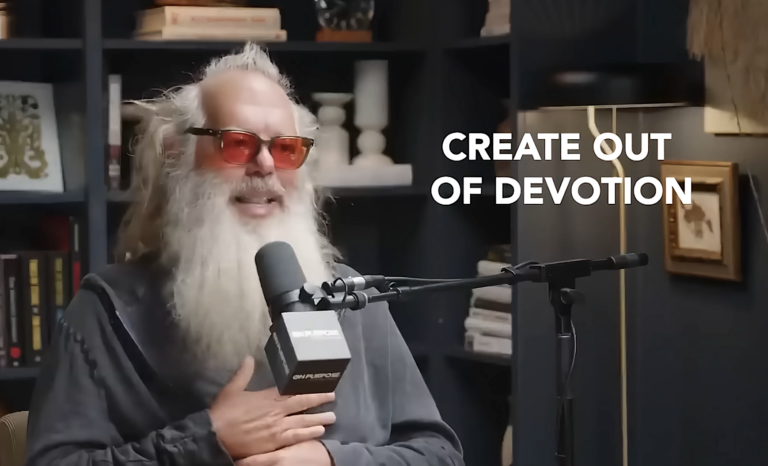
If you’ve heard Run‑D.M.C.‘s Raising Hell, Rage Against the Machine’s self-titled debut, Johnny Cash’s American Recordings, or Adele’s 21, you’ve heard the work of Rick Rubin. Yet even if you’ve listened closely to every song on which he’s been credited as a producer over the past 45 years, you may have trouble pinning down what, exactly,…
|
|
|
|
| |
|
During her lifetime, the medieval abbess Hildegard von Bingen (1098–1179) composed roughly 77 songs and hymns. She remains the earliest known woman composer in Western classical music and one of the most important composers of the High Middle Ages.
In her honor, a YouTuber who goes by Hildegard von Blingin’ has developed…
|
|
|
|
| |

|
Above, Scott Galloway and Kara Swisher explain how everyday Americans can push back against government overreach—by focusing on the economic decisions they make each day. “Trump does not respond to outrage. He responds to markets,” says Galloway. Ergo, it’s time for an “economic strike,” a “short-term coordinated withdrawal from spending.” He continues: “if wealthy households…
|
|
|
|