|
Radio Caroline, the Pirate Radio Ship That Rocked the British Music World (1965), The Skeleton Dance, Voted the 18th Best Cartoon of All Time, Is Now in the Public Domain (1929) ͏ ͏ ͏ ͏ ͏ ͏ ͏ ͏ ͏ ͏ ͏ ͏ ͏ ͏ ͏ ͏ ͏ ͏ ͏ ͏ ͏ ͏ ͏
|
| |
|
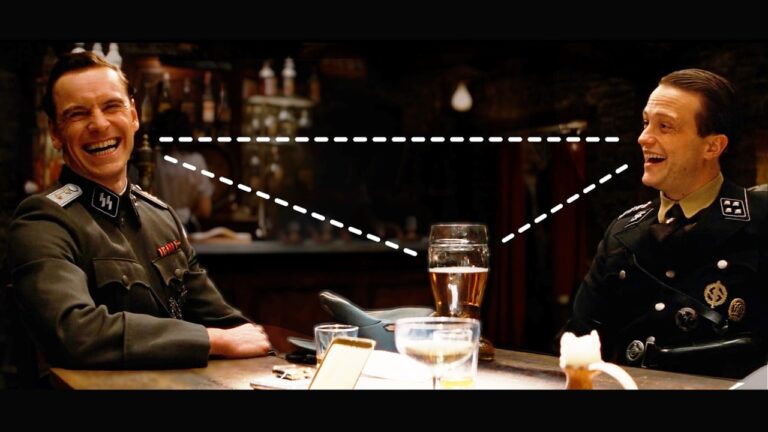
Ideally, a viewer should be able to identify the work of a particular auteur from any one scene that the auteur has directed. In reality, it’s not always possible to do so, even in the work of filmmakers with highly idiosyncratic styles. But in the case of Quentin Tarantino, it would probably be more difficult…
|
|
|
|
| |
|
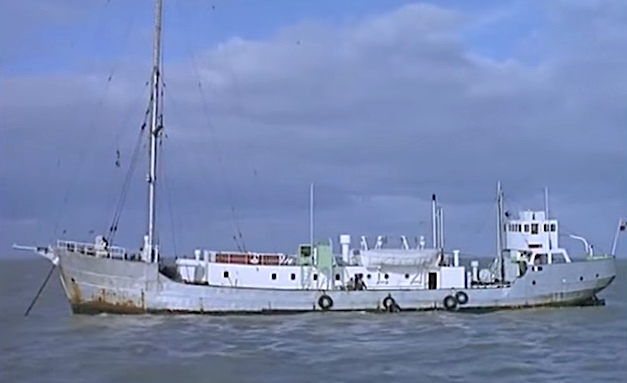
Nowadays musicians can reach hundreds, thousands, sometimes millions of listeners with a few, usually free, online services and a minimal grasp of technology. That’s not to say there aren’t still economic barriers aplenty for the struggling artist, but true independence is not an impossible prospect.
In the 1950s and 60s, on the other hand,…
|
|
|
|
| |
|
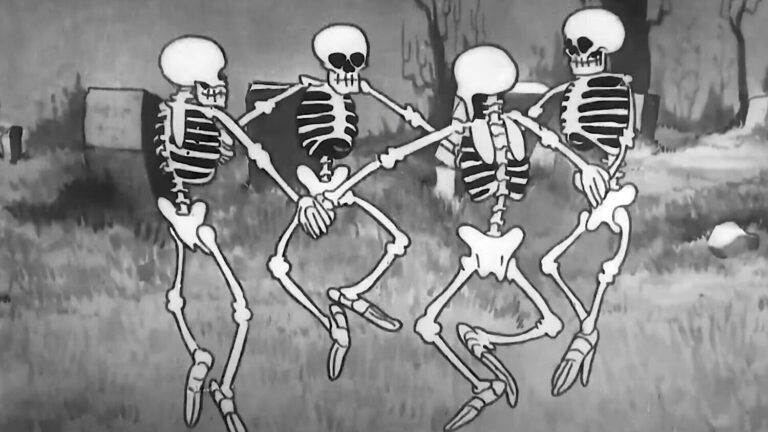
The July 17, 1929 issue of Variety carried a notice about a laugh-filled new short film in which “skeletons hoof and frolic,” the peak of whose hilarity “is reached when one skeleton plays the spine of another in xylophone fashion, using a pair of thigh bones as hammers.” The final lines of this strong recommendation…
|
|
|
|
| |
|
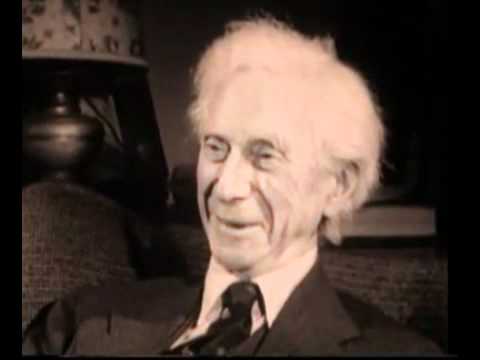
Bertrand Russell, the great British philosopher and social critic, appeared on the BBC program Face-to-Face in 1959 and was asked a closing question: What would you tell a generation living 1,000 years from now about the life you’ve lived and the lessons you’ve learned? His answer is short, but pithy. You can read…
|
|
|
|
| |

|
In the video above, Laurie Anderson describes C. P. Cavafy’s poem “Waiting for the Barbarians” as being “set in ancient Rome.” That’s a reasonable interpretation, given that it contains an emperor, senators, and orators, though Cavafy himself said that none of them are necessarily Roman. The universality of the situation the poem describes, in…
|
|
|
|