|
Digest of new articles at openculture.com, your source for the best cultural and educational resources on the web ͏ ͏ ͏ ͏ ͏ ͏ ͏ ͏ ͏ ͏ ͏ ͏ ͏ ͏ ͏ ͏ ͏ ͏ ͏ ͏ ͏ ͏ ͏ ͏ ͏ ͏ ͏ ͏ ͏ ͏ ͏ ͏ ͏ ͏ ͏ ͏ ͏ ͏ ͏ ͏ ͏ ͏ ͏ ͏ ͏ ͏ ͏ ͏ ͏ ͏ ͏ ͏ ͏ ͏ ͏ ͏ ͏ ͏ ͏ ͏ ͏ ͏ ͏ ͏ ͏ ͏ ͏ ͏ ͏ ͏ ͏ ͏ ͏ ͏ ͏ ͏ ͏ ͏ ͏ ͏ ͏ ͏ ͏ ͏ ͏ ͏ ͏
|
|
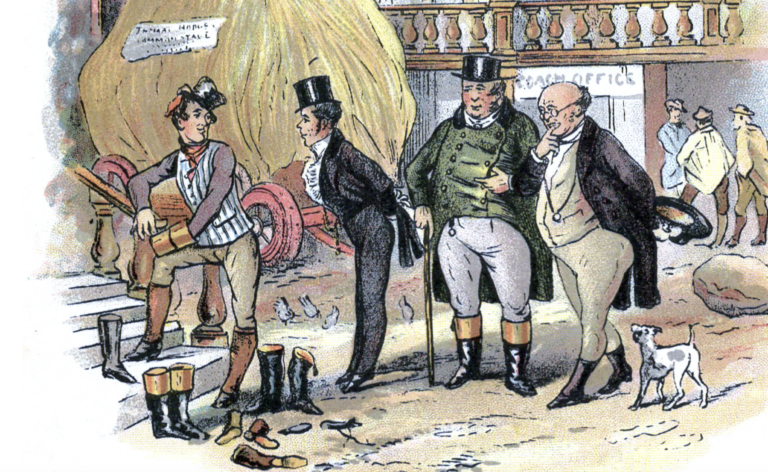
At the height of his fame, Charles Dickens could have commanded any illustrator he liked for his novels. But at the beginning of his literary career, it was he who was charged with accompanying the artist, not the other way around. His first serialized novel The Posthumous Papers of the Pickwick Club, better known as The Pickwick Papers, began as a series of comical “cockney sporting plates” by Robert Seymour. Honest enough to admit his ignorance of the cockney sporting life but shrewd enough to know an opportunity when he saw one, the young Dickens accepted the publisher’s request for stories meant to elaborate on the images.
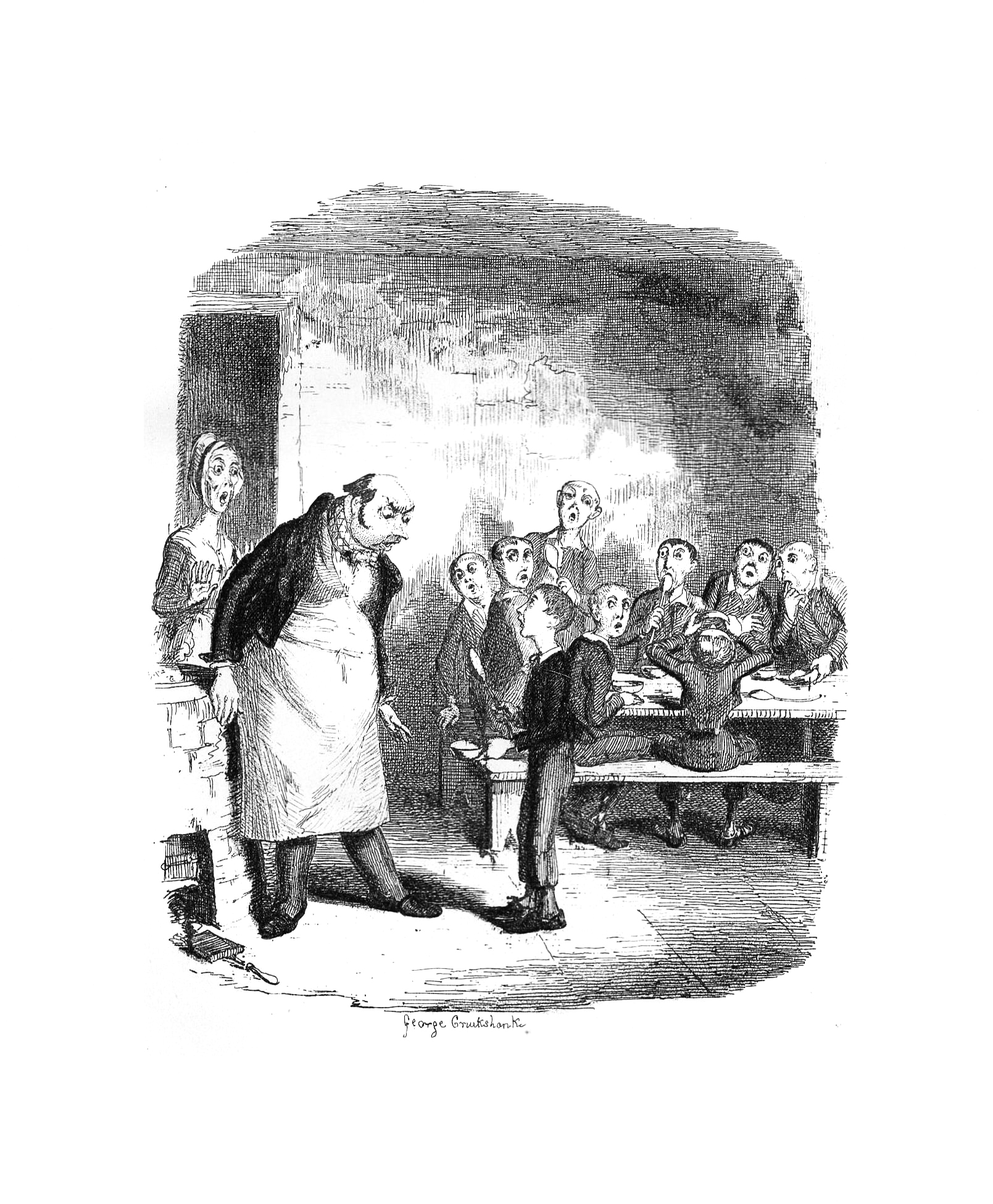
Even then, Dickens possessed irrepressible talent as a popular storyteller, and it was his writing — which evidenced scant interest in adherence to the existing art — that made The Pickwick Papers into a great success, a mass-cultural phenomenon comparable to a hit sitcom avant la lettre.
187 years later there remains a whiff of scandal around this […]
|
|
|
|
|
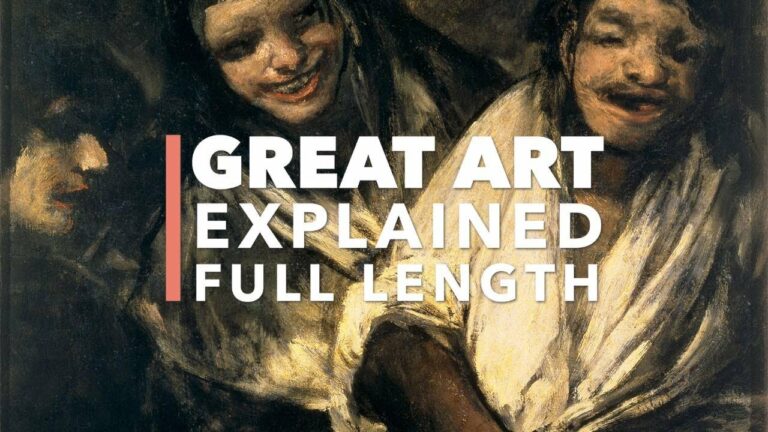
Back in October, we featured the first of a planned series of videos on the “Black Paintings” created at the end of Francisco Goya’s life. Last week, the YouTube channel Great Art Explained completed the series and rolled them up into a 51-minute documentary, which you can watch above. It comes with this preface from curator James Payne:
In this full-length film, I look at Francisco Goya’s later works. At the age of 46, Goya suffered from a severe illness that caused loss of vision and hearing, tinnitus, dizziness, right-sides paralysis, weakness and general malaise. Although he recovered from a cerebral stroke which accompanied it, he went completely deaf. From this point on his work took a darker tone.
To understand Francisco Goya’s Black Paintings, we need to understand how he went from a popular well-loved royal portrait artist to painting deeply disturbing imagery on the bare walls of his house in total isolation.
His darker work was never really seen in his lifetime. His series of etchings known as Los Caprichos was withdrawn from public sale for fear of attack by […]
|
|
|
|
|
Kurt Vonnegut is one of those writers whose wit, humanism and lack of sentimentality leave you hankering for more.
Fortunately, the prolific novelist was an equally prolific letter writer.
His published correspondence includes a description of the firebombing of Dresden penned upon his release from the Slaughterhouse Five POW camp, an admission to daughter Nanette that most parental missives “contain a parent’s own lost dreams disguised as good advice,” and some unvarnished exchanges with many of familiar literary names. (“I am cuter than you are,” he taunted Cape Cod neighbor Norman Mailer.)
No wonder these letters are catnip to performers with the pedigree to recognize good writing when they see it.
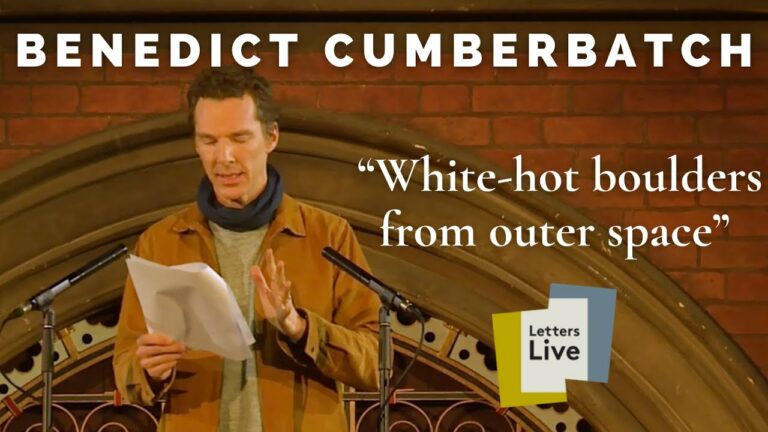
Having interpreted Shakespeare, Ibsen, and Ionesco, book lover Benedict Cumberbatch obviously relishes the straightforward ire of Vonnegut’s 1973 response to a North Dakota school board chairman who ordered a school janitor to burn all copies of Slaughterhouse-Five assigned by Bruce Severy, a recently hired, young English teacher.
In addition to Slaughterhouse-Five, the board also consigned two other volumes on the syllabus – James […]
|
|
|
|
|
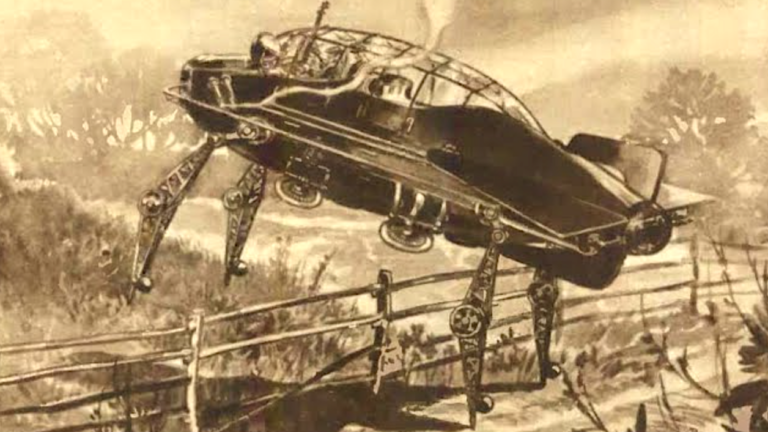
Many of us now in adulthood first came to know the nineteen-twenties as the decade our grandparents were born. It may thus give us pause to consider that it began over a century ago — and even more pause to consider the question of why its visions of the future seem more exciting than our own. You can behold a variety of such visions in the videos above and below, which come from The 1920s Channel on Youtube. Using a collection of print-media clippings, it offers an experience of the “futurism” of the nineteen-twenties, which has now inspired a distinct type of “retro-futurism,” between the “steampunk” of the Victorian era and the “atompunk” of America after the Second World War.
“Being in the modern age, futurism of the nineteen-twenties leans more towards atompunk,” says the video’s narrator. But it also has a somewhat dieselpunk flavor,” the latter being a kind of futurism from the nineteen-forties. “In America, the nineteen-twenties were similar to the nineteen-fifties, in that they took place in the immediate aftermath of a massive, destructive war, […]
|
|
|
|
|
A new deal to start a new year: Between now and January 31, 2023, Coursera is offering a $200 discount on its annual subscription plan called “Coursera Plus.” Normally priced at $399, Coursera Plus (now available for $199) gives you access to 90% of Coursera’s courses, Guided Projects, Specializations, and Professional Certificates, all of which are taught by top instructors from leading universities and companies (e.g. Yale, Duke, Google, Facebook, and more). The $199 annual fee–which translates roughly to 55 cents per day–could be a good investment for anyone interested in learning new subjects and skills in 2023, or earning certificates that can be added to your resume. Just as Netflix’s streaming service gives you access to unlimited movies, Coursera Plus gives you access to unlimited courses and certificates. It’s basically an all-you-can-eat deal.
You can try out Coursera Plus for 14 days, and if it doesn’t work for you, you can get your money back. Explore the offer (before January 31, 2023) here.
Note: Open Culture has a partnership […]
|
|
|
|