|
Digest of new articles at openculture.com, your source for the best cultural and educational resources on the web ͏ ͏ ͏ ͏ ͏ ͏ ͏ ͏ ͏ ͏ ͏ ͏ ͏ ͏ ͏ ͏ ͏ ͏ ͏ ͏ ͏ ͏ ͏ ͏ ͏ ͏ ͏ ͏ ͏ ͏ ͏ ͏ ͏ ͏ ͏ ͏ ͏ ͏ ͏ ͏ ͏ ͏ ͏ ͏ ͏ ͏ ͏ ͏ ͏ ͏ ͏ ͏ ͏ ͏ ͏ ͏ ͏ ͏ ͏ ͏ ͏ ͏ ͏ ͏ ͏ ͏ ͏ ͏ ͏ ͏ ͏ ͏ ͏ ͏ ͏ ͏ ͏ ͏ ͏ ͏ ͏ ͏ ͏ ͏ ͏ ͏ ͏
|
|
Niccolò Machiavelli lived in a time before the internet, before radio and television, before drones and weapons of mass destruction. Thus one naturally questions the relevance of his political theories to the twenty-first century. Yet in discussions about the dynamics of power, no name has endured as long as Machiavelli’s. His reputation as a theorist rests mostly on his 1532 treatise Il Principe, or The Prince, in which he pioneered a way of analyzing power as it was actually wielded, not as people would have liked it to be. How, he asked, does a ruler — a prince — attain his position in a state, and even more importantly, how does he maintain it?
You can hear Machiavelli’s answers to these questions explained, and see them illustrated, in the 43-minute video above. It breaks The Prince down into seven parts summarizing as many of the book’s main points, including “Do not be neutral,” “Destroy, do not would,” and “Be feared.”
These commandments would seem to align with Machiavelli’s popular image as an apologist, even an advocate, for brutal and repressive forms of rule. But his […]
|
|
|
|
|
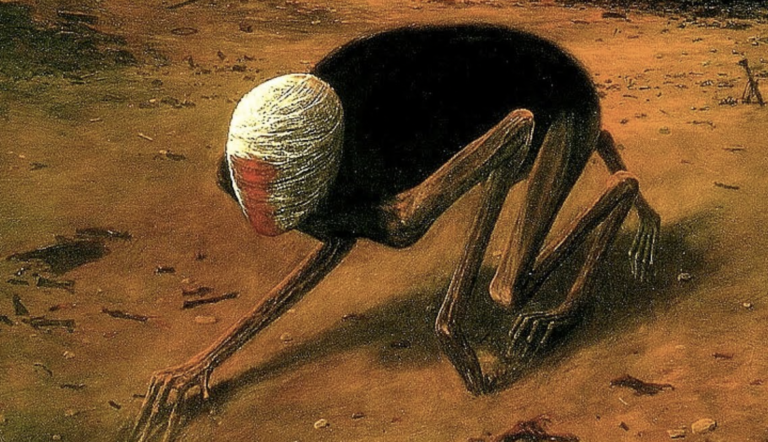
“In the medieval tradition, Beksinski seems to believe art to be a forewarning about the fragility of the flesh — whatever pleasures we know are doomed to perish — thus, his paintings manage to evoke at once the process of decay and the ongoing struggle for life. They hold within them a secret poetry, stained with blood and rust.” — Guillermo del Toro
The life and death of Polish painter, photographer, and sculptor Zdzisław Beksiński has been sensationalized, made into a cursed tragedy in the telling of events late in his life that, taken together, all seem horrifying enough: the death of the artist’s wife from cancer in 1998, the suicide of his son, Tomasz, one year later, and, finally, his own stabbing death in 2005 at the hands of his caretaker’s teenage son. If we add to this account Beksiński’s childhood in Nazi-occupied, then Soviet-occupied Poland, we have ample reason to speculate about the meaning of his nightmarish visions.
But the “Nightmare Artist,” as he’s called in the video above, wants us to stay […]
|
|
|
|
|
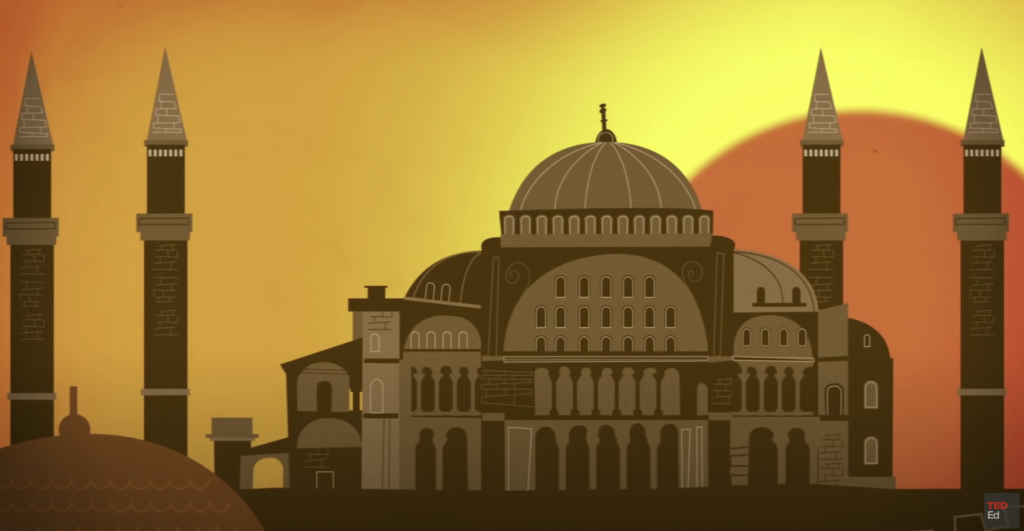
If you only know one fact about the Roman Empire, it’s that it declined and fell. If you know another, it’s that the Roman Empire gave way to the Europe we know today — in the fullness of time, at least. A good deal of history lies between our twenty-first century and the fall of Rome, which in any case wouldn’t have seemed like such a decisive break when it happened. “Most history books will tell you that the Roman Empire fell in the fifth century CE,” says the narrator of the animated TED-Ed lesson above. “This would’ve come as a great surprise to the millions of people who lived in the Roman Empire up through the Middle Ages.”
This medieval Roman Empire, better known as the Byzantine Empire, began in the year 330. “That’s when Constantine, the first Christian emperor, moved the capital of the Roman Empire to a new city called Constantinople, which he founded on the site of the ancient Greek city Byzantium.” Not only did Constantinople survive the barbarian invasions of the Empire’s western provinces, it […]
|
|
|
|
|
“My name, ‘Alan,’ means ‘harmony’ in Celtic and ‘hound’ in Anglo-Saxon. Accordingly, my existence is, and has been, a paradox, or better, a coincidence of opposites.”
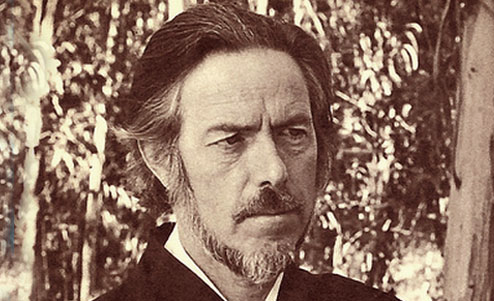
Zen Buddhism is full of paradoxes: practical, yet mystical; seriously formal, yet shot through with jokes and plays on words; stressing intricate ceremonial rules and communal practices, yet just as often brought to life by “wild fox” masters who flout all convention. Such a Zen master was Alan Watts, the teacher, writer, philosopher, priest, and calligrapher who embraced contradiction and paradox in all its forms.
Watts was a natural contrarian, becoming a Buddhist at 15 — at least partly in opposition to the fundamentalist Protestantism of his mother — then, in the 1940s, ordaining as an Episcopal priest. Though he left the priesthood in 1950, he would continue to write and teach on both Buddhism and Christianity, seeking to reconcile the traditions and succeeding in ways that offended leaders of neither religion. His book of theology, Behold the Spirit, “was widely hailed in Christian circles,” David Guy writes at Tricycle magazine. “One Episcopal reviewer said it […]
|
|
|
|
|
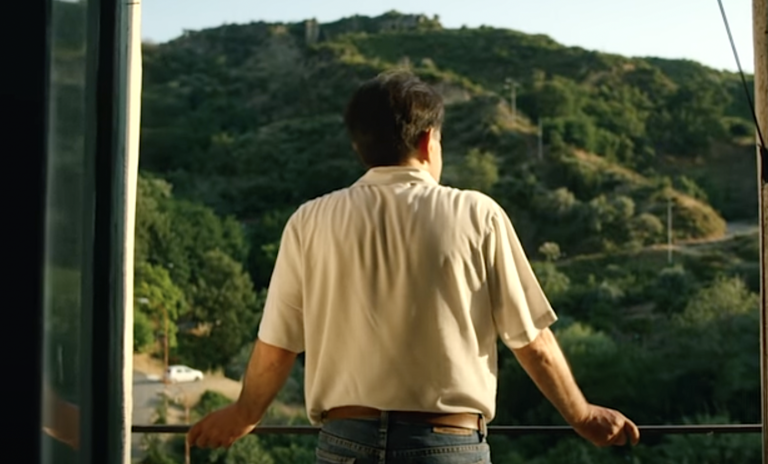
“I guess everybody’s got a dream and we’re all hoping to see it come true,” muses Giovanni Mimmo Mancusou, a philosophical native of Calabria, the lovely, sun-drenched region forming the toe of Italy’s boot, above. “A dream coming true is better than just a dream.”
Filmmakers Jan Vrhovnik and Ana Kerin were scouting for subjects to embody “the very essence of nostalgia” when they chanced upon Mancusou in a corner shop.
A lucky encounter! Not every non-actor – or for that matter, actor – is as comfortable on film as the laidback Mancusou.
(Vrhovnik has said that he invariably serves as his own camera operator when working with non-actors, because of the potential for intimacy and intuitive approach that such proximity affords.)
Mancusou, an advocate for simple pleasures, also appears to be quite fit, which makes us wonder why the film’s description on NOWNESS doubles down on adjectives like “aging”, “older” and most confusingly, “wisened.”
Merriam-Webster defines “wizened” with a z as “dry, shrunken, and wrinkled often as a result of aging or of failing vitality” … and “wisened” not […]
|
|
|
|