|
Digest of new articles at openculture.com, your source for the best cultural and educational resources on the web ͏ ͏ ͏ ͏ ͏ ͏ ͏ ͏ ͏ ͏ ͏ ͏ ͏ ͏ ͏ ͏ ͏ ͏ ͏ ͏ ͏ ͏ ͏ ͏ ͏ ͏ ͏ ͏ ͏ ͏ ͏ ͏ ͏ ͏ ͏ ͏ ͏ ͏ ͏ ͏ ͏ ͏ ͏ ͏ ͏ ͏ ͏ ͏ ͏ ͏ ͏ ͏ ͏ ͏ ͏ ͏ ͏ ͏ ͏ ͏ ͏ ͏ ͏ ͏ ͏ ͏ ͏ ͏ ͏ ͏ ͏ ͏ ͏ ͏ ͏ ͏ ͏ ͏ ͏ ͏ ͏ ͏ ͏ ͏ ͏ ͏ ͏
|
|
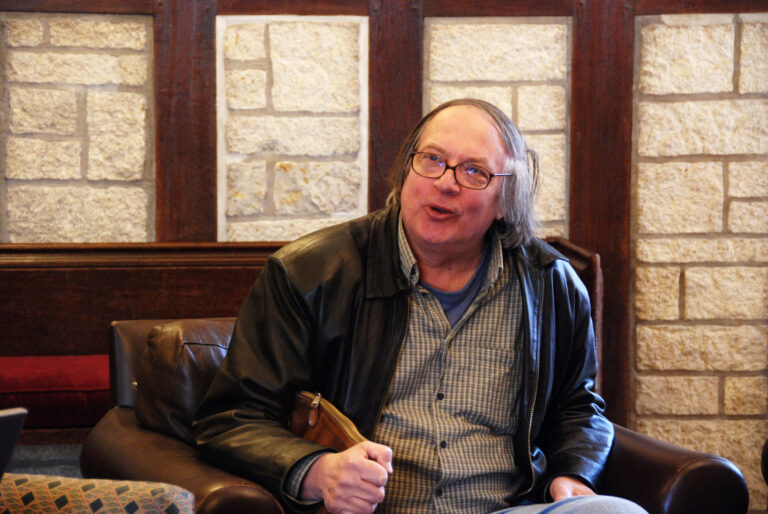
On May 22, historian John Merriman died at the age of 75. A professor at Yale since 1973, Merriman became an “early practitioner of the history ‘from the ground up, that swept academic study in the 1970s,” notes an obituary in Yale News. There, historian Alice Kaplan adds: “John Merriman became our greatest historian of the French left and its repression, of the Communards, the Anarchists, and the French police, whose experiences he brought to life in books and lectures informed by his work in archives in every region of France…”
The New York Times remembers him as “a rumpled figure who used his storytelling gifts to animate his lectures on French and European history.” And they recall how author Ta-Nehisi Coates “watched some of Professor Merriman’s recorded lectures online and described him … as a ‘kind of freestyle rapper’ who riffed off his material — anecdotes, quotes and observations — and […]
|
|
|
|
|
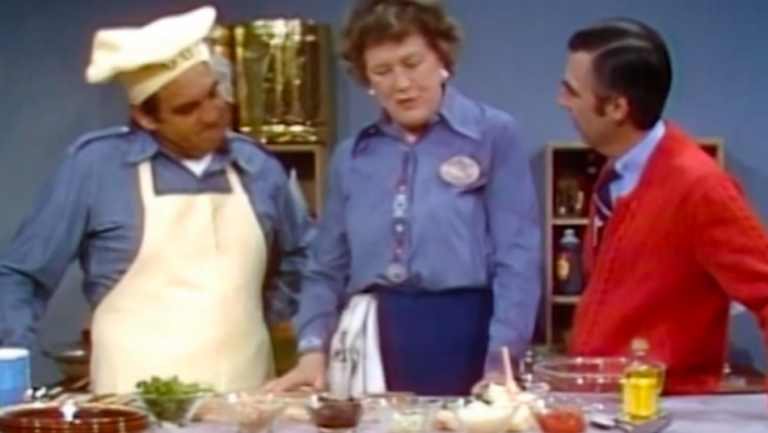
Julia Child and Fred Rogers were titans of public television, celebrated for their natural warmth, the ease with which they delivered important lessons to home viewers, and, for a certain sector of the viewing public, how readily their personalities lent themself to parody.
Child’s cooking program, The French Chef, debuted in 1963, and Roger’s much beloved children’s show, Mister Rogers Neighborhood, followed five years later.
Rogers occasionally invited accomplished celebrities to join him for segments wherein they demonstrated their particular talents:
With our guest’s help, I have been able to show a wide diversity of self-expression, the extraordinary range of human potential. I want children and their families to know that there are many constructive ways to express who they are and how they feel.
In 1974, Child paid a call to the neighborhood bakery presided over by “Chef” Don Brockett (whose later credits included a cameo as a “Friendly Psychopath” in Silence of the Lambs…)
The easy-to-prepare pasta dish she teaches Rogers […]
|
|
|
|
|
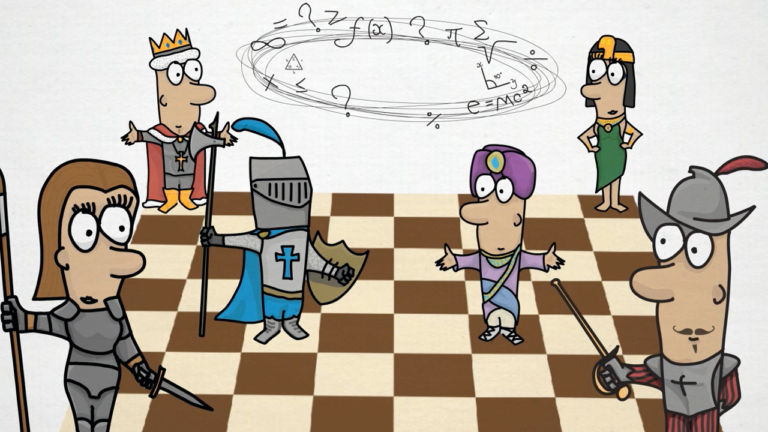
Though not a long book, The Art of War is nevertheless an intimidating one. Composed in the China of the fifth century BC, it comes down to us as perhaps the definitive analysis of military strategy, applicable equally to East, West, antiquity, and modernity alike. Hence the minor but still-productive industry that puts forth adaptations, extensions, and reinterpretations of The Art of War for non-military settings, transposing its lessons into law, business, sports, and other realms besides. But if you want a handle on what its author, the general and strategist Sun Tzu, actually wrote, watch the illustrated video above.
A production of Youtube channel Eudaimonia, previously featured here on Open Culture for a similarly animated exegesis of Machiavelli’s The Prince, it runs more than two and a half hours in full. Far though it exceeds the length of the average explainer video, it does reflect the tendency of Sun Tzu’s succinct observations to expand, when seriously considered, into much wider and more complex discussions. To each of the original text’s chapters the Eudaimonia video devotes a ten-to-fifteen-minute […]
|
|
|
|
|
Imagine if Franz Kafka were charged with picking the winning entries in The New Yorker’s weekly cartoon caption contest.
The punchlines might become a little more obscure.
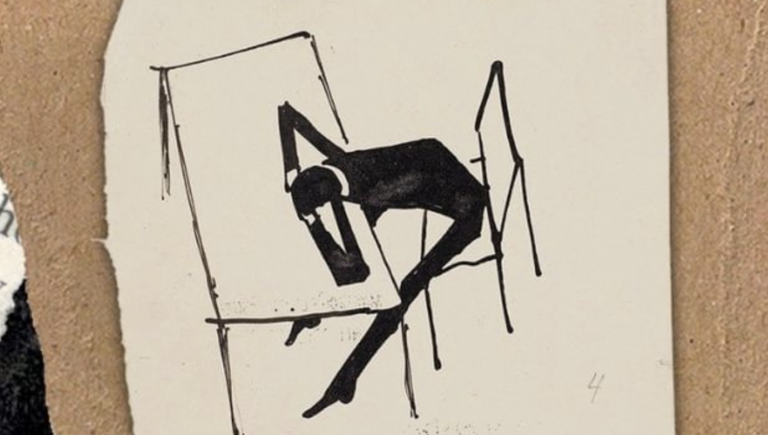
If that idea fills you with perverse pleasure, perhaps you should toddle over to Yale University Press’s Instagram to contribute some possible captions for eight of the inky drawings the tortured author made in a black notebook between 1901 and 1907.
The intended meaning of these images, included in the new book, Franz Kafka: The Drawings, are as up for grabs as any uncaptioned cartoon on the back page of The New Yorker.
In Conversations with Kafka, author Gustav Janouch recalled how their significance proved elusive even to their creator, and also the frustration his friend expressed regarding his artistic abilities:
I should so like to be able to draw. As a matter of fact, I am always trying to. But nothing comes of it. My drawings are purely personal picture writing, whose meaning […]
|
|
|
|
|
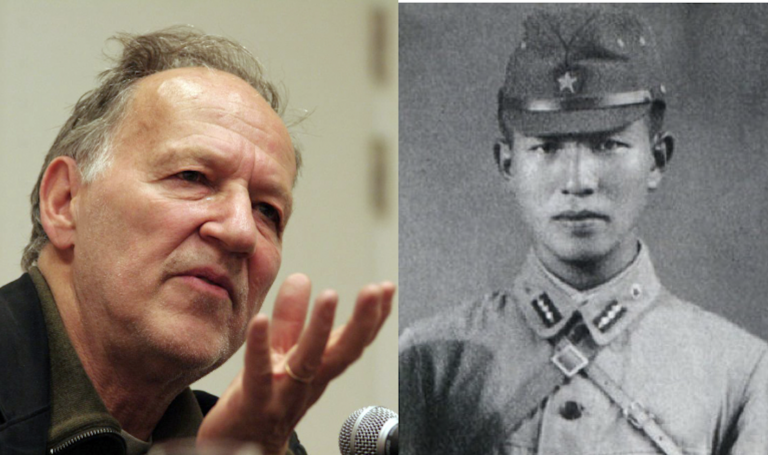
As everyone knows, Japan conceded defeat in the Second World War on August 15, 1945. But as many also know, certain individual Japanese soldiers refused to surrender, each continuing to fight the war for decades in his own way. The most famous was Lieutenant Onoda Hiroo, who hid out in the Philippines mounting guerrilla attacks — at first with a few fellow soldiers, and finally alone — until 1974. Onoda became a celebrity upon retuning to his homeland, and his admirers weren’t only Japanese. In Tokyo to direct an opera in 1997, Werner Herzog requested an introduction to one man only: the soldier who’d fought the war for 30 years.
Now Onoda has become the subject of one of Herzog’s latest projects: not a film, but a novel called The Twilight World. In his native German (brought into English by translator-critic Michael Hofmann), Herzog has written of not just his own meeting with Onoda but narrated Onoda’s own long experience in the Philippines.
“Onoda’s war is of no meaning for the cosmos, for history, for the course […]
|
|
|
|