|
Digest of new articles at openculture.com, your source for the best cultural and educational resources on the web ͏ ͏ ͏ ͏ ͏ ͏ ͏ ͏ ͏ ͏ ͏ ͏ ͏ ͏ ͏ ͏ ͏ ͏ ͏ ͏ ͏ ͏ ͏ ͏ ͏ ͏ ͏ ͏ ͏ ͏ ͏ ͏ ͏ ͏ ͏ ͏ ͏ ͏ ͏ ͏ ͏ ͏ ͏ ͏ ͏ ͏ ͏ ͏ ͏ ͏ ͏ ͏ ͏ ͏ ͏ ͏ ͏ ͏ ͏ ͏ ͏ ͏ ͏ ͏ ͏ ͏ ͏ ͏ ͏ ͏ ͏ ͏ ͏ ͏ ͏ ͏ ͏ ͏ ͏ ͏ ͏ ͏ ͏ ͏ ͏ ͏ ͏
|
|
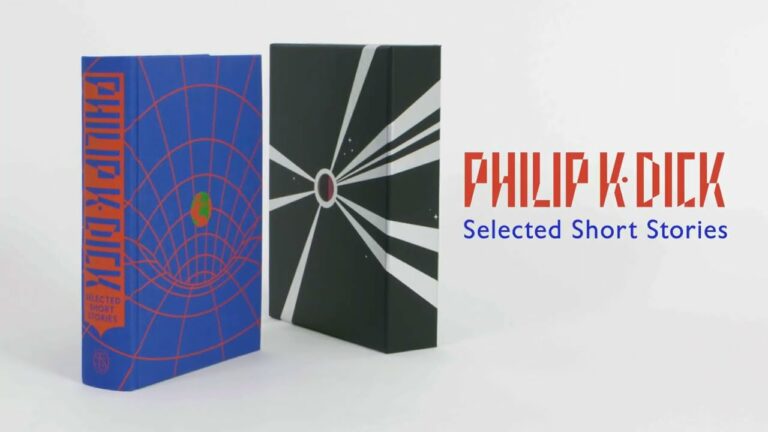
Philip K. Dick’s multiple worlds have appeared in increasingly better editions since the author passed away in 1982. In the 21st century, respectable hardbacks and quality paper have fully replaced yellowed, pulpy pages. Maybe no edition yet is more attractive than the Folio Society of London’s two-volume hardback set of Dick’s selected short stories, illustrated by 24 different artists and including tales that have survived film adaptations, for better and worse, like “Paycheck,” “The Minority Report,” and “We Can Remember It for You Wholesale.” The books will set you back $125, but that’s a small sum compared to the price of an earlier, four-volume Complete Short Stories, published in a limited edition of 750, day-glo, hand-numbered copies. These sold out in less than 48 hours and now go for $2,500 in rare online sales.
In death Dick has achieved what he sought in his writing life: success as literary author. He thought he would eventually publish his realist fiction to earn the reputation, vowing in 1960 that he would “take twenty to thirty years to succeed as a literary […]
|
|
|
|
|
“I am creating a revolution here! I don’t want musicians, I want saboteurs, I want assassins, I want shock troops!” — Malcolm McLaren in FX’s Pistol
“People are trying to make it out as a bit of a joke, but it’s not a joke. It’s not political anarchy either; it’s musical anarchy, which is a different thing.” — John Lydon (Johnny Rotten), Interview with Mary Harron, 1976
“What do you think of Steve [Jones]?” says Malcolm McLaren (Thomas Brodie-Sangster) to his partner Vivienne Westwood (Talulah Riley) before telling her his plans to manage the future Sex Pistols in Oscar-winning director Danny Boyle’s FX mini-series Pistol. “Very damaged,” says Westwood, “but that’s quite good.” This sits well with budding impresario McLaren, who sees then-lead singer Jones as exactly the bomb he needs to throw at the establishment. “He’s got nothing else to live for,” says McLaren coldly.
The kids in the UK punk scene McLaren and Westwood stage-managed may have been outcasts, but many also came from staid suburban backgrounds, as did many of the punks in the downtown New York scene. When McLaren […]
|
|
|
|
|
If you live in Kyoto or are traveling to Japan in the next two months or, who knows, maybe you have a whole lotta miles saved up on your credit card, Brian Eno has a career-spanning exhibition going on at the former welfare centre of the Kyoto Chuo Shinkin Bank.
The above live stream recording features a selection of previously released ambient work, along with a panel of Japanese “Eno Experts” chatting about the musician/producer/artist/thinker. They play selections on vinyl, show clips from rare Eno documentaries, even manage to dig up a LaserDisc of Thursday Afternoon and a CD-Rom of Head Candy.
Ambient Kyoto is Eno’s first large-scale exhibition in Japan, and features the installations “77 Million Paintings,” “The Ship,” his constantly shifting “Light Boxes,” a stream of “The Lighthouse,” Eno’s SONOS channel of his unreleased archive, and a new work called “Face to Face,” which the exhibition site describes thus:
This work began with a small group of photographs of the faces of 21 real […]
|
|
|
|
|
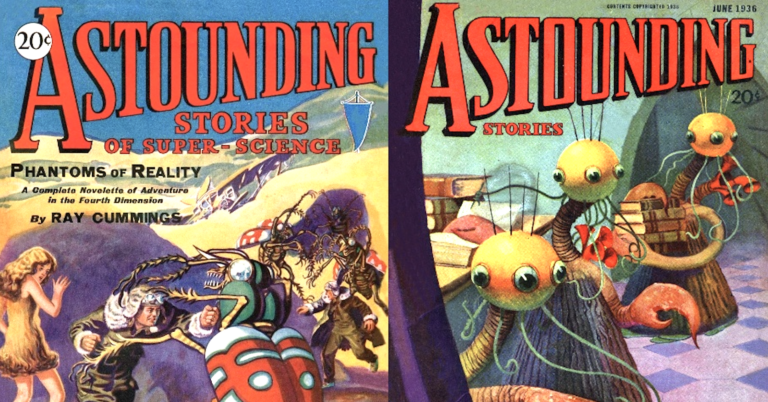
Having been putting out issues for 92 years now, Analog Science Fiction and Fact stands as the longest continuously published magazine of its genre. It also lays claim to having developed or at least popularized that genre in the form we know it today. When it originally launched in December of 1929, it did so under the much more whiz-bang title of Astounding Stories of Super-Science. But only three years later, after a change of ownership and the installation as editor of F. Orlin Tremaine, did the magazine begin publishing work by writers remembered today as the defining minds of science fiction.
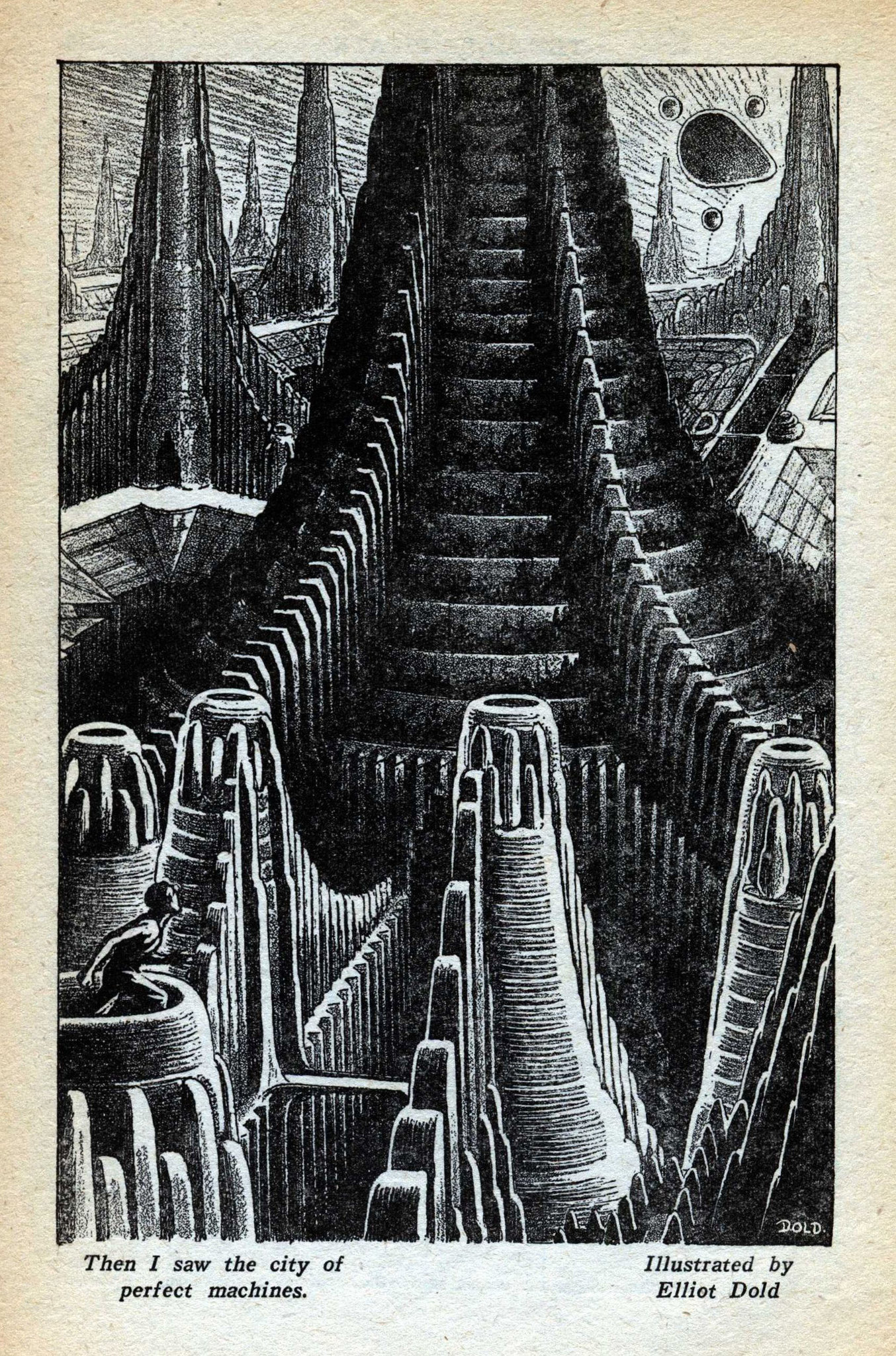
Under Tremaine’s editorship, Astounding Stories pulled itself above its pulp-fiction origins with stories like Jack Williamson’s “Legion of Space” and John W. Campbell’s “Twilight.” The latter inspired the striking illustration above by artist Elliott Dold. “Dold’s work was deeply influenced by Art Deco, which lends its geometric forms to the city of machines in ‘Twilight,'” writes the New York Times‘ Alec Nevala-Lee, which “inaugurated the […]
|
|
|
|
|
On May 22, historian John Merriman died at the age of 75. A professor at Yale since 1973, Merriman became an “early practitioner of the history ‘from the ground up, that swept academic study in the 1970s,” notes an obituary in Yale News. There, historian Alice Kaplan adds: “John Merriman became our greatest historian of the French left and its repression, of the Communards, the Anarchists, and the French police, whose experiences he brought to life in books and lectures informed by his work in archives in every region of France…”
The New York Times remembers him as “a rumpled figure who used his storytelling gifts to animate his lectures on French and European history.” And they recall how author Ta-Nehisi Coates “watched some of Professor Merriman’s recorded lectures online and described him … as a ‘kind of freestyle rapper’ who riffed off his material — anecdotes, quotes and observations — and […]
|
|
|
|