|
Digest of new articles at openculture.com, your source for the best cultural and educational resources on the web ͏ ͏ ͏ ͏ ͏ ͏ ͏ ͏ ͏ ͏ ͏ ͏ ͏ ͏ ͏ ͏ ͏ ͏ ͏ ͏ ͏ ͏ ͏ ͏ ͏ ͏ ͏ ͏ ͏ ͏ ͏ ͏ ͏ ͏ ͏ ͏ ͏ ͏ ͏ ͏ ͏ ͏ ͏ ͏ ͏ ͏ ͏ ͏ ͏ ͏ ͏ ͏ ͏ ͏ ͏ ͏ ͏ ͏ ͏ ͏ ͏ ͏ ͏ ͏ ͏ ͏ ͏ ͏ ͏ ͏ ͏ ͏ ͏ ͏ ͏ ͏ ͏ ͏ ͏ ͏ ͏ ͏ ͏ ͏ ͏ ͏ ͏
|
|
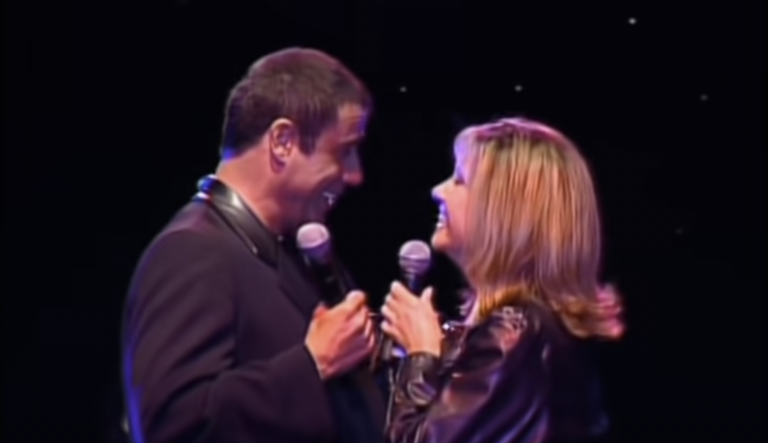
American nostalgia as we know it was invented in the nineteen-seventies. Consider that decade’s preponderance of backward-looking pop-cultural phenomena: Sha Na Na; Happy Days; “Yesterday Once More”; American Graffiti, whose tagline asked “Where were you in ’62?”, a time just eleven years before the release of the picture itself. But no piece of work stands more iconically for the seventies revival of the late fifties and early sixties than Grease. First produced as a stage musical in Chicago in 1971, it graduated to Broadway the next year. But Grease wouldn’t take its most enduring form until 1978, the year that brought Randal Kleiser’s film adaptation starring John Travolta and the late Olivia Newton-John.
A 28-year-old Australian might have seemed an unconventional choice for the part of Sandy Dombrowski, the new girl at midwestern Rydell High School. But after the alteration of a few details in the character and story, she made the role entirely her own. “It was Newton-John’s dulcet intimacy as a singer that set her up perfectly to play the naïve Sandy onscreen,” writes the New Yorker‘s Rachel Syme.
Her “squeaky prudishness […]
|
|
|
|
|
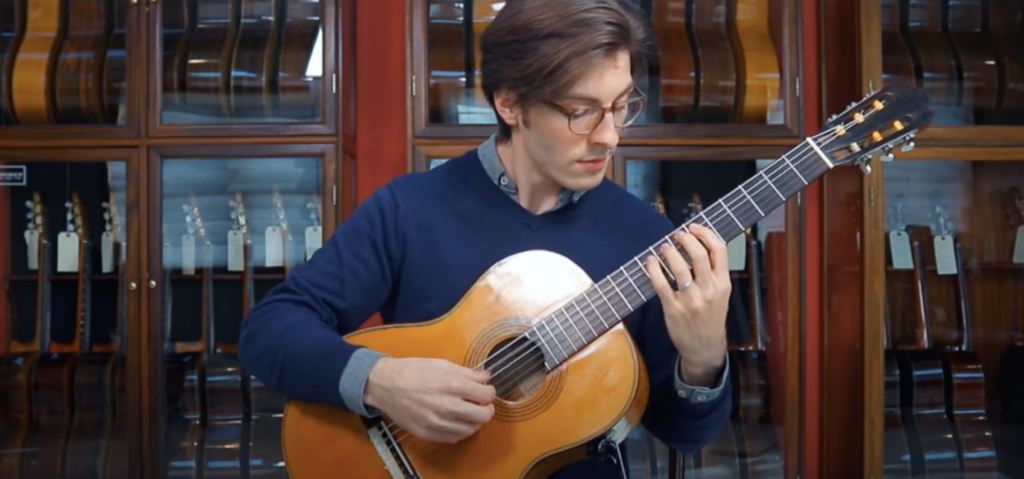
The highest quality classical guitars handmade in the 21st century can run into the tens of thousands of dollars. This is no frivolous expense for a professional player. Put such an instrument in the hands of an amateur and you may not hear much difference between it and a $150 factory-made budget model. In the hands of a seasoned player, a high-end guitar truly sings. Tone resides in the fingers — or 90% of it anyway — but a skilled guitarist knows how to discover and make use of all an instrument’s best qualities. For a musician who makes a living doing so, spending the cost of a car on a guitar makes economic sense (as does a good insurance policy).
The tonal qualities of the instrument below, a handmade classical guitar from 1888, are clearly abundant; it’s also clear that guitarist Brandon Acker — who has appeared in many of our previous posts on the guitar — knows how to exploit them. At times, he brings out such rich resonance, the instrument sounds like a piano; at others, it […]
|
|
|
|
|
The mid-nineteen-nineties was not a time without irony. You may recall that, back then, “alternative” rock had not only gone mainstream, but, in certain regions, had even become the most popular genre of music on the radio. That was certainly true in the Seattle area, where I grew up. And if you wanted to start a rock band there, as writer Adam Cadre remembers, you knew what steps you had to take: “get a record deal, make a video, get it on 120 Minutes, have it become a Buzz Clip, wonder why massive success doesn’t ease the aching void inside.”
If you got into bands like 10,000 Maniacs, Smashing Pumpkins, R.E.M., The Replacements, the Pixies, the Offspring, or Sonic Youth in the mid-nineties (to say nothing of a certain trio called Nirvana), chances are — statistically speaking, at least — that you first saw them on 120 Minutes.
At the peak of its popularity on MTV, the show defined the alternative-rock zeitgeist, introducing new bands as well as bringing new waves of listeners to existing ones. […]
|
|
|
|
|
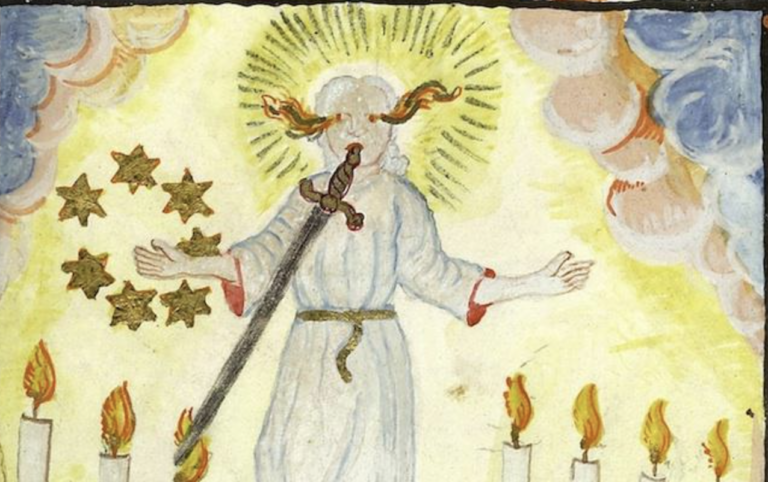
According to the Book of Revelation, the returning Christ arrives surrounded by seven candlesticks. In its author’s prophetic dream, “his head and his hairs were white like wool, as white as snow; and his eyes were as a flame of fire.” From his mouth issues “a sharp sword with which to strike down the nations.” It’s a startling image, created for symbolic purposes. Without a key to what those symbols mean, the text remains obscure. It is, after all, a vision given to a mystic hermit exiled on an island.
Many a Revelation-inspired magical grimoire from succeeding centuries also remains nearly incomprehensible to non-adepts. Such is the case with the “strange 18th-century manuscript called Clavis Inferni (key of hell),” as Benjamin Breen writes at Slate. “Filled with invocations, cryptic sigils, and paintings of supernatural beings” — such as the illustration from Revelation above — “the book defies interpretation — as it was meant to do.” Also, like Revelation, the text’s authorship is mysterious, and yet significant to our understanding of its […]
|
|
|
|
|
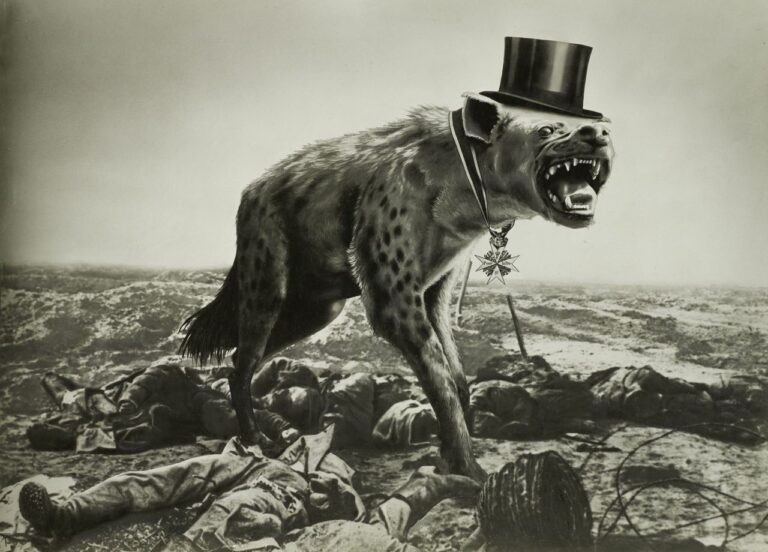
The story of artist John Heartfield — born Helmut Franz Josef Herzfeld in Berlin in 1891 — begins like a German fairy tale. In 1899, his parents, ill and poverty-stricken, abandoned Helmut and his three siblings in a mountain cabin at Aigen, near Salzburg. The hungry children were discovered four days later by the mayor of the town and his wife, who took them in and fostered them. Meanwhile, their uncle, a lawyer, appeared with a trust from their wealthy grandfather’s estate to fund their educations.
Helmut trained at several art schools in Germany, eventually arriving at the School of Arts and Crafts in the bohemian Berlin of the 1910s, where he abandoned his dream of becoming a painter and instead invented hugely effective anti-war propaganda art during World War I and the rise of the Nazis. As The Canvas video above explains, Heartfield’s work pointedly encapsulates the “anti-bourgeois, anti-capitalist, anti-fascist” attitudes of radical Berlin Dadaists. He was “one of Hitler’s most creative critics.”
Herzfeld began his anti-war art campaign by anglicizing his name to counter rising anti-British sentiment at the […]
|
|
|
|