|
Digest of new articles at openculture.com, your source for the best cultural and educational resources on the web ͏ ͏ ͏ ͏ ͏ ͏ ͏ ͏ ͏ ͏ ͏ ͏ ͏ ͏ ͏ ͏ ͏ ͏ ͏ ͏ ͏ ͏ ͏ ͏ ͏ ͏ ͏ ͏ ͏ ͏ ͏ ͏ ͏ ͏ ͏ ͏ ͏ ͏ ͏ ͏ ͏ ͏ ͏ ͏ ͏ ͏ ͏ ͏ ͏ ͏ ͏ ͏ ͏ ͏ ͏ ͏ ͏ ͏ ͏ ͏ ͏ ͏ ͏ ͏ ͏ ͏ ͏ ͏ ͏ ͏ ͏ ͏ ͏ ͏ ͏ ͏ ͏ ͏ ͏ ͏ ͏ ͏ ͏ ͏ ͏ ͏ ͏
|
|
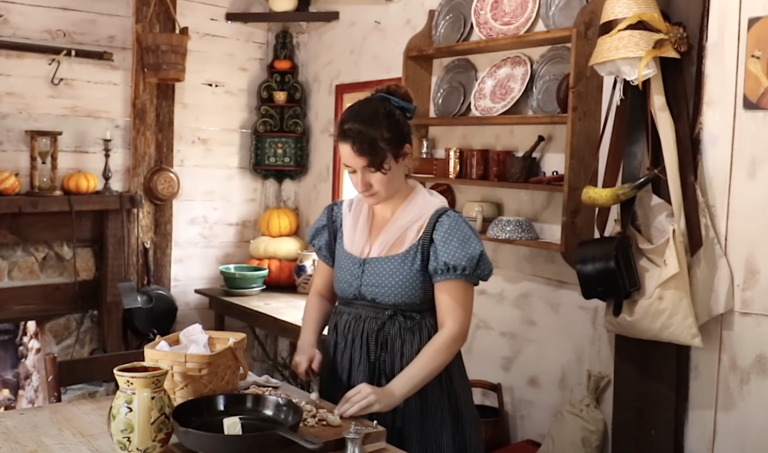
Americans today can acquire every element of their Thanksgiving dinner practically ready to eat, in need of little more than some heat before being set on the table. This very Thursday, in fact, many Americans will no doubt do just that. But it wasn’t an option two centuries ago, especially for those who lived on the wild frontier. To see how they’d have put their Thanksgiving dinner together, you’ll want to consult one Youtube channel in particular: Early American, previously featured here on Open Culture for its videos re-creating various meals as they would have been prepared circa 1820.
The creators of Early American, Justine Dorn and Ron Rayfield, also happen to be a married couple in real life. In their videos they appear to play historical versions of themselves, adhering to the domestic division of labor custom would have dictated in rural America of the early nineteenth century.
When Ron steps in the door with the fruits of a bountiful hunt, two rabbits and a duck, Justine knows just how to put them at the center of a full-fledged […]
|
|
|
|
|
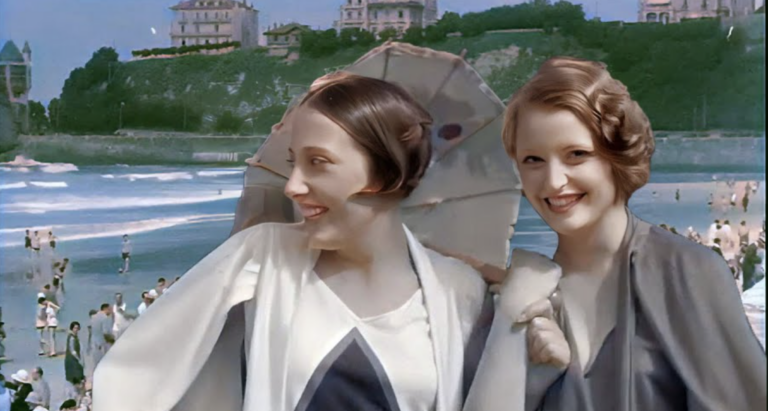
The Youtube channel GlamourDaze invites you to time travel back to a sunny beach in roaring 20s Biarritz France. And, to help you along, they’ve enhanced the original 1928 video with AI technology. Setting the stage, they write:
By the 1920’s, the coastal resort of Biarritz on the Côte Basque in France attracted the fashionable and wealthy during the summer and early autumn. Those who could afford it, stayed at the Hôtel du Palais which was originally a summer villa built for Empress Eugénie. Her visits turned Biarritz into a popular summer resort.
The film starts with clips from a hotel overlooking the beach, then a street fashion show. We then move down to the beach for a walk among the sunbathers and swimmers.
In just a few years over the 1920’s, women’s swimsuits had evolved considerably when compared to those seen in our recent video “A Day at the Beach c. 1921“.
The roaring twenties saw seismic changes in clothing, style and social attitudes.
You can find more historical footage restored with AI in the Relateds below.
Related Content
[…]
|
|
|
|
|

FYI: Masterclass is getting an early jump on the holiday sales, running a Buy One, Share One Free deal.
Here’s the gist: If you buy an All-Access pass to their 180+ courses, you will receive another All-Access Pass to give to someone else at no additional charge. An All-Access pass costs $180 (or $15 per month), and lasts one year. For that fee, you–and a family member or friend–can watch courses created by Annie Leibovitz, Neil Gaiman, Jon Kabat-Zinn, Werner Herzog, Martin Scorsese, Michael Pollan, Jane Goodall, Margaret Atwood, Helen Mirren, Alice Waters, Bill Nye and so many more. The deal is available now. Find it here.
Note: If you sign up for a MasterClass course by clicking on the links in this post, Open Culture will receive a small fee that helps support our operation.
|
|
|
|
|
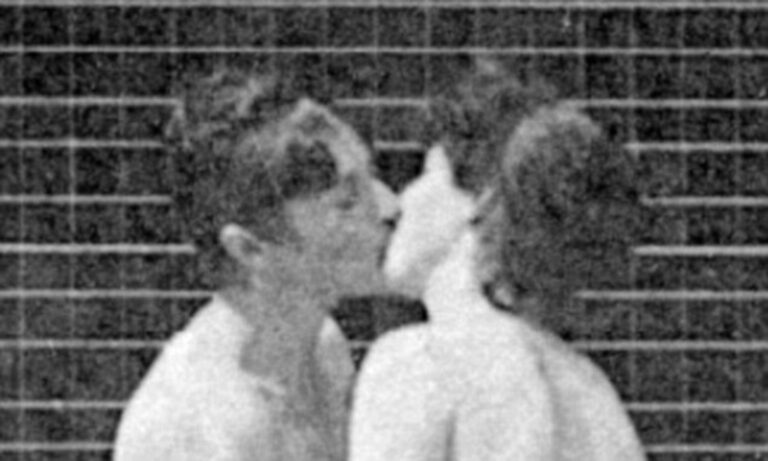
Every moving image we watch today descends, in a sense, from the work of Eadweard Muybridge. In the 1870s he devised a method of photographing the movements of animals, a study he expanded to humans in the 1880s. This constituted a leap toward the development of cinema, though you wouldn’t necessarily know it by looking at the best-known images he produced, such as the set of cards known as The Horse in Motion. You may get a more vivid sense of his photography’s import by seeing it in animated GIF form, as previously featured here on Open Culture, including the very first kiss on film.
Though he often worked with nude models, “Muybridge was not into smut and eroticism,” says Flashbak. “His rapid-fire sequential photographs of two naked women kissing served to aid his studies of human and animal movement. It was in the interests of art and science Muybridge secured the services of two women, invited them to undress and photographed them kissing.” This turns out to be […]
|
|
|
|
|
The nineteen-seventies had its own distinctive aesthetics, questionable though that period’s styles have often looked to subsequent generations. So, in stark, jagged, neon contrast, did the eighties. Those of us who came of age in the nineties have, in recent years, come to appreciate that look and feel of what then surrounded us, which seemed both bland and exaggerated at the time. But around the turn of the millennium, something fundamental seems to have changed. The brief “Y2K” era may now officially be retro, but how different was the style of the two-thousands from that of the subsequent decade, or indeed one after that — the one in which we find ourselves right now?
To put the question more bluntly, why don’t decades feel culturally distinct anymore? “The dimension of the future has disappeared,” British theorist Mark Fisher once said in a lecture. “We’re marooned, we’re trapped in the twentieth century, still.”
To be in the twenty-first century is nothing more than “to have twentieth-century culture on high-definition screens.” Though Fisher died five years ago, his observations have only become […]
|
|
|
|