|
Digest of new articles at openculture.com, your source for the best cultural and educational resources on the web ͏ ͏ ͏ ͏ ͏ ͏ ͏ ͏ ͏ ͏ ͏ ͏ ͏ ͏ ͏ ͏ ͏ ͏ ͏ ͏ ͏ ͏ ͏ ͏ ͏ ͏ ͏ ͏ ͏ ͏ ͏ ͏ ͏ ͏ ͏ ͏ ͏ ͏ ͏ ͏ ͏ ͏ ͏ ͏ ͏ ͏ ͏ ͏ ͏ ͏ ͏ ͏ ͏ ͏ ͏ ͏ ͏ ͏ ͏ ͏ ͏ ͏ ͏ ͏ ͏ ͏ ͏ ͏ ͏ ͏ ͏ ͏ ͏ ͏ ͏ ͏ ͏ ͏ ͏ ͏ ͏ ͏ ͏ ͏ ͏ ͏ ͏
|
|
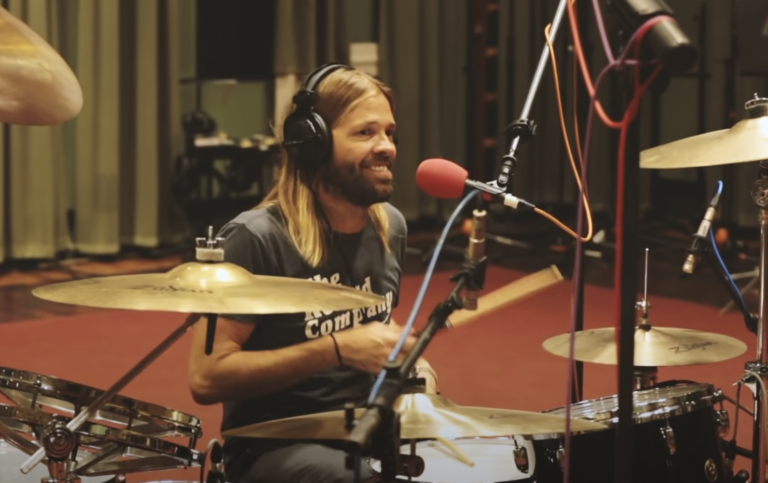
If you’re going to back Dave Grohl behind the drums, well…. As so many have said, in so many ways over the weekend, in poignant tributes to Foo Fighters’ drummer Taylor Hawkins, who sadly passed away at age 50 on Friday — you’d better be damned good. As the Foo Fighters formed with Grohl on guitar and vocals, the former Nirvana drummer, now frontman “needed someone who would not make fans keep wishing he had stuck with drums,” as NBC’s Daniel Arkin writes.
Grohl almost did stick with drums, at least in the studio, recording the parts himself for the band’s first album, The Colour and the Shape, after conflicts with original drummer William Goldsmith. Hawkins was the touring drummer for Alanis Morissette at the time — a much bigger act than Foo Fighters in the late 90s. But the two kept bumping into each other “back stage at festivals around the world,” as Grohl wrote in his 2021 autobiography, The Storyteller: Tales of Life and Music. “Our chemistry was so obvious that even Alanis herself once asked him, ‘What […]
|
|
|
|
|
There are browser extensions designed to increase your productivity every time you open a new tab.
Others use positive affirmations, inspiring quotes, and nature photography to put your day on the right track.
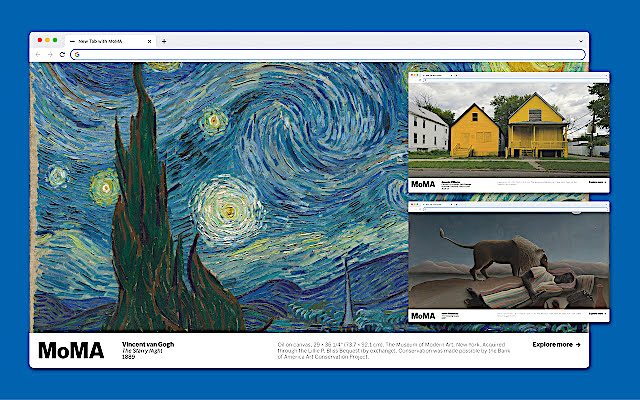
We hereby announce that we’re switching our settings and allegiance to New Tab with MoMA.
After installing this extension, you’ll be treated to a new work of modern and contemporary art from The Museum of Modern Art’s collection whenever you open a new tab in Chrome.
If you can steal a few minutes, click whatever image comes up to explore the work in greater depth with a curator’s description, links to other works in the collection by the same artist, and in some cases installation views, interviews and/or audio segments.
Expect a few gift shop heavy hitters like Vincent Van Gogh’s The Starry Night, but also lesser known works not currently on view, like Yayoi Kusama’s Violet Obsession, a rowboat slipcovered in electric purple “phallic protrusions.”
Violet Obsession’s New Tab with MoMA link not […]
|
|
|
|
|
Long before it was a nationalist rallying cry in Japan during WWII, the term Yamato-damashii referred to something less like racial imperialism and more like chivalry — the “Japanese Spirit” or “Old Soul of Japan,” as Greek-Japanese writer Lafcadio Hearn wrote. Perhaps surprisingly, the “Japanese Spirit” was not based in the martial arts of the samurai at first, but in the scholarship of China, as the ancient novel The Tale of Genji explains when defining Yamato-damashii as “a good, solid fund of knowledge… a fund of Chinese learning.” This would change when the code of Bushidō evolved, and the samurai, with his elaborate armor and elegant swords, became a central figure of honor in Japanese society.
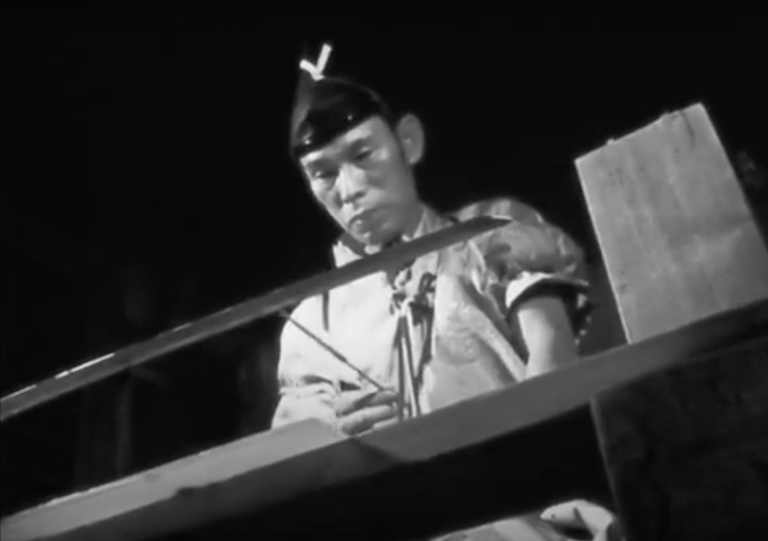
In The Japanese Sword as the Soul of the Samurai, the nearly half-hour documentary above by traveling American documentary filmmaker Ken Wolfgang, George Takei narrates the tale of the samurai’s sword. The film begins with the legendary character Yamato Takeru (who one scholar speculates may share a common origin with King Arthur). This ur-samurai inherited the first sword from the tail of a eight-headed dragon that […]
|
|
|
|
|
In light of the newly released, Kenneth Branagh-directed film Death on the Nile, Pretty Much Pop discusses the continuing appearance of the works of the world’s most successful mystery writer in film and TV.
Your host Mark Linsenmayer is joined by repeat guests Sarahlyn Bruck, Al Baker, and Nicole Pometti to discuss the recent films, the Sarah Phelps TV adaptations (like The ABC Murders), the Poirot BBC TV series, and some older adaptations.
We take on the different characterizations of Poirot and how recent, grittier interpretations compare with those of James Bond and Sherlock Holmes. Also, how should a screenwriter adapt such fact-heavy novels? What works and doesn’t in terms of modernizing them to current audience expectations? How did Christie keep things interesting for herself writing so many mysteries? How deep do her meditations on psychology and ethics run in these books, and can that be adequately conveyed on screen? What’s the future of the mystery […]
|
|
|
|