|
Digest of new articles at openculture.com, your source for the best cultural and educational resources on the web ͏ ͏ ͏ ͏ ͏ ͏ ͏ ͏ ͏ ͏ ͏ ͏ ͏ ͏ ͏ ͏ ͏ ͏ ͏ ͏ ͏ ͏ ͏ ͏ ͏ ͏ ͏ ͏ ͏ ͏ ͏ ͏ ͏ ͏ ͏ ͏ ͏ ͏ ͏ ͏ ͏ ͏ ͏ ͏ ͏ ͏ ͏ ͏ ͏ ͏ ͏ ͏ ͏ ͏ ͏ ͏ ͏ ͏ ͏ ͏ ͏ ͏ ͏ ͏ ͏ ͏ ͏ ͏ ͏ ͏ ͏ ͏ ͏ ͏ ͏ ͏ ͏ ͏ ͏ ͏ ͏ ͏ ͏ ͏ ͏ ͏ ͏
|
|
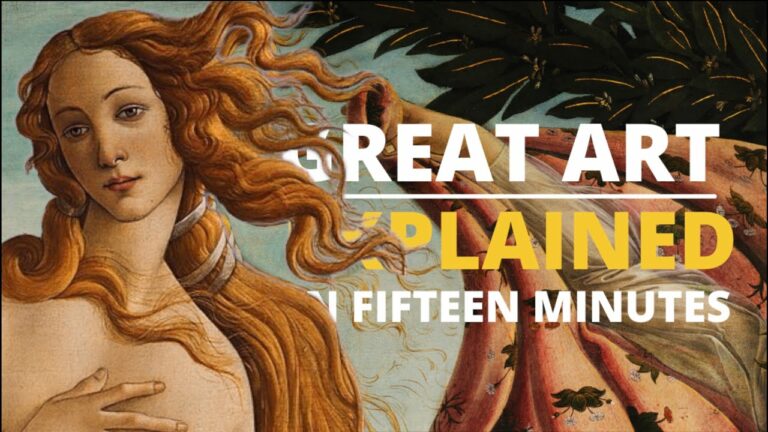
The Birth of Venus, we often hear, depicts the ideal woman. Yet half a millennium after Sandro Botticelli painted it, how many of us whose tastes run to the female form really see it that way? “I’ve always been struck by how Venus is strangely asexual, and her nudity is clinical,” says gallerist James Payne, creator of the Youtube channel Great Art Explained. “Maybe that’s because she represents sex as a necessary function: sex for procreation, the ultimate goal in a dynastic marriage.” This, safe to say, isn’t the sort of thing that gets most of us going in the 21st century. But this famous painting does something more important than to show us a naked woman: it reveals, as Payne puts it in a new video essay, “a dramatic shift in western art.”
If you accept the definition of the Renaissance that has it start in the 14th century, The Birth of Venus‘ completion in the 1480s makes it quite an early Renaissance artwork indeed. In that period, “a renewed interest in ancient Greco-Roman culture led […]
|
|
|
The 1960s moved very fast. The Beatles started 1963 as four freshly scrubbed moptops from Liverpool. By 1968 they were hairy hippies dabbling in drugs and mysticism. (And writing some of the best music of all time, don’t get me wrong!). Then there were the Monkees. Created by Bob Rafelson and Bert Schneider in 1966 as a loving homage to the Beatles 1964-65 Richard Lester films, it too quickly changed. By 1968, the show and the band had run its course. There was already no cultural space for four lovable…anythings. And while many elements killed the optimism and radical hope of the 1960s–Vietnam, bad acid, Manson, Altamont–hats off to Head, the cult movie that annihilated The Monkees as a band, the band movie as a concept, and the concept of light entertainment as being on the side of the viewer. Obscenity, who really cares? asked Dylan a few years before. Propaganda, all is phony. That’s Head.
What’s interesting about the Head story is trying to figure out the motivations of several of the players. The Monkees themselves were tired of being […]
|
The 1960s moved very fast. The Beatles started 1963 as four freshly scrubbed moptops from Liverpool. By 1968 they were hairy hippies dabbling in drugs and mysticism. (And writing some of the best music of all time, don’t get me wrong!). Then there were the Monkees. Created by Bob Rafelson and Bert Schneider in 1966 as a loving homage to the Beatles 1964-65 Richard Lester films, it too quickly changed. By 1968, the show and the band had run its course. There was already no cultural space for four lovable…anythings. And while many elements killed the optimism and radical hope of the 1960s–Vietnam, bad acid, Manson, Altamont–hats off to Head, the cult movie that annihilated The Monkees as a band, the band movie as a concept, and the concept of light entertainment as being on the side of the viewer. Obscenity, who really cares? asked Dylan a few years before. Propaganda, all is phony. That’s Head.
What’s interesting about the Head story is trying to figure out the motivations of several of the players. The Monkees themselves were tired of being […]
|
|
|
|
|
The sensual intelligence housed in the tabernacle of my palate beckons me to pay the greatest attention to food. – Salvador Dali
Looking for an easy, low-cost recipe for a quick weeknight supper?
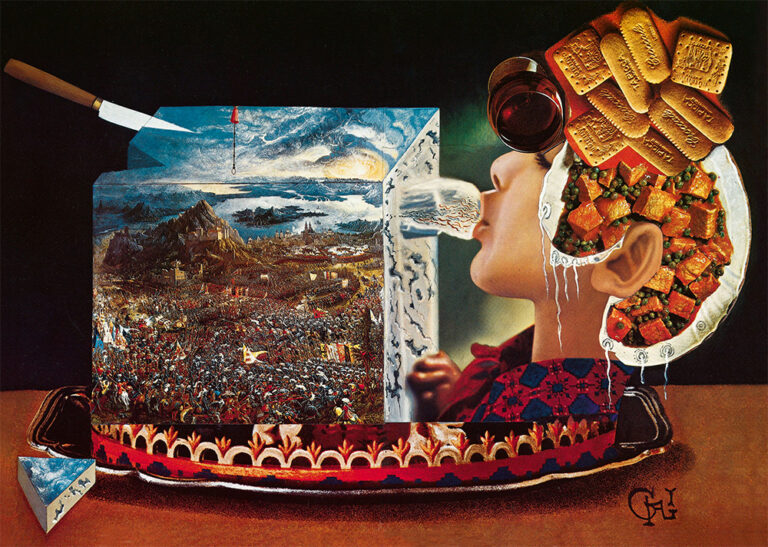
Salvador Dali’s Bush of Crayfish in Viking Herb is not that recipe.
It’s presentation may be Surreal, but it’s not an entirely unrealistic thing to prepare as The Art Assignment’s Sarah Urist Green discovers, above.
The recipe, published in Les Diners de Gala, Dali’s over-the-top cult cookery book from 1973, has pedigree.
Dali got it off a chef at Paris’ fabled Tour d’Argent, who later had second thoughts about giving away trade secrets, and balked at sharing exact measurements for the dish:
Bush of Crawfish in Viking Herbs
In order to realize this dish, it is necessary to have crawfish of 2 ounces each. Prepare the following ingredients for a broth: ‘fumet’ (scented reduced bullion) of fish, of consommé, of white wine, Vermouth, Cognac, salt, pepper, sugar and dill (aromatic herb). Poach the crawfish in this broth for […]
|
|
|
|
|
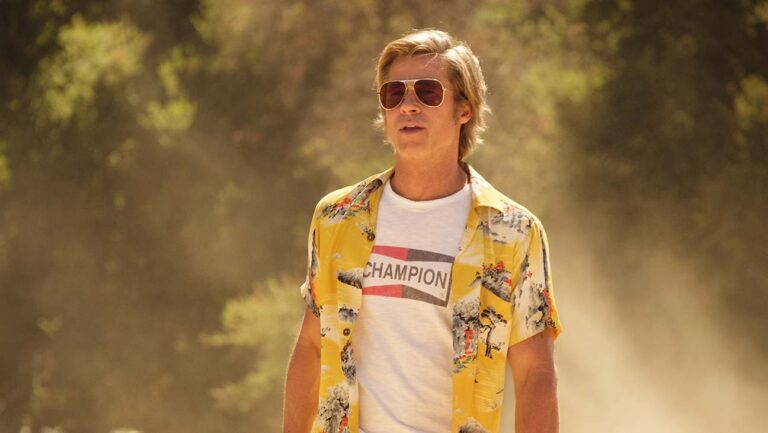
For more than two hours, Quentin Tarantino’s Once Upon a Time… in Hollywood builds up to the Manson murders. Or rather, it seems to be building up to the Manson murders, but then takes a sharp turn on Cielo Drive; when the credits roll, the real-life killers are dead and the real-life victims alive. Such revisionist revenge is of a piece with other recent Tarantino pictures like Inglourious Basterds, which ends with the massacre of Hitler and Goebbels, among other Nazis, and Django Unchained, wherein the titular slave lays waste to the house of the master. Long well known for borrowing from other movies, Tarantino seems to have found just as rich a source of material in history books.
Once Upon a Time… in Hollywood “creates a new story using existing characters and situations, and many of them just happen to be real.” So says Kirby Ferguson in the video essay above, “Tarantino’s Copying: Then Vs. Now.” The film’s large cast of secondary characters includes such 1960s celebrities as Steve McQueen and Bruce Lee, as well as countless other figures […]
|
|
|
|