|
Digest of new articles at openculture.com, your source for the best cultural and educational resources on the web ͏ ͏ ͏ ͏ ͏ ͏ ͏ ͏ ͏ ͏ ͏ ͏ ͏ ͏ ͏ ͏ ͏ ͏ ͏ ͏ ͏ ͏ ͏ ͏ ͏ ͏ ͏ ͏ ͏ ͏ ͏ ͏ ͏ ͏ ͏ ͏ ͏ ͏ ͏ ͏ ͏ ͏ ͏ ͏ ͏ ͏ ͏ ͏ ͏ ͏ ͏ ͏ ͏ ͏ ͏ ͏ ͏ ͏ ͏ ͏ ͏ ͏ ͏ ͏ ͏ ͏ ͏ ͏ ͏ ͏ ͏ ͏ ͏ ͏ ͏ ͏ ͏ ͏ ͏ ͏ ͏ ͏ ͏ ͏ ͏ ͏ ͏
|
|
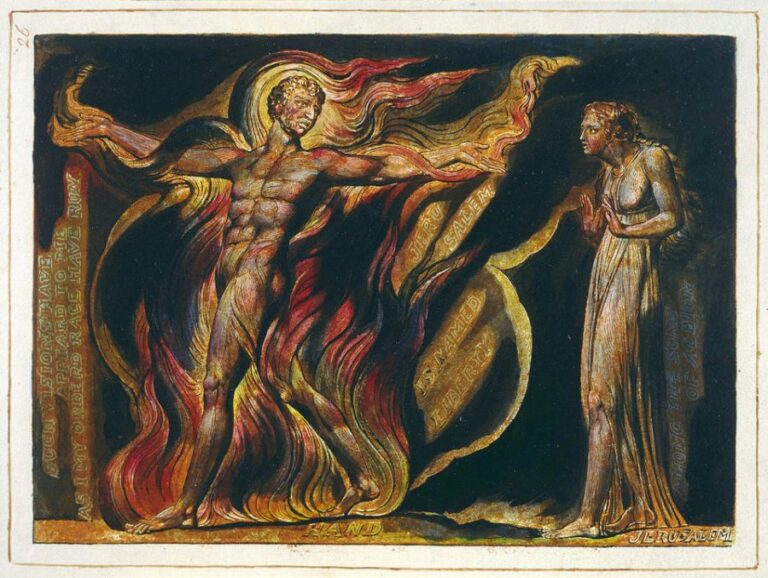
Few artists have anticipated, or precipitated, the fragmented, heroically individualist, and purposefully oppositional art of modernity as William Blake, a man to whom the cliché ahead of his time can be applied with perfect accuracy. Blake strenuously opposed the rationalist Deism and Neoclassical artistic values of his contemporaries, not only in principle, but in nearly every part of his artistic practice. His politics were correspondingly radical: in opposition to empire, racism, poverty, patriarchy, Christian dogma, and the emerging global capitalism of his time.
Nowhere do we see Blake’s visual radicalism more in evidence, argues Julia M. Wright in a 2000 essay for the journal Mosaic, than in his Laocoön, a work that not only seems to presage the modernist collaging of text and image, from Braque to Rauschenberg, but also looks toward hypertext with its nonlinearity, fragmentation, and intertextuality: “By combining as many as four different media in Laocoön — drawing, writing, engraving, and sculpture [in his depiction of the classical original] — Blake puts into play their different properties, engaging the debate in theory as well as practice.”
[…]
|
|
|
|
|
The early days of electronic instruments lacked commonly accepted ideas about what an electronic instrument was, much less how it should be used. No one associated electronics with techno or new wave or hip hop or pop, given that none of these existed. Every sound made by experiments in synthesis in the early 20th century was by its nature experimental, and most electronic instruments were one of a kind. It did not even seem obvious that electronic instruments had to be machines that were purpose built for sound.
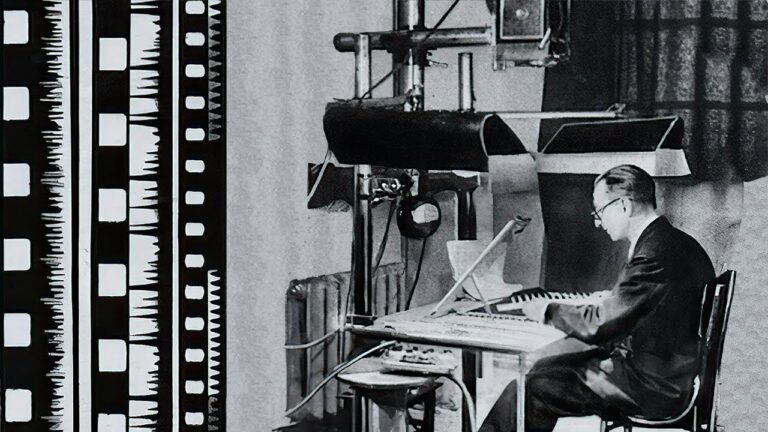
In 1930, at the very dawn of sound on film, Evgeny Sholpo invented the Variophone — or “Automated Paper Sound with soundtracks in both transversal and intensive form.” It was, in simpler terms, a photoelectric audio synthesizer that made use of a film projector and spinning cardboard discs with sound waves cut into them in various patterns. When amplified, the device could turn the patterns into sounds. It also created “abstract spiral animation,” notes Boing Boing. Both “were way ahead of their time.”
If you’re thinking such a machine might be used […]
|
|
|
|
|
The excitement over Crimes of the Future, set to premiere next week at the Cannes Film Festival, suggests that David Cronenberg retains a strong fan base more than half a century into his filmmaking career. But many of us who consider ourselves part of that fan base didn’t discover his work in the theater, much less at Cannes. Rather, we found it at the video store, ideally one that devoted a section specifically to his work — or at least to his signature genre of “body horror,” which his films would in any case have dominated. Fitting, then, that the new Cronenberg interview above takes place among shelves packed with, if not the VHS tapes and Laserdiscs we grew up with, then at least DVDs and Blu-Rays.
This video comes from Konbini, a French Youtube channel whose Video Club series has brought such auteurs as Claire Denis, Hirokazu Kore-eda, and Terry Gilliam into the hallowed halls of Paris’ JM Vidéo.
“They have 50,000 movies, I think,” says the interviewer. “That’s too many,” replies Cronenberg, “so you […]
|
|
|
|
|
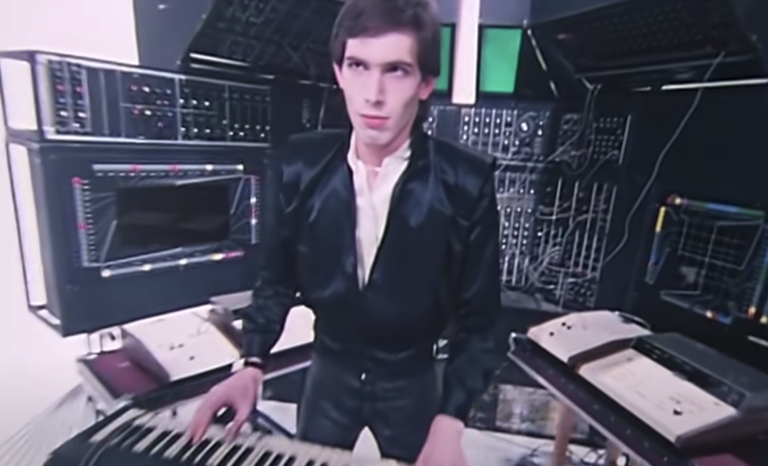
More than four decades after its release, The Buggles’ “Video Killed the Radio Star” is usually credited with more pop-cultural importance than musical influence. Perhaps that befits the song whose video was the first-ever aired on MTV. But if you listen closely to the song itself in The Buggles’ recording (as opposed to the concurrently produced version by Bruce Woolley and the Camera Club, which also has its champions), you’ll hear an unexpected degree of both compositional and instrumental complexity. You’ll also have a sense of a fairly wide variety of inspirations, one that Buggles co-founder Trevor Horn has since described as including not just other music but literature as well.
“I’d read J. G. Ballard and had this vision of the future where record companies would have computers in the basement and manufacture artists,” said Horn in a 2018 Guardian interview. “I’d heard Kraftwerk‘s The Man-Machine and video was coming. You could feel things changing.” The Buggles, Horn and collaborator Geoff Downes employed all the technology they could marshal. And by his reckoning, “Video Killed […]
|
|
|
|
|
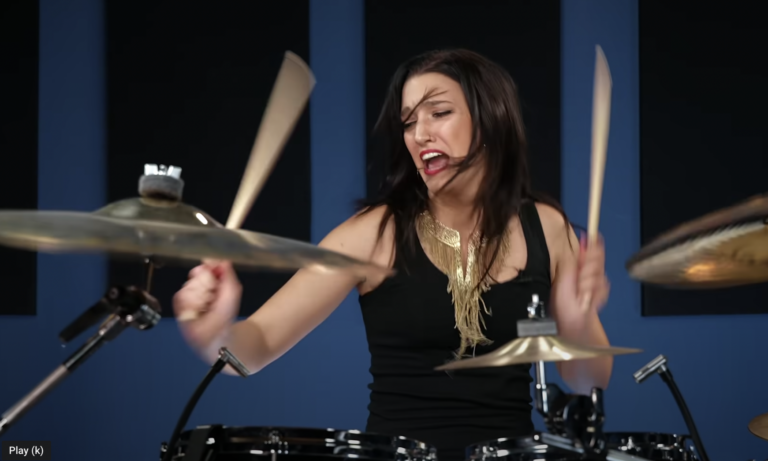
Testimonials to Prince’s mind-blowing musicianship flooded the media after his death, from celebrated stars and not-so-famous musicians who played in the artist’s backing bands over the decades. In the former category, we have Prince’s own musical hero, Stevie Wonder — no slouch as a multi-instrumentalist — whose Songs in the Key of Life stood as a “perfect album” for the Purple One. Wonder describes their jam sessions as “amazing” for the variety of people and cultures Prince could bring together, and for the incredible range of his talent.
“He could play classical music if he wanted to,” said Wonder, in tears after Prince’s death. “He could play jazz if he wanted to, he could play country if he wanted to. He played rock, you know, he played blues. He played pop. He played everything….” He played all 27 instruments on his debut album, from electric guitar, bass, and piano to “mini-Moog, poly-Moog, Arp string ensemble, Arp Pro Soloist, Oberheim four-voice, clavinet, drums, syndrums, water drums, slapsticks, bongos, congas, finger cymbals, wind chimes, orchestral bells, woodblocks, brush trap, tree bell, […]
|
|
|
|