|
Digest of new articles at openculture.com, your source for the best cultural and educational resources on the web ͏ ͏ ͏ ͏ ͏ ͏ ͏ ͏ ͏ ͏ ͏ ͏ ͏ ͏ ͏ ͏ ͏ ͏ ͏ ͏ ͏ ͏ ͏ ͏ ͏ ͏ ͏ ͏ ͏ ͏ ͏ ͏ ͏ ͏ ͏ ͏ ͏ ͏ ͏ ͏ ͏ ͏ ͏ ͏ ͏ ͏ ͏ ͏ ͏ ͏ ͏ ͏ ͏ ͏ ͏ ͏ ͏ ͏ ͏ ͏ ͏ ͏ ͏ ͏ ͏ ͏ ͏ ͏ ͏ ͏ ͏ ͏ ͏ ͏ ͏ ͏ ͏ ͏ ͏ ͏ ͏ ͏ ͏ ͏ ͏ ͏ ͏
|
|
The original Star Trek ran for only three seasons, but in that short time it had, to put it mildly, an outsized cultural impact. That partly had to do with the series having aired in the late nineteen-sixties, an era when a host of long-standing norms in American society (as well as in other societies across the world) seemed to have come up for re-negotiation. Through its science-fictional premises and twenty-third-century setting, Star Trek could deal with the present in ways that would have been difficult for other, ostensibly more realistic programs.
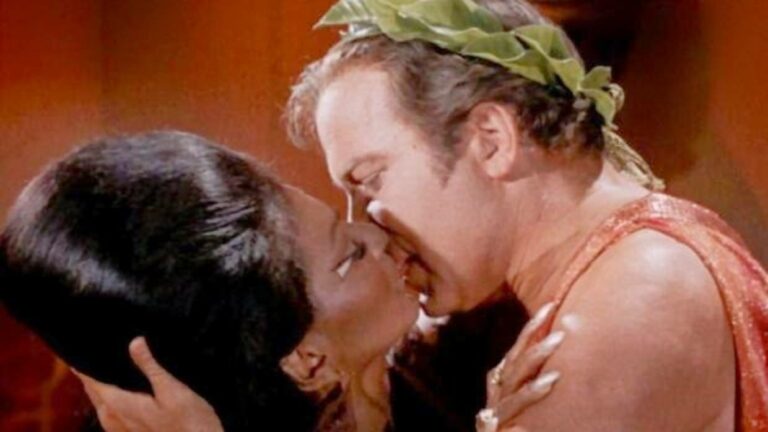
In “Plato’s Stepchildren,” an episode from 1968, several members of the Enterprise’s crew find themselves captive on a planet of telekinetic, ancient-Greece-worshipping sadists. It was there that Star Trek staged one of its most memorable moments, a kiss between William Shatner’s Captain Kirk and the late Nichelle Nichols’ Lieutenant Uhura. It arises not out of a relationship that has developed organically between the characters, but out of compulsion by the powers of their “Platonian” captors, who force the humans to perform for their entertainment.
Despite that narrative loophole, the […]
|
|
|
|
|
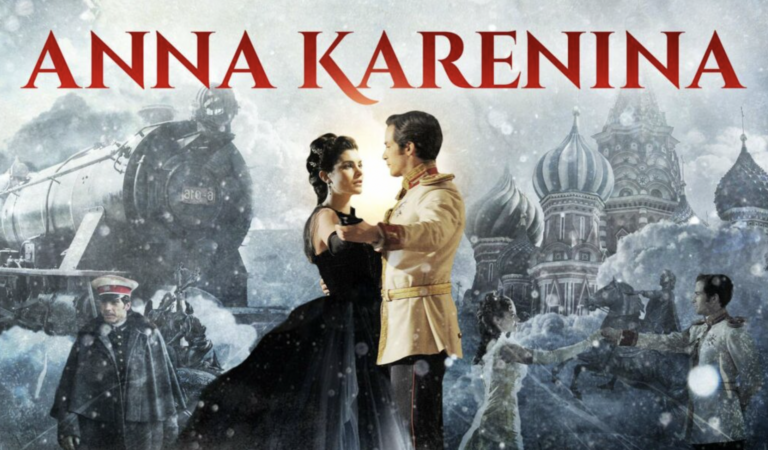
Just a few years after publishing his last and most-beloved novel Anna Karenina, Leo Tolstoy gave away his wealth, renounced his aristocratic privileges, and embraced the life of a peasant. His extreme experiment in Christian anarchism notwithstanding, however, Tolstoy was fascinated by new technology and allowed himself to be photographed and filmed near the end of his life. On one occasion, he supposedly confessed a love of the cinema to his visitors and told them he was thinking of writing “a play for the screen” on a “bloody theme.”
“All the same,” argues Rosamund Bartlett at the OUP blog, Tolstoy “would probably have taken a dim view of the twenty odd screen adaptations of Anna Karenina.” The author died the year before the first filmed adaptation of his work, a silent French/Russian adaptation of Anna Karenina made in 1911. Five more would follow before Greta Garbo stepped into the role for a loose 1927 adaptation titled Love, then again a 1935 film version directed by Clarence Brown, with Fredric March as Vronsky and Garbo as the “most famous and critically-acclaimed of all […]
|
|
|
|
|
We’ve had fun had at the expense of the multi-hyphenate: i.e. “I’m an actor-slash-drummer-slash-makeup-artist-slash-brand-ambassador,” etc…. And, fair enough. Few people are good enough at their one job to reasonably excel at two or three, right? But then again, we live in the kind of hyperspecialized world Henry Ford could only dream of, and consider ourselves highly favored if we’re allowed to be just the one thing long enough to retire and do nothing.
What if we could have multiple identities without being thought of as unserious, eccentric, or mentally ill?
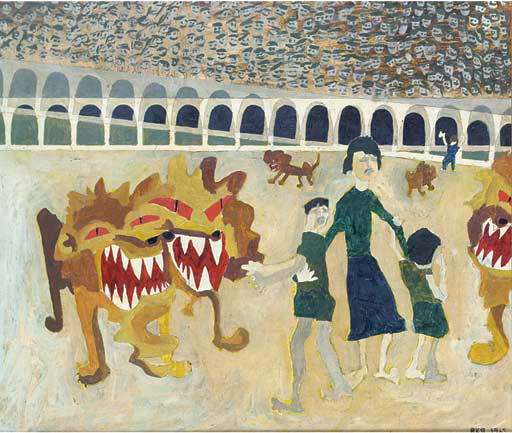
Discussions of Syd Barrett, Pink Floyd’s founding singer and guitarist, never pass without reference to his mental illness and abrupt disappearance from the stage. But they rarely engage with Barrett as an artist post-Pink Floyd: namely, his two underrated solo albums; and his output as a painter, the medium in which he began his career and to which he returned for the last thirty of his life.
If Syd Barrett were allowed a role other than crazy diamond (a role, we must allow, assigned to him by his former bandmates), we might see […]
|
|
|
|
|
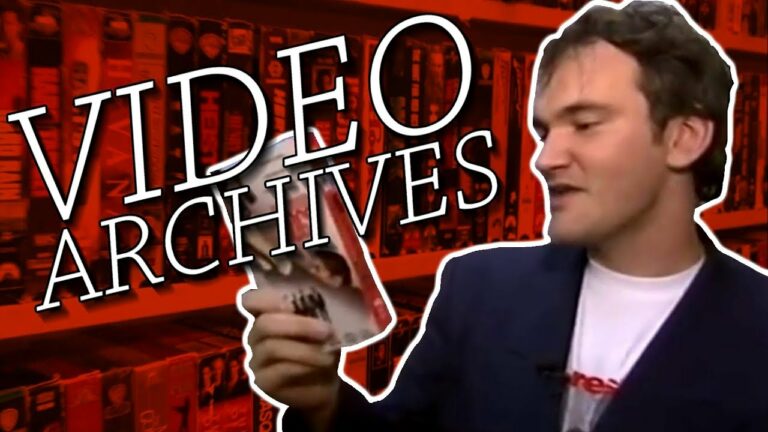
Quentin Tarantino has countless fans all around the world, increasingly many of whom are too young to ever have rented a tape from a video store. But when those twenty-something cinephiles learn his origin story as a filmmaker, they must suspect they missed out on a valuable experience in the VHS era, whatever its inconveniences. When Tarantino broke out in the nineteen-nineties with Reservoir Dogs and Pulp Fiction, he was publicly celebrated not just for those films, but for his having made them as a video-store-clerk-turned-auteur.
Indeed, it really does seem true that Tarantino’s cinematic sensibility owes something to the years he’d spent exercising his movie expertise behind the counter at Video Archives in Manhattan Beach. When the store closed in 1995, the freshly ascendant Tarantino seized the opportunity to buy up its thousands of VHS tapes. Roger Avary, his fellow Archives alumnus and collaborator on the screenplay for Pulp Fiction, bought the Laserdiscs. Though much of Avary’s collection has succumbed to the “disc rot” that notoriously afflicts that format, Tarantino’s collection has held up for more than a quarter-century.
Now Tarantino’s […]
|
|
|
|
|
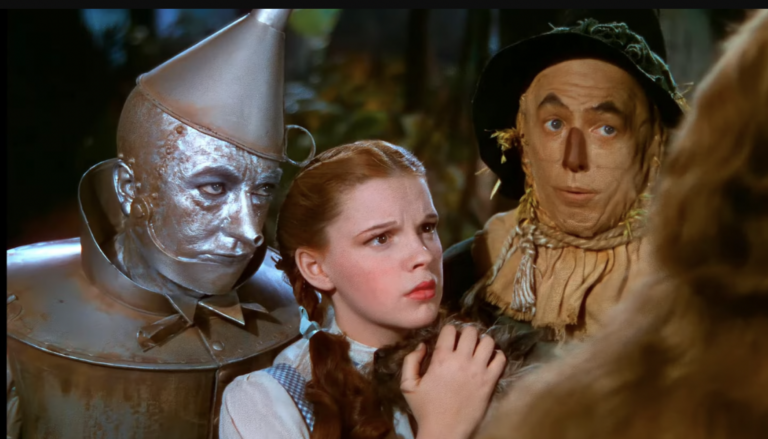
The Wizard of Oz came out more than 80 years ago, but there must still be a few among us who remember seeing it in the theater. Only they would have felt completely the power of its famous scene when Dorothy leaves black-and-white Kansas and enters the colorful land of Oz. Much of the power of art comes from contrast, and this particular contrast could hardly have been a more persuasive advertisement for the power of Technicolor. After a development history of more than twenty years, that color motion-picture process had by 1939 reached the stage of its technological evolution called “Process 4,” which enabled studios to make use of not just some but all of the spectrum.
This final form of Technicolor enraptures viewers even today, reproducing colors as it did at intense, sometimes borderline-psychedelic depths of saturation. The process found its ideal material in the fantasy of The Wizard of Oz, with its yellow brick road (choosing whose exact shade inspired about a week of deliberation at MGM), its ruby slippers (calculatedly changed from the silver shoes in […]
|
|
|
|