|
| |
|
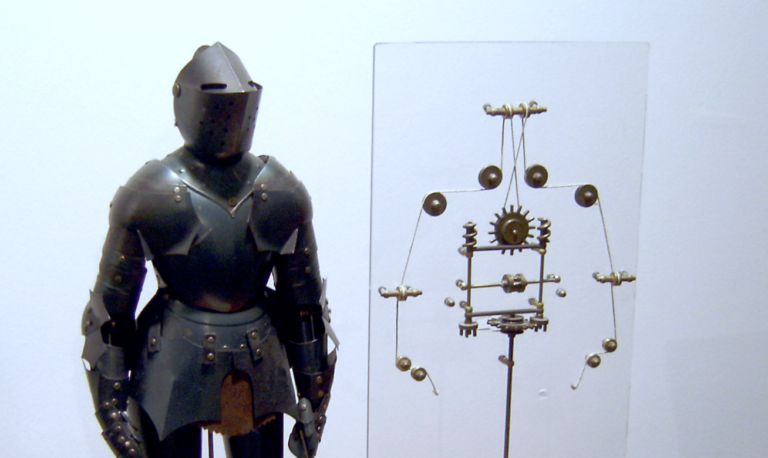
Image by Erik Möller, via Wikimedia Commons
Those of us who were playing video games in the nineteen-nineties may remember a fun little platformer, not technically unimpressive for its time, called Clockwork Knight. The concept of a clockwork knight turns out to have had some historical validity, or at least it…
|
|
|
|
| |
|
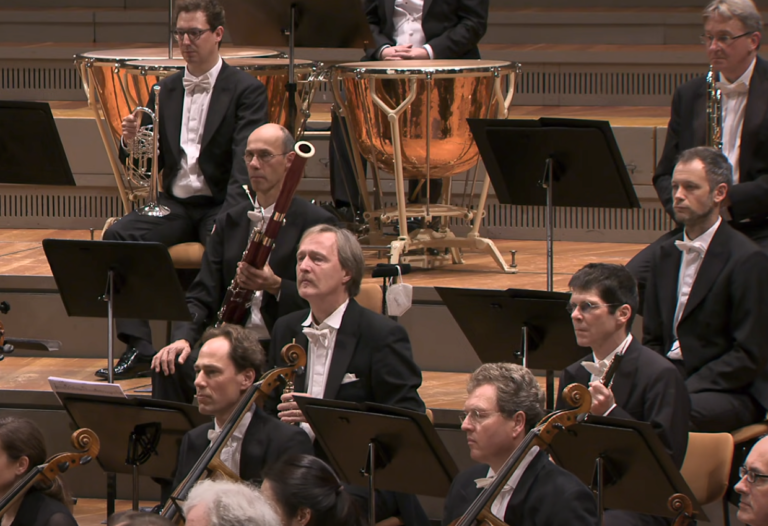
In late October 2020, amidst another surge of the COVID-19 virus, the German government asked the Berlin Philharmonic to close down for a month. On the eve of their closure, the Philharmonic performed John Cage’s modernist composition, 4′33″, which asks performers not to play their instruments throughout the entire duration of the piece, allowing…
|
|
|
|
| |

|
Here at Open Culture, Richard Feynman is never far from our minds. Though he distinguished himself with his work on the development of the atomic bomb and his Nobel Prize-winning research on quantum electrodynamics, you need no special interest in either World War II or theoretical physics to look to him as an…
|
|
|
|
| |
|
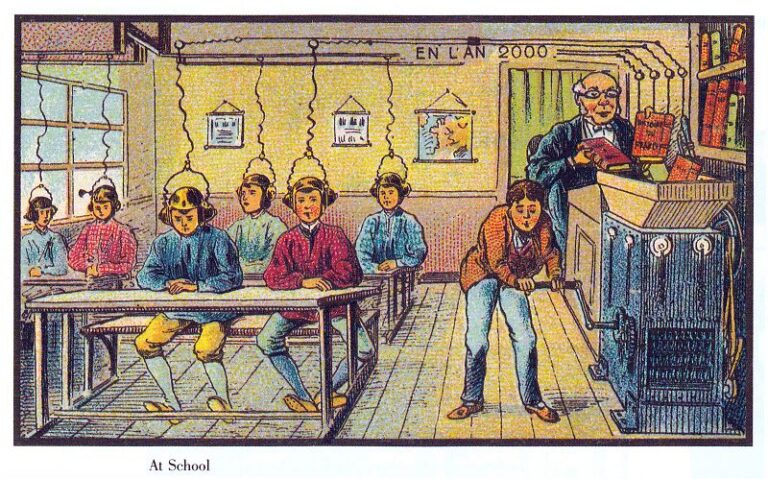
Atomic physicist Niels Bohr is famously quoted as saying, “Prediction is very difficult, especially if it’s about the future.” Yet despite years of getting things wrong, magazines love think pieces on where we’ll be in several decades, even centuries in time. It gives us comfort to think great things await us, even…
|
|
|
|
| |

|
A little over four years ago, we featured here on Open Culture a set of realistic images of people who don’t actually exist. They were, as we would now assume, wholly generated by an artificial-intelligence system, but back in 2018, there were still those who doubted that such a thing could be done without…
|
|
|
|