|
| |
|
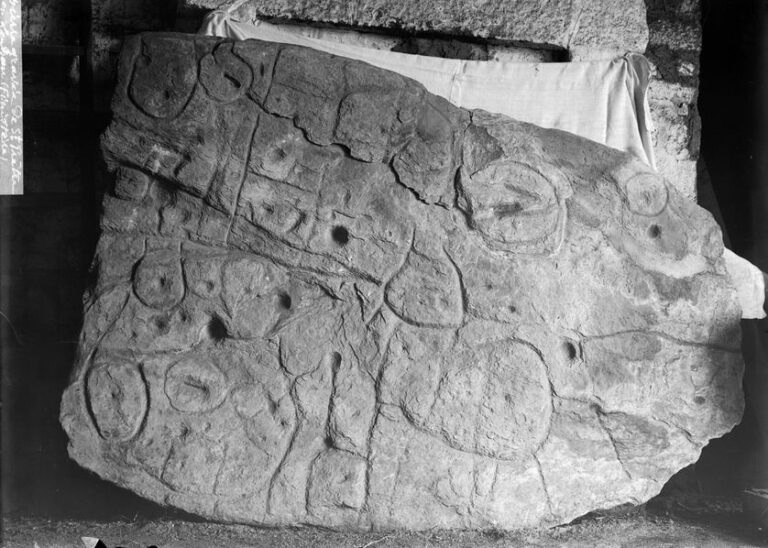
Image by Paul du Châtellier, via Wikimedia Commons
In 1900, the French prehistorian Paul du Châtellier dug up from a burial ground a fairly sizable stone, broken but covered with engraved markings. Even after he put it back together, neither he nor anyone else could work out what the markings represented.…
|
|
|
|
| |
|
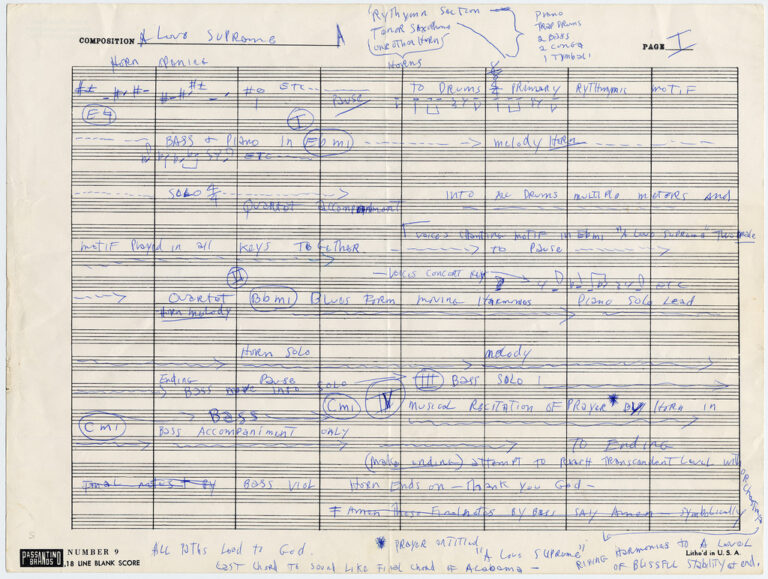
Above, we present an important document from the Smithsonian’s National Museum of American History: John Coltrane’s handwritten outline of his groundbreaking jazz composition, A Love Supreme.
Recorded in December of 1964 and released in 1965, A Love Supreme is Coltrane’s personal declaration of his faith in God and his…
|
|
|
|
| |
|
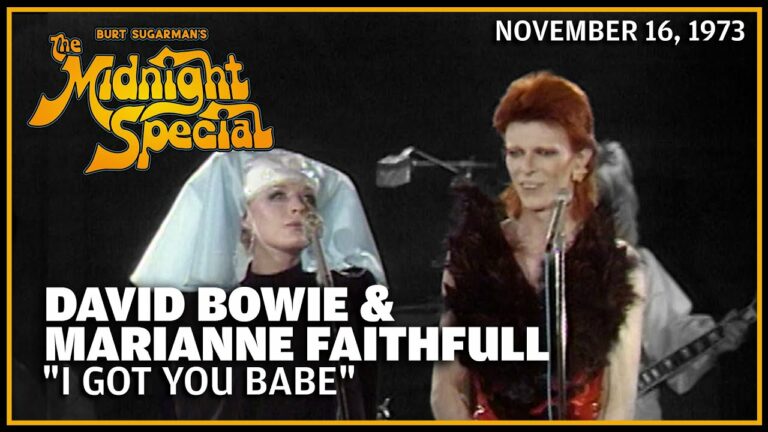
If you had to choose a living cultural figure to represent nineteen-seventies America, you could do much worse than Burt Sugarman. He made his name as a television impresario with The Midnight Special, which put on NBC’s airwaves performances by everyone from ABBA to AC/DC, REO Speedwagon to Roxy Music, and War to Weather…
|
|
|
|
| |

|
It’s easy to see why kumihimo, the ancient Japanese art of silk braiding, is described as a meditative act.
The weaver achieves an intricate design by getting into a rhythmic groove, overlapping hand-dyed silken threads on a circular or rectangle wooden loom, from which up to 50 weighted-wooden bobbins dangle.
If the mind…
|
|
|
|