|
Digest of new articles at openculture.com, your source for the best cultural and educational resources on the web ͏ ͏ ͏ ͏ ͏ ͏ ͏ ͏ ͏ ͏ ͏ ͏ ͏ ͏ ͏ ͏ ͏ ͏ ͏ ͏ ͏ ͏ ͏ ͏ ͏ ͏ ͏ ͏ ͏ ͏ ͏ ͏ ͏ ͏ ͏ ͏ ͏ ͏ ͏ ͏ ͏ ͏ ͏ ͏ ͏ ͏ ͏ ͏ ͏ ͏ ͏ ͏ ͏ ͏ ͏ ͏ ͏ ͏ ͏ ͏ ͏ ͏ ͏ ͏ ͏ ͏ ͏ ͏ ͏ ͏ ͏ ͏ ͏ ͏ ͏ ͏ ͏ ͏ ͏ ͏ ͏ ͏ ͏ ͏ ͏ ͏ ͏
|
|
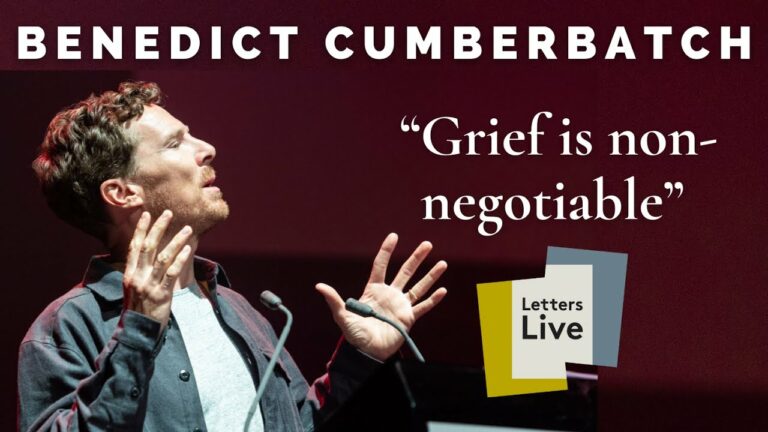
We would rather not grieve. Because we avoid it, death can leave us numb, and we may not know how to talk about it without turning loss into a lesson. “Even when it’s expected, death or loss still comes as a surprise,” writes psychotherapist Megan Devine in her book on grieving, It’s OK That You’re Not OK. And in grief, it can so happen that “otherwise intelligent people have started spouting slogans and platitudes, trying to cheer you up. Trying to take away your pain.” Everything happens for a reason, they’re in a better place, they’d want you to be happy, this will make you stronger….! However well-intentioned, “platitudes and cheerleading solve nothing.”
Is loss a problem to be solved? Can we avoid grief without shutting out the intimacy of love? There are many sage answers to these questions. Few, for example, have written as elegantly or agonized as publicly about love and loss as singer Nick Cave of The Birthday Party and The Bad Seeds. These are subjects to which he returns on album after album and in entries of his cult-favorite blog […]
|
|
|
|
|
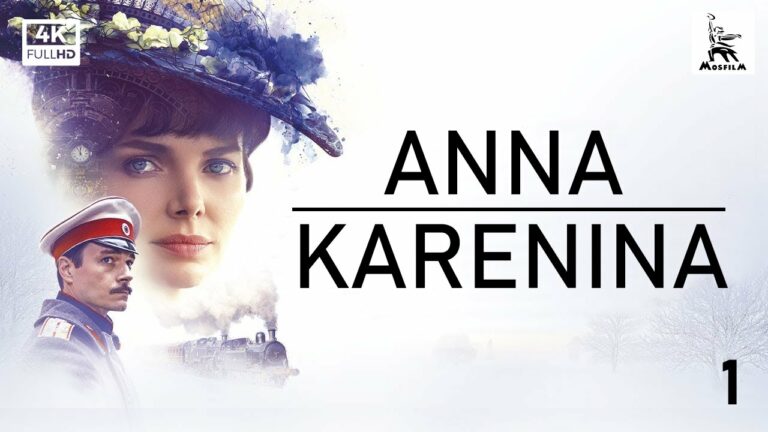
Earlier this week we featured Sergei Bondarchuk’s four-part film adaptation of Leo Tolstoy’s War and Peace. You can watch that most ambitious of all filmed versions of War and Peace free online on the Youtube channel of Mosfilm, the Soviet Union’s national studio. Though the U.S.S.R. may have gone, Mosfilm hasn’t. Under the direction of filmmaker Karen Shakhnazarov, the studio has soldiered on as a quasi-private production company and put out a variety of films, many of them rooted in Russian history and literature. Five years ago, Shakhnazarov himself directed an eight-part adaptation of another beloved Tolstoy novel, Anna Karenina.
War and Peace (watch here) has been made into four different films. But that’s nothing beside the at least seventeen Anna Karenina movies in existence, not counting Shakhnazarov’s. It was first released in a relatively short cut, its runtime truncated to a bit over two and a half hours, as Anna Karenina: Vronsky’s Story.
That version’s narrative focused, as you may have guessed, on the life of Anna’s irresistible aristocratic lover. Later, Russia-1 television broadcast Shakhnazarov’s work in […]
|
|
|
|
|
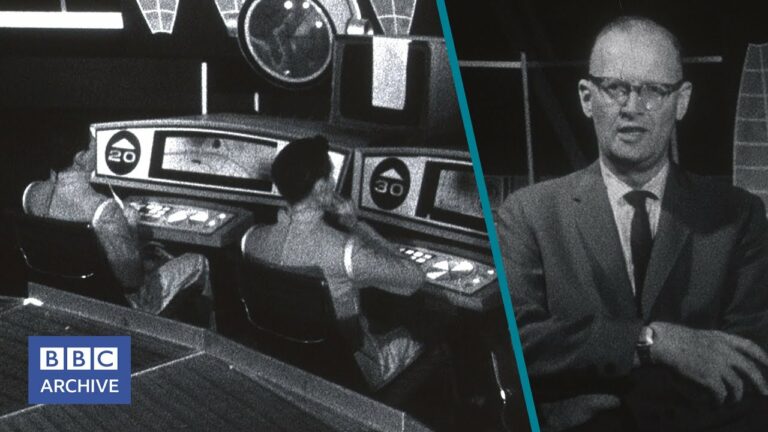
Are you feeling confident about the future? No? We understand. Would you like to know what it was like to feel a deep certainty that the decades to come were going to be filled with wonder and the fantastic? Well then, gaze upon this clip from the BBC Archive YouTube channel of sci-fi author Arthur C. Clarke predicting the future in 1964.
Although we best know him for writing 2001: A Space Odyssey, the 1964 television viewing public would have known him for his futurism and his talent for calmly explaining all the great things to come. In the late 1940s, he had already predicted telecommunication satellites. In 1962 he published his collected essays, Profiles of the Future, which contains many of the ideas in this clip.
Here he correctly predicts the ease with which we can be contacted wherever in the world we choose to, where we can contact our friends “anywhere on earth even if we don’t know their location.” What Clarke doesn’t predict here is how “location” isn’t a thing when we’re on the internet. He imagines […]
|
|
|
|
|
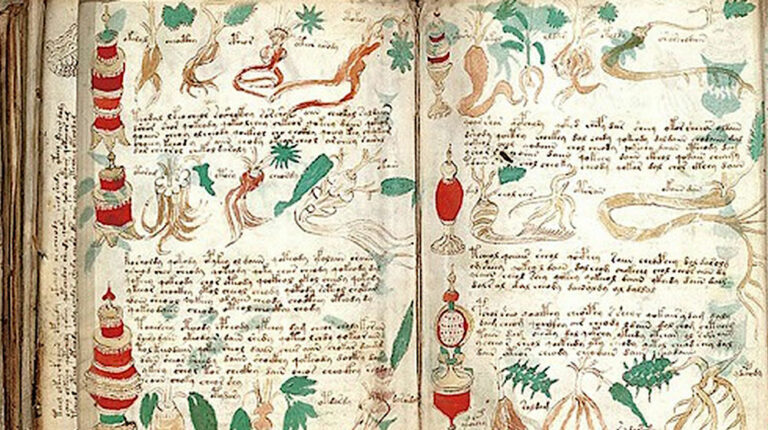
“The Voynich manuscript is a real medieval book, and has been carbon-dated to the early 1400s.” No modern hoax, this notoriously bizarre text has in fact “passed through the hands of many over the years,” including “scientists, emperors, and collectors.” Though “we still don’t know who actually wrote it, the illustrations hint at the book’s original purpose,” having “much in common with medieval herbals, astrology guides, and bathing manuals.” Hence the likelihood of the Voynich manuscript being “some sort of medical textbook, although a very strange one by any measure. Then there’s the writing.”
This summary of the known history and nature of the most mysterious manuscript in existence comes from the Youtube video above, “Secrets of the Voynich Manuscript.” Its channel Hochelaga has previously been featured here on Open Culture for episodes on medieval monsters, a guide to supernatural phenomena from renaissance Germany, Hokusai’s ghost art, and the Biblical apocalypse.
In short, the Voynich manuscript could hardly find a more accommodating wheelhouse. And as in Hochelaga’s other videos, the subject is approached not with […]
|
|
|
|
|
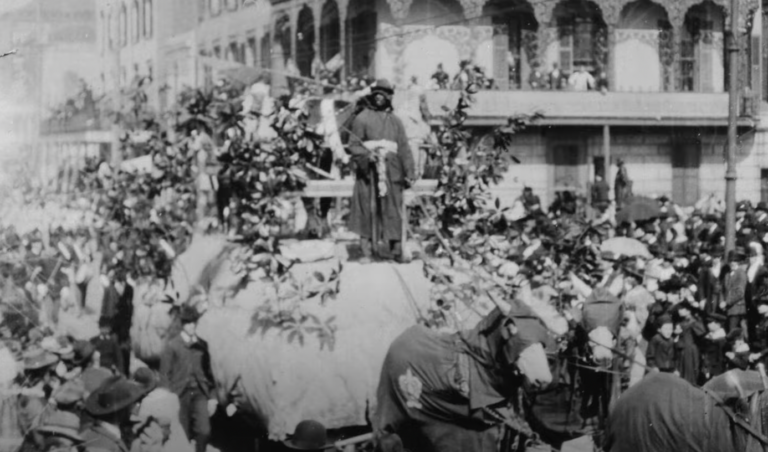
“America has only three great cities: New York, San Francisco, and New Orleans. Everywhere else is Cleveland.” This quotation has been repeated for decades — not least, unsurprisingly, in New Orleans. I saw and heard it often on my last trip there, and though attributions varied, most credited the remark to either Mark Twain or Tennessee Williams. According to Quote Investigator, no historical evidence points to either man as the line’s originator, though “the notion that only three cities in the U.S. were commendable or distinctive has a very long history.”
In 1895, for instance, the then-popular comedienne Vernona Jarbeau said that “there are only three cities in the United States that I would care to live in, and one of them is San Francisco.” But she said it, one should note, to a San Francisco newspaper; who’s to say the crowd-pleasing instinct wouldn’t have motivated a transposition of her preference elsewhere in America? New Orleans, then in existence for more than half a century, possessed an even longer-established distinctiveness. The embellished galleries of the French Colonial buildings in the […]
|
|
|
|