|
Digest of new articles at openculture.com, your source for the best cultural and educational resources on the web ͏ ͏ ͏ ͏ ͏ ͏ ͏ ͏ ͏ ͏ ͏ ͏ ͏ ͏ ͏ ͏ ͏ ͏ ͏ ͏ ͏ ͏ ͏ ͏ ͏ ͏ ͏ ͏ ͏ ͏ ͏ ͏ ͏ ͏ ͏ ͏ ͏ ͏ ͏ ͏ ͏ ͏ ͏ ͏ ͏ ͏ ͏ ͏ ͏ ͏ ͏ ͏ ͏ ͏ ͏ ͏ ͏ ͏ ͏ ͏ ͏ ͏ ͏ ͏ ͏ ͏ ͏ ͏ ͏ ͏ ͏ ͏ ͏ ͏ ͏ ͏ ͏ ͏ ͏ ͏ ͏ ͏ ͏ ͏ ͏ ͏ ͏
|
|
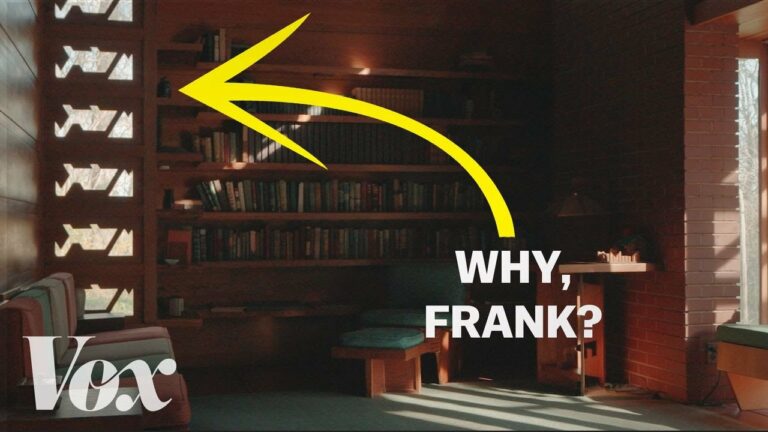
There could be few more American styles of dwelling than the tract house, and few more American architects than Frank Lloyd Wright. But Wright, of course, never designed a tract house. Each of his dwellings, to say nothing of his public buildings, was in every sense a one-off, not just in its layout and its details but in its relationship to its context. Wright believed, as he declared in his book The Natural House, that a building should be “as dignified as a tree in the midst of nature.” This he held true even for relatively modest residences, as evidenced by the series of “Usonian houses” he began in the late nineteen-thirties.
The Vox video above features the “cypress-and-brick masterpiece” that is Pope-Leighey House in Alexandria, Virginia, which Wright completed in 1941. “Bounded by the humble budget of the Pope family” — Loren Pope, its head was working as a newspaper copy editor at the time — “this structure nonetheless exhibits the distinct features characteristic of his formidable vision and style.”
So says the house’s page at the […]
|
|
|
|
|
Librarians are champions of organization, and among its best practitioners.
Books are shelved according to the Dewey Decimal system.
Categories are assigned using Library of Congress Rule Interpretations, Library of Congress Subject Headings, and Library of Congress Classification.
And Sharon McKellar, the Teen Services Department Head at the Oakland Public Library, collects ephemera she and other staffers find in books returned to the OPL’s 18 locations.
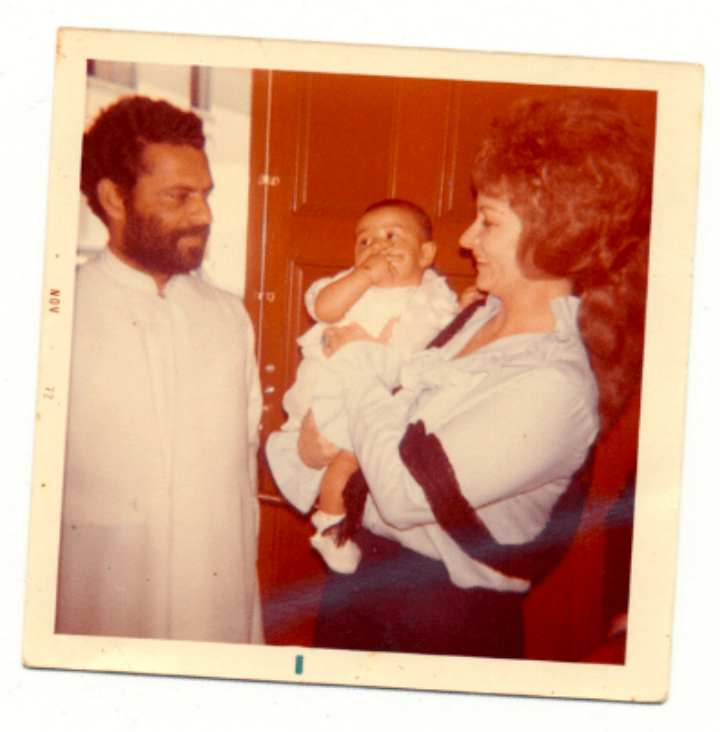
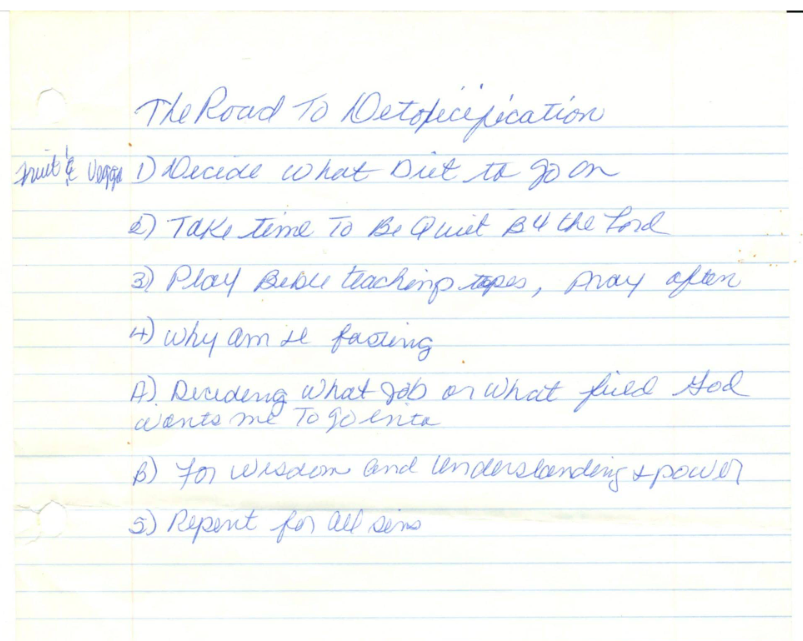

It’s an impulse many share.
Eventually, she began scanning them to share on her employer’s website, inspired by Found Magazine, a crowdsourced collection of found letters, birthday cards, kids’ homework, to-do lists, handwritten poems, doodles, dirty pictures, etc.
As Found’s creators, Davy Rothbart and Jason Bitner, write on the magazine’s website:
We certainly didn’t invent the idea of found stuff being cool. Every time we visit our friends in […]
|
|
|
|
|
If you don’t believe chairs can be art, you’ll have to take it up with the curators, gallerists, collectors, architects, and designers around the world who spend their lives obsessing over chair design. Every major museum has a furniture collection, and every collection displaying furniture gives special pride of place to the radical innovations of modernist chairs, from early artisan creations of the Bauhaus to mass-produced mid-century chairs of legend. Chairs are status symbols, art objects, and physical manifestations of leisure, power, and repose.
Who could forget Charles and Ray Eames’ iconic lounge chair, Arne Jacobsen’s “Egg,” the elegantly simple side chairs of Eero Saarinen and Charles Eames, or even the more recent corner office staple, the Aeron Chair — the Herman Miller original that has been part of the Museum of Modern Art’s permanent collection since 1992? “In chairs more than in any other object, human beings are the unit of measure,” says Museum of Modern Art curator Paola Antonelli, “and designers are forced to walk a line between standardization and personalization.”
Artist […]
|
|
|
|
|
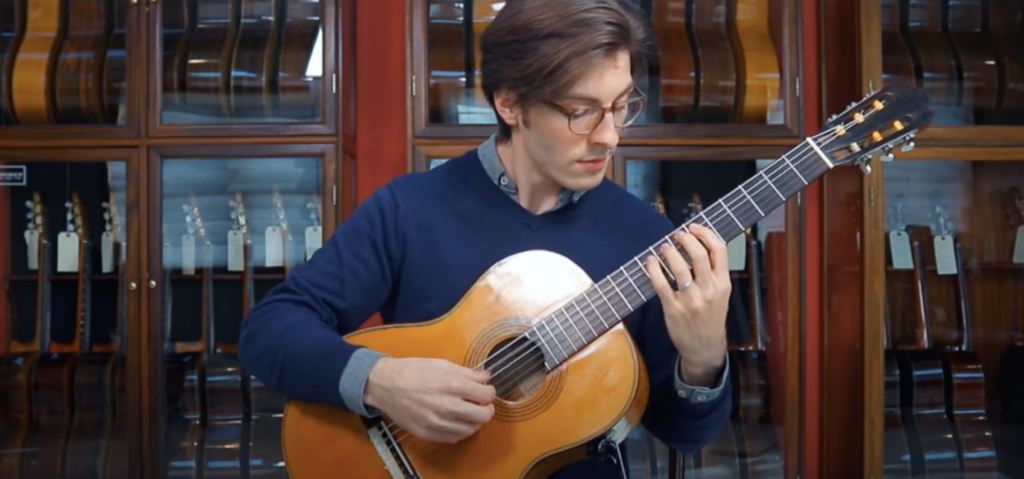
The highest quality classical guitars handmade in the 21st century can run into the tens of thousands of dollars. This is no frivolous expense for a professional player. Put such an instrument in the hands of an amateur and you may not hear much difference between it and a $150 factory-made budget model. In the hands of a seasoned player, a high-end guitar truly sings. Tone resides in the fingers — or 90% of it anyway — but a skilled guitarist knows how to discover and make use of all an instrument’s best qualities. For a musician who makes a living doing so, spending the cost of a car on a guitar makes economic sense (as does a good insurance policy).
The tonal qualities of the instrument below, a handmade classical guitar from 1888, are clearly abundant; it’s also clear that guitarist Brandon Acker — who has appeared in many of our previous posts on the guitar — knows how to exploit them. At times, he brings out such rich resonance, the instrument sounds like a piano; at others, it […]
|
|
|
|
|
American nostalgia as we know it was invented in the nineteen-seventies. Consider that decade’s preponderance of backward-looking pop-cultural phenomena: Sha Na Na; Happy Days; “Yesterday Once More”; American Graffiti, whose tagline asked “Where were you in ’62?”, a time just eleven years before the release of the picture itself. But no piece of work stands more iconically for the seventies revival of the late fifties and early sixties than Grease. First produced as a stage musical in Chicago in 1971, it graduated to Broadway the next year. But Grease wouldn’t take its most enduring form until 1978, the year that brought Randal Kleiser’s film adaptation starring John Travolta and the late Olivia Newton-John.
A 28-year-old Australian might have seemed an unconventional choice for the part of Sandy Dombrowski, the new girl at midwestern Rydell High School. But after the alteration of a few details in the character and story, she made the role entirely her own. “It was Newton-John’s dulcet intimacy as a singer that set her up perfectly to play the naïve Sandy onscreen,” writes the New Yorker‘s Rachel Syme.
Her “squeaky prudishness […]
|
|
|
|