|
Digest of new articles at openculture.com, your source for the best cultural and educational resources on the web ͏ ͏ ͏ ͏ ͏ ͏ ͏ ͏ ͏ ͏ ͏ ͏ ͏ ͏ ͏ ͏ ͏ ͏ ͏ ͏ ͏ ͏ ͏ ͏ ͏ ͏ ͏ ͏ ͏ ͏ ͏ ͏ ͏ ͏ ͏ ͏ ͏ ͏ ͏ ͏ ͏ ͏ ͏ ͏ ͏ ͏ ͏ ͏ ͏ ͏ ͏ ͏ ͏ ͏ ͏ ͏ ͏ ͏ ͏ ͏ ͏ ͏ ͏ ͏ ͏ ͏ ͏ ͏ ͏ ͏ ͏ ͏ ͏ ͏ ͏ ͏ ͏ ͏ ͏ ͏ ͏ ͏ ͏ ͏ ͏ ͏ ͏
|
|
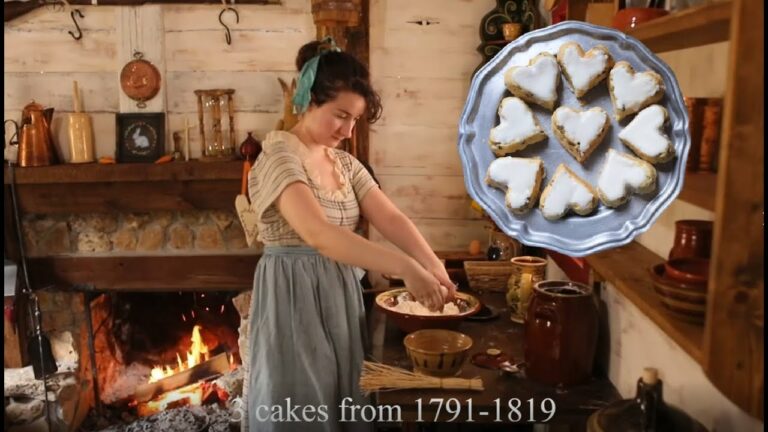
Many of us avoid turning on the oven during a heatwave, but how do we feel about making cookies in a Dutch Oven heaped with glowing embers?
Justine Dorn, co-creator with other half, Ron Rayfield, of the Early American YouTube channel, strives to recreate 18th and early 19th century desserts in an authentic fashion, and if that means whisking egg whites by hand in a 100 degree room, so be it.
“Maybe hotter,” she wrote in a recent Instagram post, adding:
It’s hard work but still I love what I do. I hope that everyone can experience the feeling of being where you belong and doing what you know you were born to do. Maybe not everyone will understand your reasoning but if you are comfortable and happy doing what you do then continue.
Her historic labors have an epic quality, but the recipes from aged cookbooks are rarely complex.
The gluten free chocolate cookies from the 1800 edition of The Complete Confectioner have but three ingredients – grated chocolate, caster sugar, and the aforementioned egg whites – […]
|
|
|
|
|
If you are a graduate of a U.S. school system, the words “Remember the Lusitania” may be as vaguely familiar to you as “Remember the Alamo.” And you may be just as fuzzy about the details. We learn roughly that the sinking of the British luxury liner was an act of German aggression that moved the U.S. to enter World War I. That lesson is largely the result of a propaganda effort launched at the time to inflame anti-German sentiments and push the U.S. out of isolationism. But it would take almost two years after the attack before the country entered the war. The Lusitania did not change President Woodrow Wilson’s position. While the “sinking of the Lusitania was a crucial moment in helping to sway the American public in support of the Allied cause,” it was only kept in the public eye by those who wanted the U.S. in the war.
Mainstream U.S. coverage immediately afterward was not overly belligerent. A week after the disaster, in a May 16th, 1915 issue, the Sunday New York Times ran a two-page spread entitled “Prominent Americans […]
|
|
|
|
|
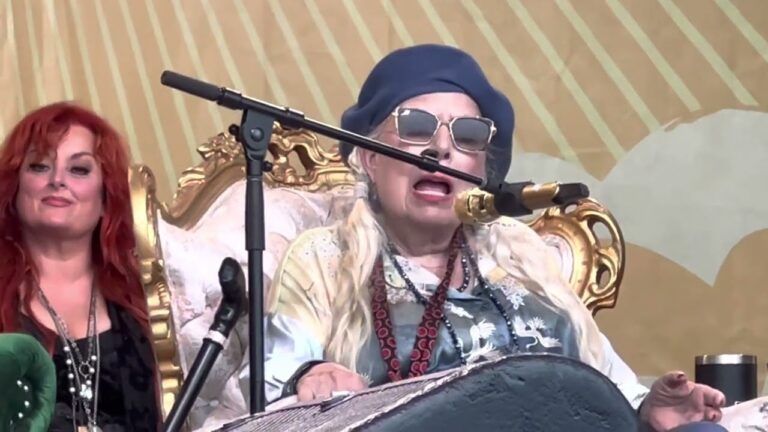
“She’s doing something very, very brave right now for you guys. This is a trust fall, and she picked the right people to do this with.” — Brandi Carlile introducing Joni Mitchell at the Newport Folk Festival, 2022
Comeback queen Joni Mitchell stunned fans with her recent appearance at the Newport Folk Festival this summer, her first full public concert since 2000. In Newport tradition, surprise stars make an appearance every year. Former guests have included Dolly Parton, Chaka Khan, and Mitchell’s friend David Crosby. Mitchell’s arrival this year was a revelation. She appeared out of the blue, when most people reasonably assumed she’d never perform again after suffering a debilitating brain aneurysm in 2015 that left her unable to speak or walk.
Yet, as we pointed out in an earlier post, Mitchell’s return to the stage has been years in the making. Since her aneurysm, she has confounded even the neurosurgeons with her recovery, teaching herself to play guitar again by watching online videos and learning to sing again not long after she re-learned how to get out of bed. […]
|
|
|
|
|
The wordless chorus has become a gimmick in sing-along balladry and throwaway pop. Done badly, it sounds like lazy songwriting or — to take a phrase from Somerset Maugham — “unearned emotion.” At its best, a wordless chorus is a moment of sublimity, expressing beauty or tragedy before which language fails. Either way, it usually starts as a placeholder, in brackets. (As in, “we’ll put something better here when we get around to it.”) Only later in the songwriting process does it become a choice.
In what may be one of the greatest choices of wordless choruses on record, Simon and Garfunkel’s “The Boxer” channels its raw power in only two repeated syllables (and possibly a word?): “Lie-la-lie, Lie-la-lie-lie-lie-lie-lie….” The chorus of Paul Simon’s hit from 1970’s Bridge Over Troubled Water needs no more elaboration than the “arresting whipcrack of a snare drum” (played by wrecking crew drummer Hal Blaine), Dan Einav writes at Financial Times:
[The Boxer] was the result of a painstaking and protracted recording process that took more than 100 hours, used numerous backing musicians and even spanned a number […]
|
|
|
|
|
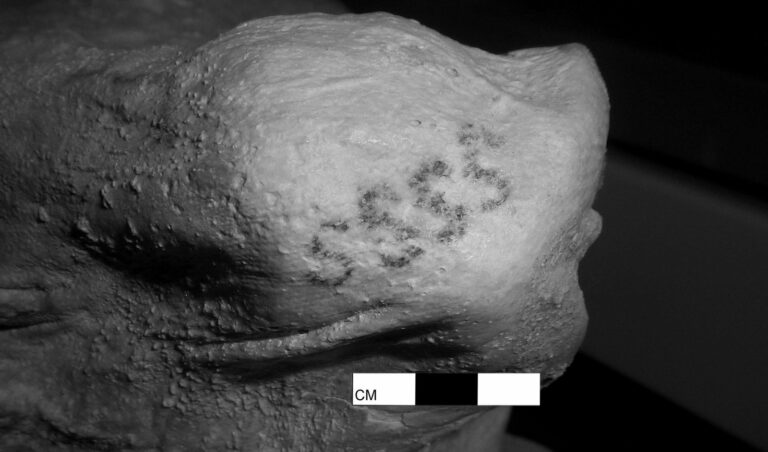
Some histories tell us more about their narrators than their characters. The story of tattoos in ancient Egypt is one example. While tattoos and other forms of body modification have been part of nearly every ancient culture, Egyptologists have found many more tattooed female than male mummies at ancient burial sites. Since tattooing seemed to be an almost “exclusively female practice in ancient Egypt,” writes archeologist Joann Fletcher, “mummies found with tattoos were usually dismissed by the (male) excavators who seemed to assume the women were of ‘dubious status,’ described in some cases as ‘dancing girls.'”
There is no evidence, however, to suggest that tattoos in ancient Egypt specifically marked dancers, prostitutes, concubines, or individuals of a lower class (and thus of little interest to some early archaeologists). One mummy described as a concubine “was actually a high-status priestess named Amunet, as revealed by her funerary inscriptions.” Early archaeologists stubbornly clung to derogatory 19th-century assumptions about tattoos (and class, dancing, sex, and religion), even when discussing tattooed Egyptian women whose burials obviously showed they were priestesses or extended members of […]
|
|
|
|