|
Digest of new articles at openculture.com, your source for the best cultural and educational resources on the web ͏ ͏ ͏ ͏ ͏ ͏ ͏ ͏ ͏ ͏ ͏ ͏ ͏ ͏ ͏ ͏ ͏ ͏ ͏ ͏ ͏ ͏ ͏ ͏ ͏ ͏ ͏ ͏ ͏ ͏ ͏ ͏ ͏ ͏ ͏ ͏ ͏ ͏ ͏ ͏ ͏ ͏ ͏ ͏ ͏ ͏ ͏ ͏ ͏ ͏ ͏ ͏ ͏ ͏ ͏ ͏ ͏ ͏ ͏ ͏ ͏ ͏ ͏ ͏ ͏ ͏ ͏ ͏ ͏ ͏ ͏ ͏ ͏ ͏ ͏ ͏ ͏ ͏ ͏ ͏ ͏ ͏ ͏ ͏ ͏ ͏ ͏
|
|
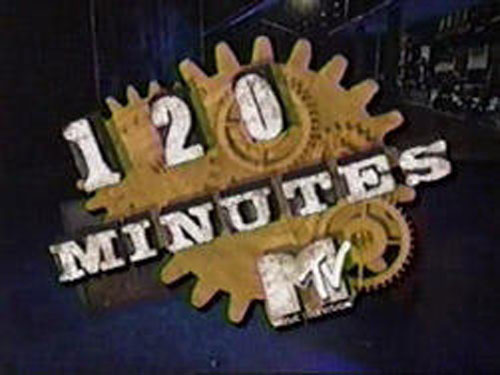
The mid-nineteen-nineties was not a time without irony. You may recall that, back then, “alternative” rock had not only gone mainstream, but, in certain regions, had even become the most popular genre of music on the radio. That was certainly true in the Seattle area, where I grew up. And if you wanted to start a rock band there, as writer Adam Cadre remembers, you knew what steps you had to take: “get a record deal, make a video, get it on 120 Minutes, have it become a Buzz Clip, wonder why massive success doesn’t ease the aching void inside.”
If you got into bands like 10,000 Maniacs, Smashing Pumpkins, R.E.M., The Replacements, the Pixies, the Offspring, or Sonic Youth in the mid-nineties (to say nothing of a certain trio called Nirvana), chances are — statistically speaking, at least — that you first saw them on 120 Minutes.
At the peak of its popularity on MTV, the show defined the alternative-rock zeitgeist, introducing new bands as well as bringing new waves of listeners to existing ones. […]
|
|
|
|
|
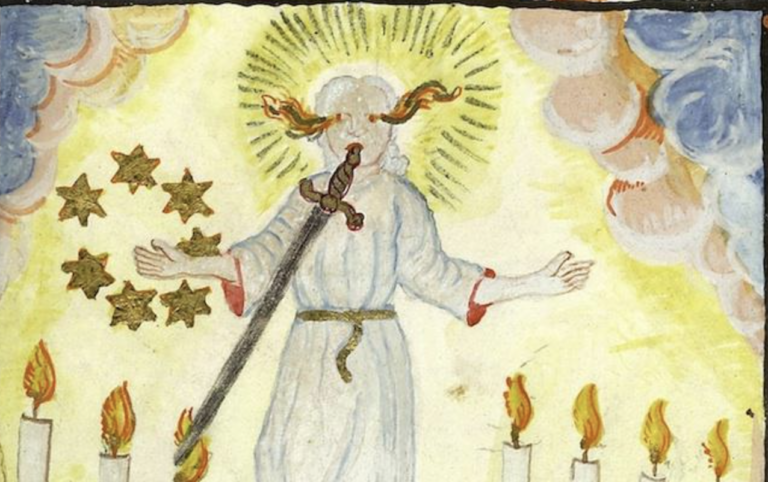
According to the Book of Revelation, the returning Christ arrives surrounded by seven candlesticks. In its author’s prophetic dream, “his head and his hairs were white like wool, as white as snow; and his eyes were as a flame of fire.” From his mouth issues “a sharp sword with which to strike down the nations.” It’s a startling image, created for symbolic purposes. Without a key to what those symbols mean, the text remains obscure. It is, after all, a vision given to a mystic hermit exiled on an island.
Many a Revelation-inspired magical grimoire from succeeding centuries also remains nearly incomprehensible to non-adepts. Such is the case with the “strange 18th-century manuscript called Clavis Inferni (key of hell),” as Benjamin Breen writes at Slate. “Filled with invocations, cryptic sigils, and paintings of supernatural beings” — such as the illustration from Revelation above — “the book defies interpretation — as it was meant to do.” Also, like Revelation, the text’s authorship is mysterious, and yet significant to our understanding of its […]
|
|
|
|
|
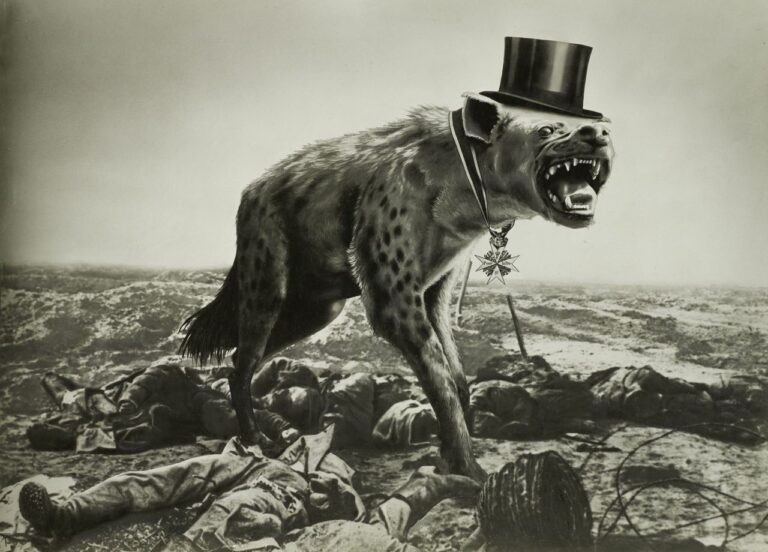
The story of artist John Heartfield — born Helmut Franz Josef Herzfeld in Berlin in 1891 — begins like a German fairy tale. In 1899, his parents, ill and poverty-stricken, abandoned Helmut and his three siblings in a mountain cabin at Aigen, near Salzburg. The hungry children were discovered four days later by the mayor of the town and his wife, who took them in and fostered them. Meanwhile, their uncle, a lawyer, appeared with a trust from their wealthy grandfather’s estate to fund their educations.
Helmut trained at several art schools in Germany, eventually arriving at the School of Arts and Crafts in the bohemian Berlin of the 1910s, where he abandoned his dream of becoming a painter and instead invented hugely effective anti-war propaganda art during World War I and the rise of the Nazis. As The Canvas video above explains, Heartfield’s work pointedly encapsulates the “anti-bourgeois, anti-capitalist, anti-fascist” attitudes of radical Berlin Dadaists. He was “one of Hitler’s most creative critics.”
Herzfeld began his anti-war art campaign by anglicizing his name to counter rising anti-British sentiment at the […]
|
|
|
|
|
In 1958, Mao Zedong launched the Great Leap Forward. Eight years later, he announced the beginning of the Great Proletarian Cultural Revolution. Between those two events, of course, came the Great Chinese Famine, and historians now view all three as being “great” in the same pejorative sense. Though Chairman Mao may not have understood the probable consequences of policies like agricultural collectivization and ideological purification, he did understand the importance of his own image in selling those policies to the Chinese people: hence the famous 1966 photo of him swimming across the Yangtze River.
By that point, “the Chinese leader who had led a peasant army to victory in the Chinese Civil War and established the communist People’s Republic of China in 1949 was getting old.” So says Coleman Lowndes in the Vox Darkroom video above. Worse, Mao’s Great Leap Forward had clearly proven calamitous. The Chairman “needed to find a way to seal his legacy as the face of Chinese communism and a new revolution to lead.” And so he repeated one of his earlier feats, the swim across the […]
|
|
|
|
|
The 2022 Oscar winner for Best Picture was CODA, a story about a musically inclined girl with a deaf family. Kambri Crews, herself a CODA and author of a much darker story about this called Burn Down the Ground, joins your Pretty Much Pop host Mark Linsenmayer, writer Sarahlyn Bruck, and jack-of-many-intellectual-trades Al Baker to talk about how deaf culture interacts with film.
Films tend to show deafness as tragic, which is not necessarily how the deaf community views themselves. We talk about balancing the demands of a story, how real life works, and the need for positive representation. Also, deaf bowling!
In addition to CODA, we talk about The Sound of Metal, A Quiet Place, Children of a Lesser God, Mr. Holland’s Opus, See No Evil Hear No Evil, Eternals, Drive My Car, and more.
Note that this discussion was recorded in May but got bumped with all the shows wrapping up at that time and summer movies launching.
If you liked this, […]
|
|
|
|