|
Digest of new articles at openculture.com, your source for the best cultural and educational resources on the web ͏ ͏ ͏ ͏ ͏ ͏ ͏ ͏ ͏ ͏ ͏ ͏ ͏ ͏ ͏ ͏ ͏ ͏ ͏ ͏ ͏ ͏ ͏ ͏ ͏ ͏ ͏ ͏ ͏ ͏ ͏ ͏ ͏ ͏ ͏ ͏ ͏ ͏ ͏ ͏ ͏ ͏ ͏ ͏ ͏ ͏ ͏ ͏ ͏ ͏ ͏ ͏ ͏ ͏ ͏ ͏ ͏ ͏ ͏ ͏ ͏ ͏ ͏ ͏ ͏ ͏ ͏ ͏ ͏ ͏ ͏ ͏ ͏ ͏ ͏ ͏ ͏ ͏ ͏ ͏ ͏ ͏ ͏ ͏ ͏ ͏ ͏
|
|
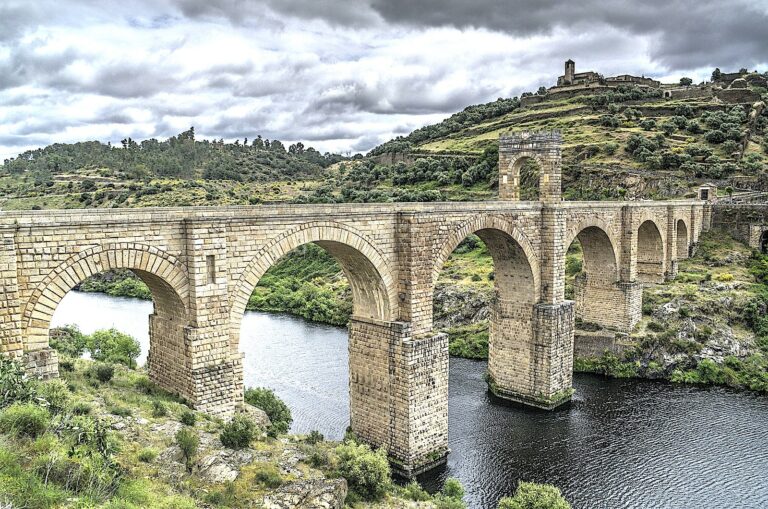
Rare indeed is the ancient-history buff who has never dreamed of walking the roads of the Roman Empire. But unlike many longings stoked by interest in the distant past, that one can actually be fulfilled. As explained in the video above from Youtube channel Intrigued Mind, a fair few Roman roads remain in existence today, albeit only in sections, and mostly ruined ones at that. “Like other incredible monuments that still stand, as if to prove the power of the Roman Empire, there are a surprising number of Roman roads still in use today,” some converted into modern highways, but “many still paved with their original cobblestones.”
Of all such roads, none has more importance than the Via Appia, or Appian Way, whose construction began back in 312 BC. “The first long road outside of the greater city of Rome that wasn’t Etruscan,” it “allowed Romans to make their first major conquest” and begin their mighty empire’s “conquest of the world.” Without understanding the storied Via Appia, none of us can truly understand Roman history. But to grasp […]
|
|
|
|
|
The holidays can be hard, starting in October when the red and green decorations begin muscling in on the Halloween aisle.
Most Wonderful Time of the Year, you say? Oh, go stuff a stocking in it, Andy Williams!
The majority of us have more in common with the Grinch, Scrooge, and/or the Little Match Girl.
Still, it’s hard to resist the preternaturally mature 11-year-old Björk reading the nativity story in her native Icelandic, backed by unsmiling older kids from the Children’s Music School in Reykjavík.
Particularly since I myself do not speak Icelandic.
The fact that it’s in black and white is merely the blueberries on the spiced cabbage.
It speaks highly of the Icelandic approach to education that a principal’s office regular who reportedly chafed at her school’s “retro, constant Beethoven and Bach bollocks” curriculum was awarded the plum part in this 1976 Christmas special for the National Broadcasting Service.
It would also appear that little Björk, the fiercely self-reliant latchkey kid of a Bohemian single mother, was far and away the most charismatic kid enrolled in the Barnamúsikskóli.
(Less than a year later […]
|
|
|
|
|
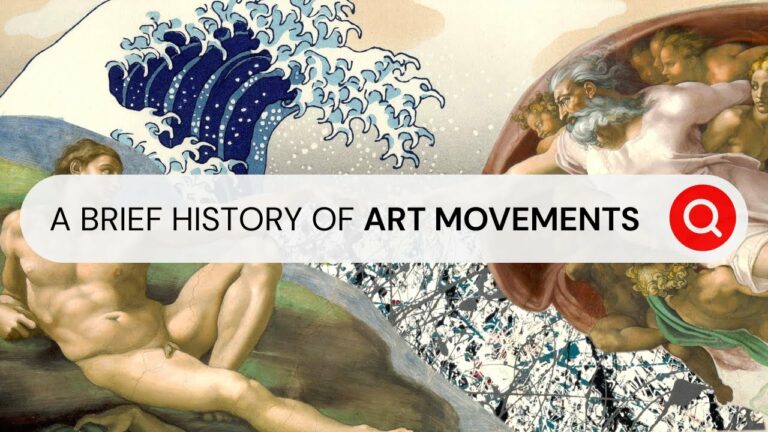
Among the ranks of Open Culture readers, there are no doubt more than a few art-history majors. Perhaps you’ve studied the subject yourself, at one time or another — and perhaps you find that by now, you remember only certain scattered artists, works, and movements. What you need is a grand narrative, a broad story of art itself, and that’s just what you’ll find in the video above from Youtube channel Behind the Masterpiece. True to its title, “A Brief History of Art Movements” briefly describes, and provides a host of visual examples to illustrate, 22 phases in the development of art in just 23 minutes.
The journey begins in prehistory, with cave paintings from 40,000 years ago apparently created “as a way to share information.” Then comes the art of antiquity, when increasingly literate societies “started creating the earliest naturalistic images of human beings,” not least to enforce “religious and political ideologies.” The religiosity intensified in the Middle Ages, when artists “depicted clear, iconic images of religious figures” — as well as their oddly […]
|
|
|
|
|
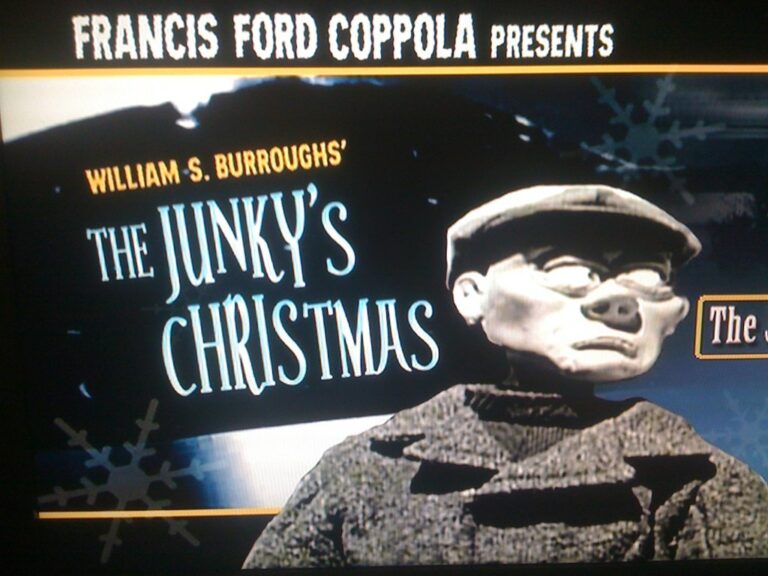
Back in 1993, the Beat writer William S. Burroughs wrote and narrated a 21 minute claymation Christmas film. And, as you can well imagine, it’s not your normal happy Christmas flick. Nope, this film – The Junky’s Christmas – is all about Danny the Carwiper, a junkie, who spends Christmas Day trying to score a fix. Eventually he finds the Christmas spirit when he shares some morphine with a young man suffering from kidney stones, giving him the “immaculate fix.” There you have it. And, oh, did we mention that the film was produced by Francis Ford Coppola?
Related Content:
William S. Burroughs’ Scathing “Thanksgiving Prayer,” Shot by Gus Van Sant
Andy Warhol’s Christmas Art
Dementia 13: The Film That Took Francis Ford Coppola From Schlockster to Auteur
|
|
|
|
|
Attention young artists: don’t let your day job kill your dream.
In the mid-70s, David Godlis kept body and soul together by working as an assistant in a photography studio, but his ambition was to join the ranks of his street photographer idols – Robert Frank, Diane Arbus, Garry Winogrand, and Lee Friedlander, to name a few.
As Godlis told Sergio Burns of Street Photography, “the 60’s and 70’s were great for photographers:”
The 35mm camera was kind of like the new affordable technology of the day. Like having an iPhone you couldn’t talk on. Cool to look at, fun to use. Photography was only just beginning to be considered an art form. Which left plenty of room for inventing yourself. The movie Blow-Up showed off the kind of cool lifestyle that could be had. Photography seemed both adventurous and artistic. There were obviously a million career paths for photographers back then. From the sublime to the ridiculous. But plenty of opportunities to experiment and find your own way.
Still, it’s a tough proposition, […]
|
|
|
|