|
Digest of new articles at openculture.com, your source for the best cultural and educational resources on the web ͏ ͏ ͏ ͏ ͏ ͏ ͏ ͏ ͏ ͏ ͏ ͏ ͏ ͏ ͏ ͏ ͏ ͏ ͏ ͏ ͏ ͏ ͏ ͏ ͏ ͏ ͏ ͏ ͏ ͏ ͏ ͏ ͏ ͏ ͏ ͏ ͏ ͏ ͏ ͏ ͏ ͏ ͏ ͏ ͏ ͏ ͏ ͏ ͏ ͏ ͏ ͏ ͏ ͏ ͏ ͏ ͏ ͏ ͏ ͏ ͏ ͏ ͏ ͏ ͏ ͏ ͏ ͏ ͏ ͏ ͏ ͏ ͏ ͏ ͏ ͏ ͏ ͏ ͏ ͏ ͏ ͏ ͏ ͏ ͏ ͏ ͏
|
|
The popularity of graphic novels (and more than a few extremely lucrative superhero movie franchises) have conferred respectability on comics.
Handsome reissues of such stunning early works as Winsor McKay’s Little Nemo in Slumberland, George Herriman’s Krazy Kat, and Frank King’s Walt and Skeezix suggest that readers' appetite for vintage comics extends deeper and further back than mere nostalgia for the Sunday funnies of their youth.
Artist Andy Bleck’s Andy’s Early Comics Archive is an excellent resource for those seeking to discover early examples of the form that have yet to be reissued in a collected edition. (Fair warning: reflecting the attitudes of the time, the collection does inevitably contains some racist imagery. Such imagery won't be on display in this post.)
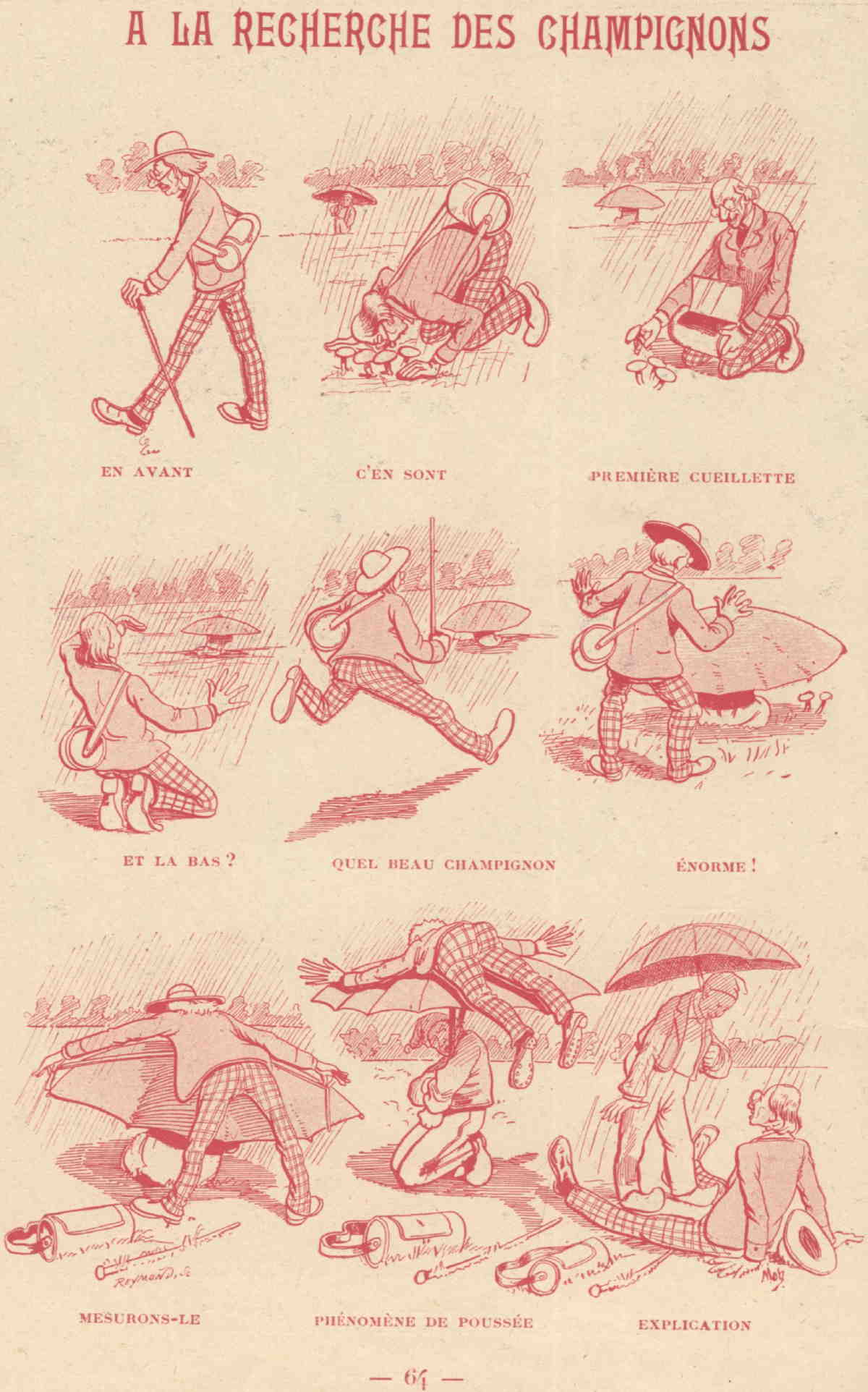
Bleck, the creator of Konky Kru, a beautifully simple, wordless series, as well as several self-published mini comics, takes a historian’s interest in his subject, beginning with the William Hogarth engravings A Harlot’s Progress from [...]
|
|
|
Michelangelo didn't want to paint the ceiling of the Sistine Chapel. Having considered himself more of a sculptor than a painter — and, given his skill with stone, not without cause — he felt that taking on such an ambitious project could bring him to ruin. But one does not simply turn down a… |
Michelangelo didn't want to paint the ceiling of the Sistine Chapel. Having considered himself more of a sculptor than a painter — and, given his skill with stone, not without cause — he felt that taking on such an ambitious project could bring him to ruin. But one does not simply turn down a job offer from the Vatican, and especially not when one is among the most respected artists in sixteenth-century Italy. In the event, Michelangelo proved equal to the task, or rather, much more than equal: he completed his ceiling frescoes in 1512 for Pope Julius II, and 23 years later was commissioned again by Pope Paul III to paint the Last Judgment over the altar.
Long before Michelangelo touched a brush to the Sistine Chapel's ceiling, a team of painters including Sandro Botticelli, Pietro Perugino, and Pinturicchio had already adorned the building's interior with frescoes depicting the lives of Moses and Jesus Christ.
Taken together, the Sistine Chapel has long been regarded as one of the greatest achievements [...]
|
|
|
From the official Iron Maiden YouTube channel comes the two-part documentary The History of Iron Maiden. Released in 2004, Part 1: The Early Days (above) moves from the band's beginnings in London's East End in 1975, to the Piece of Mind album and tour in 1983. Part 2 (below) was later included on… |
|
|
|
Atlas Obscura · Frieda Hempel's "Evviva la Francia!"
If you were listening to recorded music around the turn of the twentieth century, you listened to it on cylinders. Not that anyone alive today was listening to recorded music back then, and… |
If you were listening to recorded music around the turn of the twentieth century, you listened to it on cylinders. Not that anyone alive today was listening to recorded music back then, and much of it has since been lost. Invented by Alexander Graham Bell (better known for his work on an even more popular device known as the telephone), the recording cylinder marked a considerable improvement on Thomas Edison's earlier tinfoil phonograph. Never hesitant to capitalize on an innovation — no matter who did the innovating — Edison then began marketing cylinders of his own, soon turning his own name into the format's [...]
|
|
|
"I shall only say that those ladies who study the rules of the art, secure a never-ceasing source of pleasure to themselves, which is always at their own command.... while those who pursue the practical part alone, can make no progress whenever their teacher or copy is withdrawn."
The history of color theory is a story… |
"I shall only say that those ladies who study the rules of the art, secure a never-ceasing source of pleasure to themselves, which is always at their own command.... while those who pursue the practical part alone, can make no progress whenever their teacher or copy is withdrawn."
The history of color theory is a story we tell based on available facts. Like many histories, it has mostly been a story by and about men. Isaac Newton's experiments with optics inspired the broader inquiry. Johann Wolfgang von Goethe's 1810 Theory of Colors set a standard -- visually and philosophically -- for books about color in the following centuries. A series of lesser-known names surround them, to the founders of color monopolist Pantone and beyond.
Maybe the story would be different if Mary Gartside's work had been more readily available to her contemporaries and successors. Gartside, an English watercolor teacher and painter of botanical subjects, published An Essay on Light and Shade in 1805, and an expanded edition, An Essay on a New Theory [...]
|
|
|
|