|
Digest of new articles at openculture.com, your source for the best cultural and educational resources on the web ͏ ͏ ͏ ͏ ͏ ͏ ͏ ͏ ͏ ͏ ͏ ͏ ͏ ͏ ͏ ͏ ͏ ͏ ͏ ͏ ͏ ͏ ͏ ͏ ͏ ͏ ͏ ͏ ͏ ͏ ͏ ͏ ͏ ͏ ͏ ͏ ͏ ͏ ͏ ͏ ͏ ͏ ͏ ͏ ͏ ͏ ͏ ͏ ͏ ͏ ͏ ͏ ͏ ͏ ͏ ͏ ͏ ͏ ͏ ͏ ͏ ͏ ͏ ͏ ͏ ͏ ͏ ͏ ͏ ͏ ͏ ͏ ͏ ͏ ͏ ͏ ͏ ͏ ͏ ͏ ͏ ͏ ͏ ͏ ͏ ͏ ͏
|
|
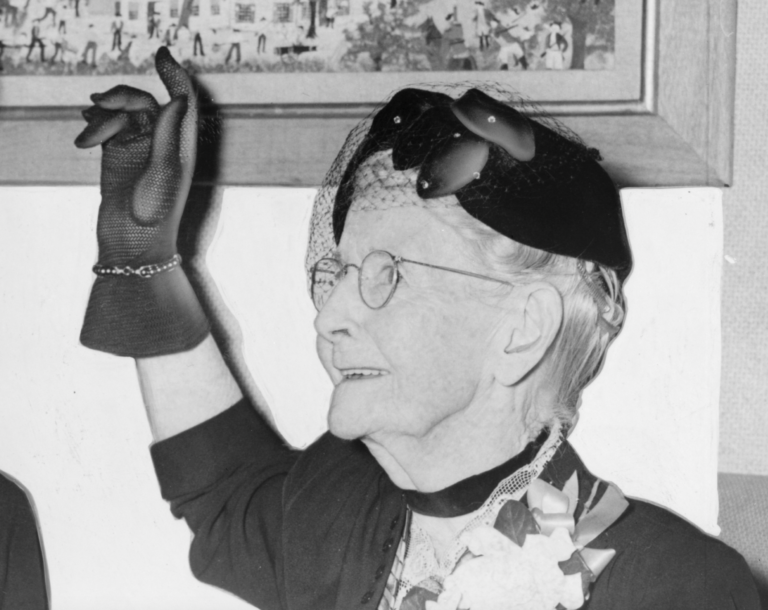
As an artistic child growing up on a farm in the 1860s and early 1870s, Anna Mary Robertson (1860-1961) used ground ochre, grass, and berry juice in place of traditional art supplies. She was so little, she referred to her efforts as “lambscapes.” Her father, for whom painting was also a hobby, kept her and her brothers supplied with paper:
He liked to see us draw pictures, it was a penny a sheet and lasted longer than candy.
She left home and school at 12, serving as a full-time, live-in housekeeper for the next 15 years. She so admired the Currier & Ives prints hanging in one of the homes where she worked that her employers set her up with wax crayons and chalk, but her duties left little time for leisure activities.
Free time was in even shorter supply after she married and gave birth to ten children – five of whom survived past infancy. Her creative impulse was confined to decorating household items, quilting, and embroidering gifts for family and friends.
At the age of 77 (circa […]
|
|
|
|
|
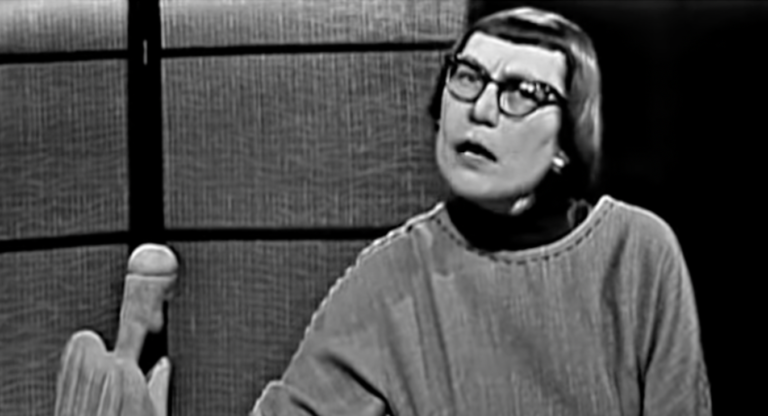
“Existentialism is both a philosophy and a mood,” says Hazel Barnes by way of opening the television series Self-Encounter: A Study in Existentialism. “As a mood, I think we could say that it is the mood of the twentieth century — or, at least, of those people in the twentieth century who are discontent with things as they are. It expresses the feeling that, somehow or other, all of those systems — whether they be social, psychological, or scientific — which have attempted to define and explain and determine man, have somehow missed the living individual person.”
Existentialism was on the rise in 1961, when Barnes spoke those words, and the subsequent six decades have arguably done little to assuage its discontent. By the time of Self-Encounter‘s broadcast in ’61, Barnes was already well-known in philosophical circles for her English translation of Jean-Paul Sartre’s Being and Nothingness. When she took on that job, with what she later described as “three years of badly taught high school French and one yearlong course in college, and a bare minimum […]
|
|
|
|
|
In light of its being recently banned in some settings, we discuss Art Spiegelman’s Maus (1980-91), which conveys his father’s account of living through the Holocaust. We also consider other war-related graphic novels like Marjane Satrapi’s Persepolis (2000) and George Takei’s They Called Us Enemy (2019).
Your host Mark Linsenmayer is joined by comics scholar Vi Burlew, comics blerd/acting coach Anthony LeBlanc, and comedian/graphic novelist Daniel Lobell.
Are comics particularly effective in changing hearts and minds when they display people’s hardships? Should kids be exposed to the horrors of the world in this way? What about the complexities of social justice and gender identity? We also touch on Gilbert Gottfried and the relationship between humor and tragedy, learning history vs. reading one person’s experience, the ages at which became political, and how comics may have aided that.
[…]
|
|
|
|
|
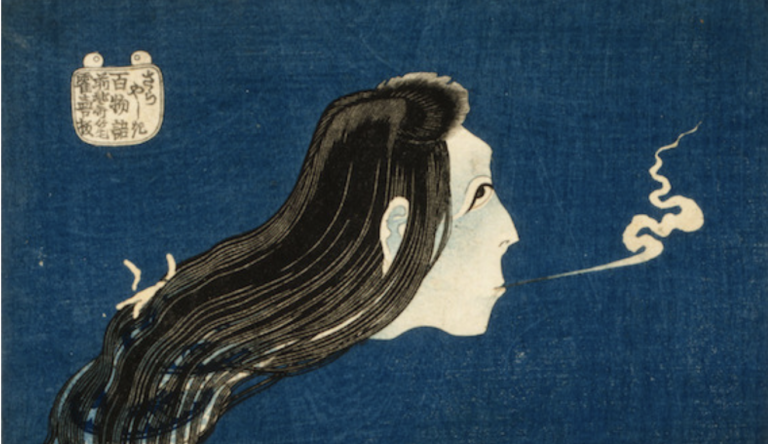
When Halloween comes around this year, consider playing a round of hyakumonogatari. You’ll need to assemble a hundred candles beforehand, but that’s the easy part; you and your friends will also need to know just as many ghost stories. In early nineteenth-century Japan, “participants would sit in a candlelit room and take turns telling frightening tales. After each one was shared, a candle would be extinguished until there was no light left, in the room. It was then that the yōkai [“strange apparitions”) would appear.” So says Youtuber Hochelaga (who’s previously covered the Biblical apocalypse and long-ago predictions of the future) in the video above, “The Ghosts of Hokusai.”
We all know the name of Katsushika Hokusai, the most widely renowned master of the traditional Japanese woodblock-print art called ukiyo-e. In a lifetime spanning the mid-eighteenth to the mid-nineteenth century, Hochelaga notes, Hokusai created around 30,000 unique pieces of art, including The Great Wave off Kanagawa, part of Thirty-Six Views of Mount Fuji.
But before executing that triumphant late series, […]
|
|
|
|
|
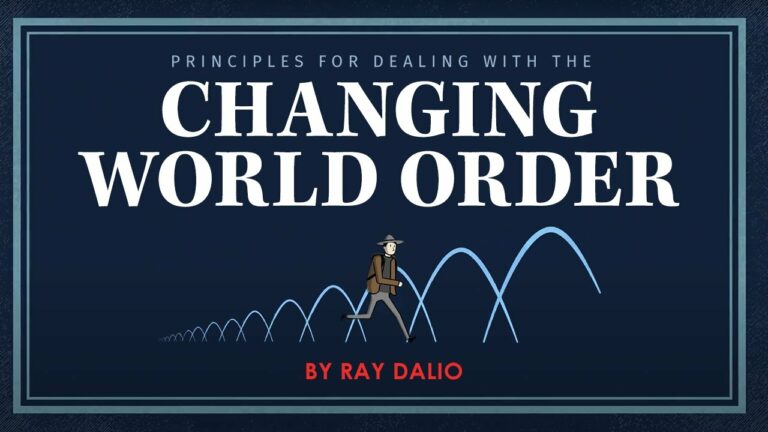
As we noted back in March, investor Ray Dalio has published his latest bestseller, Principles for Dealing with the Changing World: Why Nations Succeed and Fail. A history of the rise and fall of empires over the last 500 years, the book uses the past to contemplate the future, particularly the fate of the United States and China. Today, for Teacher Appreciation Week, Dalio has announced that he’s willing to give a copy of the book “to any high school or college educator who wants it—and to all of their students if they intend to have them read it.” He writes:
Since releasing my book and animated video [above], Principles for Dealing with the Changing World Order, many people have told me that both would be helpful for teaching history in schools and asked me if I would help make that happen. So, during this Teacher Appreciation Week I will give a copy of the book to any high school or college educator who wants it—and to all of their students if they intend to have them […]
|
|
|
|