|
Digest of new articles at openculture.com, your source for the best cultural and educational resources on the web ͏ ͏ ͏ ͏ ͏ ͏ ͏ ͏ ͏ ͏ ͏ ͏ ͏ ͏ ͏ ͏ ͏ ͏ ͏ ͏ ͏ ͏ ͏ ͏ ͏ ͏ ͏ ͏ ͏ ͏ ͏ ͏ ͏ ͏ ͏ ͏ ͏ ͏ ͏ ͏ ͏ ͏ ͏ ͏ ͏ ͏ ͏ ͏ ͏ ͏ ͏ ͏ ͏ ͏ ͏ ͏ ͏ ͏ ͏ ͏ ͏ ͏ ͏ ͏ ͏ ͏ ͏ ͏ ͏ ͏ ͏ ͏ ͏ ͏ ͏ ͏ ͏ ͏ ͏ ͏ ͏ ͏ ͏ ͏ ͏ ͏ ͏
|
|
Though it may not be for everyone, the job of President of the United States of America does have its perks. Take, for example, the ability to screen any film you like at the White House: here on Open Culture, we’ve previously featured lists of movies watched by Richard Nixon, Jimmy Carter, and Ronald Reagan. But for Carter in particular, music seems to have been even more important than cinema. So explains John Chuldenko, stepson of that former president’s son Jack, in the episode of The 1600 Sessions above. In it, he tells of his rediscovery of an institution created under Nixon, greatly expanded under Carter, and packed away under Reagan: the White House Record Library.
“The Library, begun by First Lady Pat Nixon, was curated by a volunteer commission of noted music journalists, scholars, and other experts,” says the White House Historical Association. When it came time to update it at the end of the nineteen-seventies, writes Washingtonian’s Rob Brunner, “the selection process would be headed by John Hammond, a hugely influential figure who had signed Bob Dylan, […]
|
|
|
|
|
We expect that histories of famous figures will prune their lives, sand down rough edges, rewrite and revise awkward and inconvenient facts. What we may not expect – at least in the U.S. – is that decades of a famous person’s life will be redacted from the record. This is essentially what happened, however, to the biography of Helen Keller even before her death in 1968. Perhaps the main offender remains playwright William Gibson’s 1957 The Miracle Worker, adapted from the 1903 autobiography she wrote at 23. Ostensibly about Keller, the story centers instead, beginning with its title, on her teacher, Anne Sullivan.
The play (and 1962 film with Anne Bancroft and Patty Duke reprising their stage parts), portrays Keller as a child, a role she was perpetually assigned by her critics throughout her adult life. She authored and published 14 books and dozens of essays during her 87 years, delivered hundreds of speeches, and maintained a friendship and correspondence with many important figures of the day. But in addition to the usual sexism, she had to contend with those who […]
|
|
|
|
|
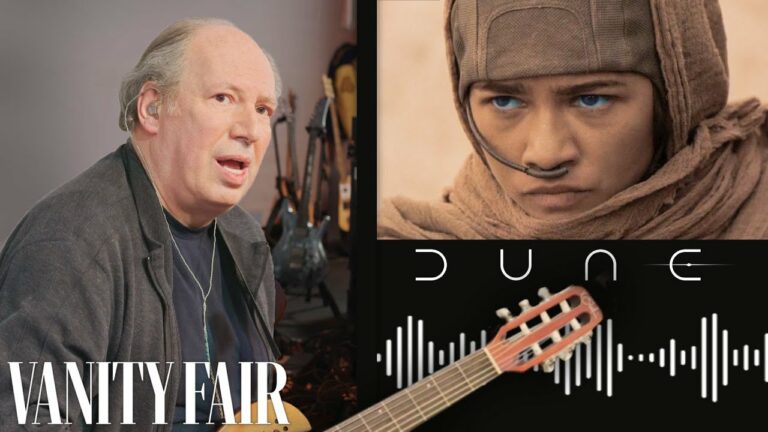
Many emotional moments were made at this year’s big awards shows. The Slap, amidst so many historic wins; poignant tributes and criminal omissions; former actor-turned-wartime-hero-president Volodymyr Zelensky’s speech, the return of Louis C.K…. Everybody’s got a lot to process. Pop culture can feel like a St. Vitus dance. One half-expects celebrities to start dropping from exhaustion. But then there’s Hans Zimmer’s Oscar acceptance speech, delivered in a white terry bathrobe, a miniature Oscar statuette in his pocket, a big goofy, 2 a.m. grin on his face. The man could not have looked more relaxed, winning his second Oscar 30 years after The Lion King.
Was he still in lockdown? No. On the night in question, Zimmer was in a hotel in Amsterdam, on tour with his band. “His category was among the eight that were handed out before the televised broadcast began,” Yahoo reports, “but he made sure his fans knew just how thrilled he was.” Zimmer posted a mini-acceptance speech to social media. “Who else has pajamas like this?” he joked to the other musicians gathered in […]
|
|
|
|
|
You can be forgiven for thinking the concept of “flow” was cooked up and popularized by yoga teachers. That word gets a lot of play when one is moving from Downward-Facing Dog on through Warrior One and Two.
Actually, flow – the state of “effortless effort” – was coined by Goethe, from the German “rausch”, a dizzying sort of ecstasy.
Friedrich Nietzsche and psychologist William James both considered the flow state in depth, but social theorist Mihaly Csikszentmihalyi, author of Creativity: Flow and the Psychology of Discovery and Invention, is the true giant in the field. Here’s one of his definitions of flow:
Being completely involved in an activity for its own sake. The ego falls away. Time flies. Every action, movement, and thought follows inevitably from the previous one, like playing jazz. Your whole being is involved, and you’re using your skills to the utmost.
Author Steven Kotler, Executive Director of the Flow Research Collective, not only seems to spend a lot of time thinking about flow, as a leading expert on […]
|
|
|
|
|
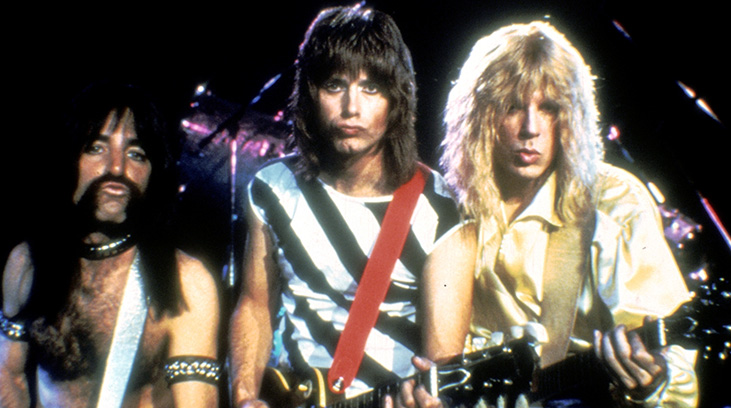
Fans of James Cameron’s Avatar are expressing astonishment that its long-expected sequel, Avatar: The Way of Water, will have taken thirteen years to get to theaters. That delay, of course, is nothing next to the 35 years that separated Blade Runner and Blade Runner 2049, or the 36 between Top Gun and Top Gun: Maverick, which comes out next month. But the recently announced sequel to This Is Spinal Tap tops them all: “Spinal Tap II will see Rob Reiner return as both film-maker on and off the screen along with Michael McKean, Harry Shearer, and Christopher Guest,” writes the Guardian‘s Benjamin Lee. “The film will be released in 2024 on the 1984 original’s 40th anniversary.”
Critics praised This Is Spinal Tap back in 1984, but it took time to become a revered classic of the improvised-mockumentary genre. In fact that genre hadn’t exist at all, which resulted in some viewers not quite getting the joke. “When the film first came out, we showed it in Dallas and people came up to me and said, why would you make a movie about a band nobody’s […]
|
|
|
|