|
Digest of new articles at openculture.com, your source for the best cultural and educational resources on the web ͏ ͏ ͏ ͏ ͏ ͏ ͏ ͏ ͏ ͏ ͏ ͏ ͏ ͏ ͏ ͏ ͏ ͏ ͏ ͏ ͏ ͏ ͏ ͏ ͏ ͏ ͏ ͏ ͏ ͏ ͏ ͏ ͏ ͏ ͏ ͏ ͏ ͏ ͏ ͏ ͏ ͏ ͏ ͏ ͏ ͏ ͏ ͏ ͏ ͏ ͏ ͏ ͏ ͏ ͏ ͏ ͏ ͏ ͏ ͏ ͏ ͏ ͏ ͏ ͏ ͏ ͏ ͏ ͏ ͏ ͏ ͏ ͏ ͏ ͏ ͏ ͏ ͏ ͏ ͏ ͏ ͏ ͏ ͏ ͏ ͏ ͏
|
|
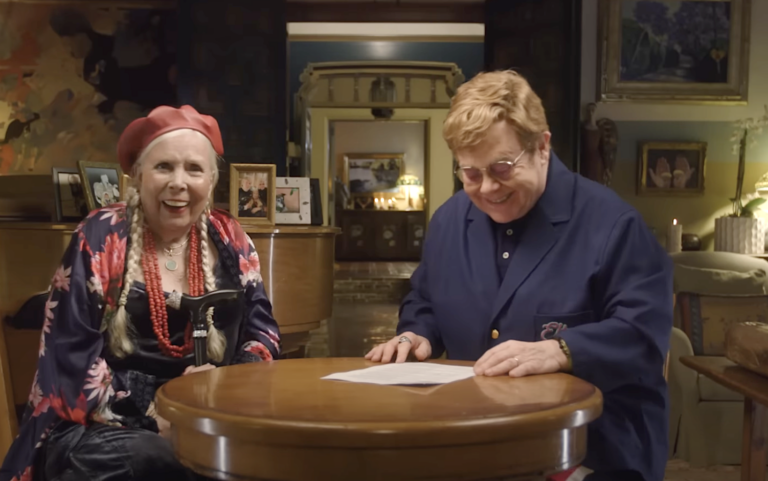
When Joni Mitchell heard the great cabaret artist Mabel Mercer in concert, she was so struck by the older woman’s rendition of “Both Sides Now,” the enduring ballad Mitchell wrote at the tender age of 23, that she went backstage to show her appreciation:
… but I didn’t tell her that I was the author. So, I said, y’know, I’ve heard various recordings of that song, but you bring something to it, y’know, that other people haven’t been able to do. You know, it’s not a song for an ingenue. You have to bring some age to it.
Well, she took offense. I insulted her. I called her an old lady, as far as she was concerned. So I got out of there in a hell of a hurry!
But I think I finally became an old lady myself and could sing the song right.
This is just one of many candid treats to be found in Mitchell’s interview with Elton John, for his Apple Music 1 show Rocket […]
|
|
|
|
|
Big Think uploaded the video on how to argue above at the end of last month, just in time for the United States midterm election. Where politics — or rather, politically inflected conflicts — have become more or less another national sport, everyone is always looking for an edge. But the expert who stars in the video, Harvard’s International Negotiation program head and Negotiating the Nonnegotiable author Daniel Shapiro, has an unusually capacious notion of what it means to win an argument. Our goal, as he conceives of it, is to have “more effective conversations,” and this entails understanding three keys to having those conversations: identity, appreciation, and affiliation.
“The moment your identity gets hooked in these conflicts,” Shapiro says, “all of a sudden your emotions become a hundred times more powerful” — and the debate at hand becomes a hundred times less tractable. You therefore must “know who you are and what you stand for,” the “values and beliefs” driving you to argue for your particular position.
Ideally, you’ll also put some effort toward finding out the same things about […]
|
|
|
|
|
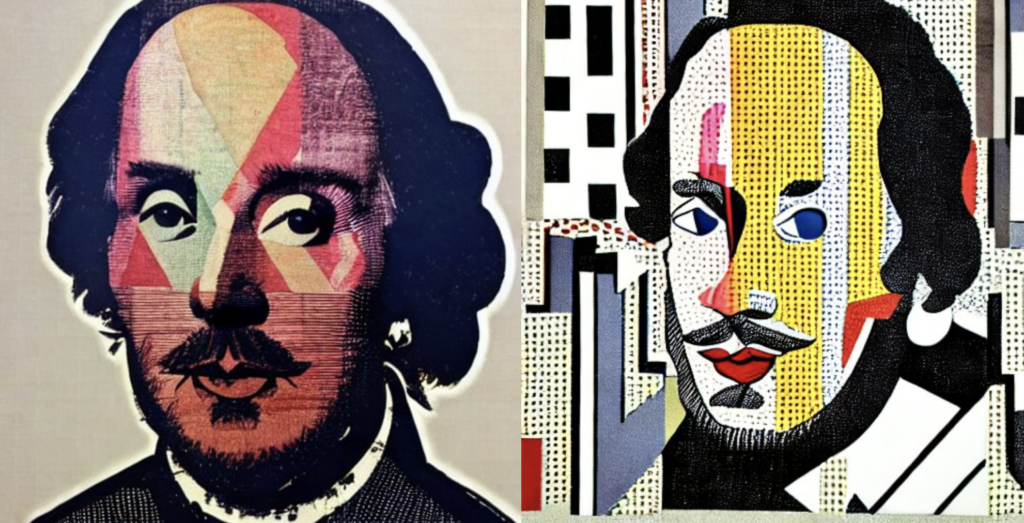
William Shakespeare’s plays have endured not just because of their inherent dramatic and linguistic qualities, but also because each era has found its own way of envisioning and re-envisioning them. The technology involved in stage productions has changed over the past four centuries, of course, but so has the technology involved in art itself. A few years ago, we featured here on Open Culture an archive of 3,000 illustrations of Shakespeare’s complete works going back to the mid-nineteenth century. That site was the PhD project of Cardiff University’s Michael Goodman, who has recently completed another digital Shakespeare project, this time using artificial intelligence: Paint the Picture to the Word.
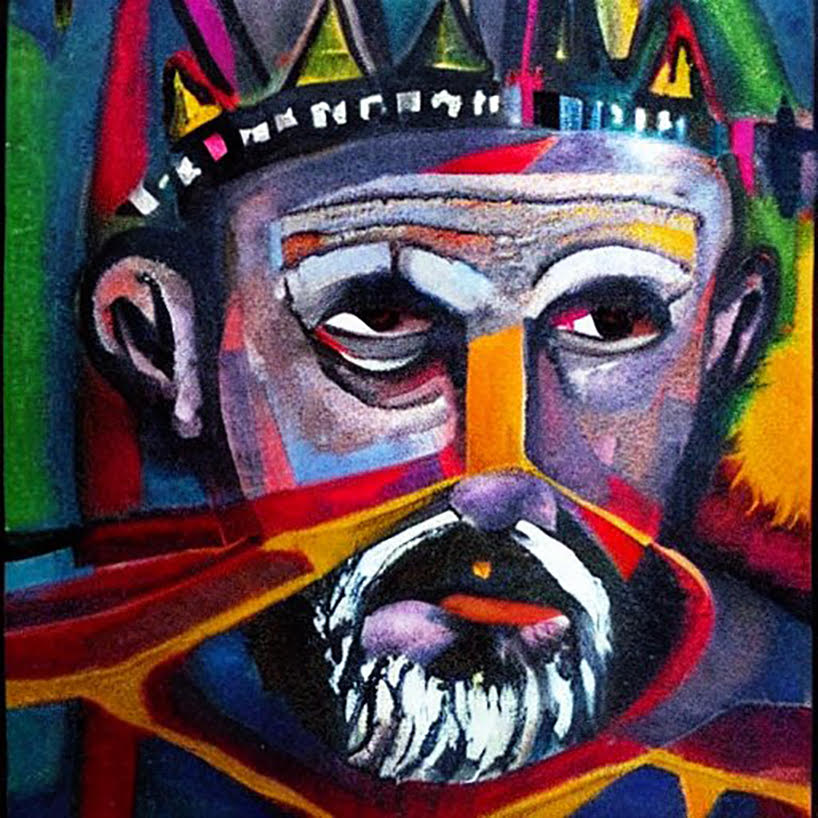
“Every image collected here has been generated by Stable Diffusion, a powerful text-to-image AI,” writes Goodman on this new project’s About page. “To create an image using this technology a user simply types a description of what they want to see into a text box and […]
|
|
|
|
|
There’s a passage from Kurt Vonnegut’s Breakfast of Champions that crosses our desk a lot at this time of year. It’s the one in which he declares Armistice Day, which coincidentally falls on his birthday, sacred:
What else is sacred? Oh, Romeo and Juliet, for instance.
And all music is.
Here, here!
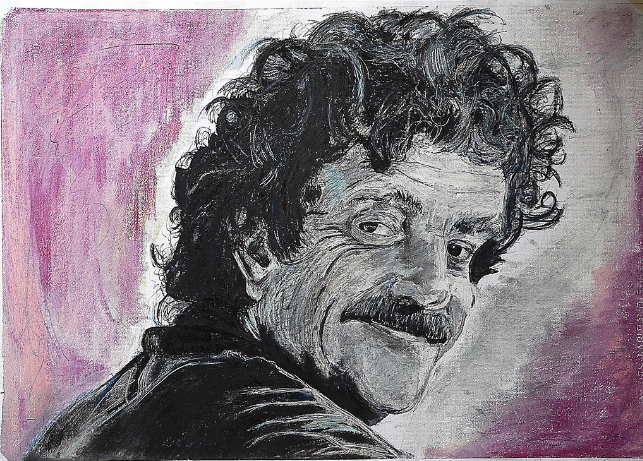
Hopefully Shakespeare won’t take umbrage if we skip over his doomed teenaged lovers to celebrate Kurt Vonnegut’s 11/11 Centennial with songs inspired by his work.
Take the Kilgore Trout Experience’s tribute to Sirens of Titan, above.
The driving force behind the KTE Tim Langsford, a drummer who mentors Autistic students at the University of Plymouth, was looking for ways to help his “foggy mind remember the key concepts, characters, and memorable lines that occur in each” of Vonnegut’s 14 books.
The solution? Community and accountability to an ongoing assignment. Langsford launched the Plymouth Vonnegut Collective in 2019 with a typewritten manifesto, inviting interested parties to read (or re-read) the novels in publication order, then gather for monthly discussions.
His loftier goal […]
|
|
|
|
|
The popularity of the phrase “style over substance” has encouraged us to assume an inherent and absolute divide between those concepts. But as the most ambitious works of man remind us, style pushed to its limits its substance, and vice versa. This truth has been expressed in various specialized ways: architect Louis Sullivan’s maxim “form follows function,” for example, which went on to attain something like scriptural status among modernists of the mid-twentieth century. It was in that same era that aerospace engineering produced one of the most glorious proofs of the unity of style and substance, form and function, mechanics and aesthetics: Concorde, the supersonic jetliner that flew between 1976 and 2003.
Nobody who flew on Concorde (colloquially but not officially “the” Concorde) has forgotten it. The sharpness and length of its ascent; the thrust of the after-burner, pressing you into your seat like the acceleration of a high-performance sports car; the visible curvature of the Earth and the deep purple of the sky; the impeccable food and drink service that turned a flight between New York and London into […]
|
|
|
|