|
Digest of new articles at openculture.com, your source for the best cultural and educational resources on the web ͏ ͏ ͏ ͏ ͏ ͏ ͏ ͏ ͏ ͏ ͏ ͏ ͏ ͏ ͏ ͏ ͏ ͏ ͏ ͏ ͏ ͏ ͏ ͏ ͏ ͏ ͏ ͏ ͏ ͏ ͏ ͏ ͏ ͏ ͏ ͏ ͏ ͏ ͏ ͏ ͏ ͏ ͏ ͏ ͏ ͏ ͏ ͏ ͏ ͏ ͏ ͏ ͏ ͏ ͏ ͏ ͏ ͏ ͏ ͏ ͏ ͏ ͏ ͏ ͏ ͏ ͏ ͏ ͏ ͏ ͏ ͏ ͏ ͏ ͏ ͏ ͏ ͏ ͏ ͏ ͏ ͏ ͏ ͏ ͏ ͏ ͏
|
|
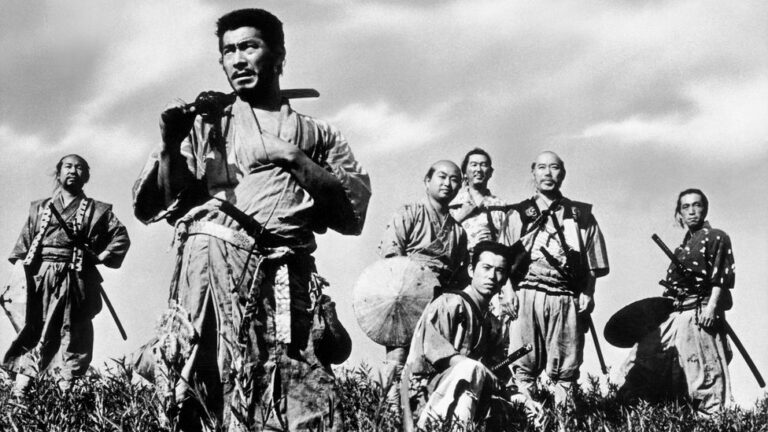
Last week, we featured the results of this decade’s Sight and Sound poll to determine the greatest films of all time. Nobody could possibly agree with every single one of its rankings, but then, some of the joy of cinephilia lies in disagreement — and even more of it in doing a few rankings of one’s own. Such is the project of video essayist Lewis Bond in the video just above from his Youtube channel The Cinema Cartography. It presents a list of the thirty greatest films, beginning at number thirty and ending at number one, weaving through a variety of time periods, cultures, and aesthetics.
We would expect no less from The Cinema Cartography, previously featured here on Open Culture for videos on subjects like cities and places in film, cinematography, and animation, as well as on specific auteurs like David Lynch, Quentin Tarantino, and Andrei Tarkovsky. None of Tarantino’s films make the cut for the top thirty here, though they do face formidable competition, including Lynch’s Mulholland Dr. and both Andrei Rublev and Mirror by […]
|
|
|
|
|
Here’s a vintage football [aka soccer] post in celebration of the World Cup…
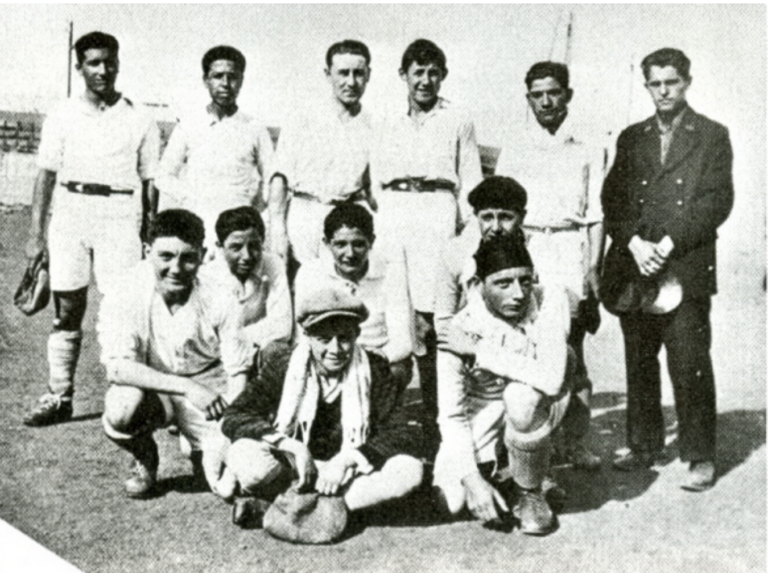
Albert Camus once said, “After many years in which the world has afforded me many experiences, what I know most surely in the long run about morality and obligations, I owe to football.”
He was referring to his college days when he played goalie for the Racing Universitaire d’Alger (RUA) junior team. Camus was a decent player, though not the great player that legend later made him out to be.
For Jim White, author of A Matter of Life and Death: A History of Football in 100 Quotations, soccer perhaps taught Camus a few things about selflessness, cooperation, bravery and resilience. That’s a sunny way of looking at things. But perhaps The Telegraph gets at the deeper, darker life lessons Camus took away from soccer:
[T]here is something appropriate about a philosopher like Camus stationing himself between the sticks [that is, in goal]. It is a lonely calling, an individual isolated within a team ethic, one who plays to different […]
|
|
|
|
|
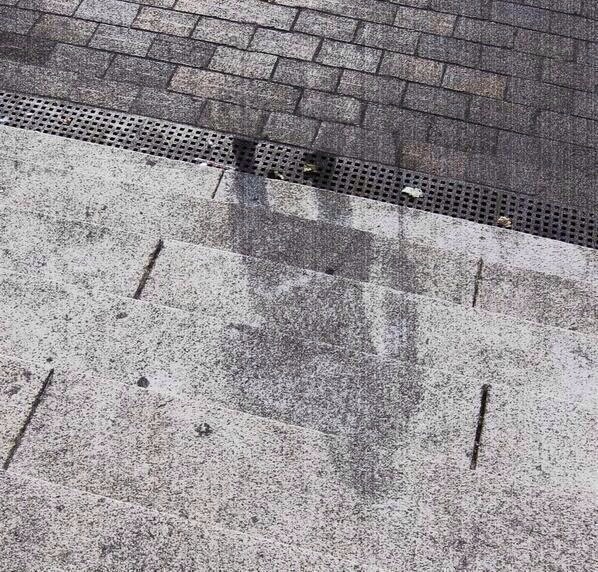
At 8:15 on the morning of August 6, 1945, a person sat on a flight of stone stairs leading up to the entrance of the Sumitomo Bank in Hiroshima, Japan. Seconds later, an atomic bomb detonated just 800 feet away, and the person sitting on the stairs was instantly incinerated. Gone like that. But not without leaving a mark.
As the Google Cultural Institute explains it, “Receiving the rays directly, the victim must have died on the spot from massive burns. The surface of the surrounding stone steps was turned whitish by the intense heat rays. The place where the person was sitting became dark like a shadow.”
That shadow lasted for years, until eventually rain and wind began to erode it. When a new Sumitomo Bank was built, the steps were relocated to the Hiroshima Peace Memorial Museum, where they’re now preserved. You can see the “Human Shadow Etched in Stone” above.
Related Content:
[…]
|
|
|
|
|
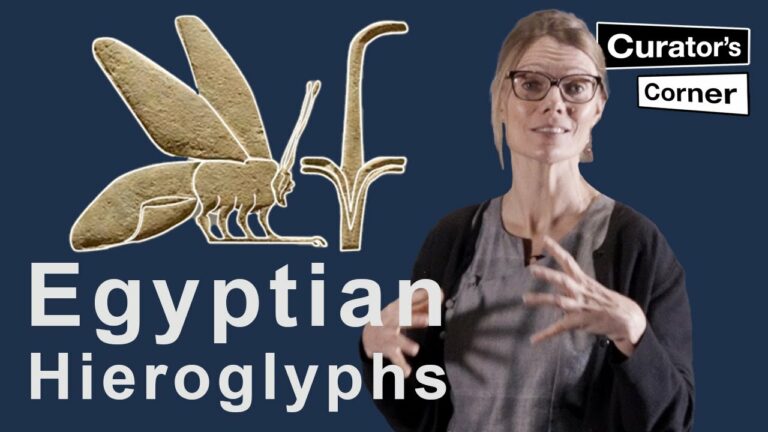
If you want to learn to read hieroglyphics, you must first learn that (with apologies to the artists behind “You Never Knew”) there are no such things as hieroglyphics. There are only hieroglyphs, as the British Museum’s curator of ancient writing Ilona Regulski explains in the video just above, and hieroglyphic is the adjectival form. You may remember Regulski from another British Museum video we’ve featured here on Open Culture, about what the Rosetta Stone actually says — which she knows because she can actually read it, not just in the ancient Greek language, but in the ancient Egyptian one. Here, she explains how to interpret its once utterly mysterious symbols.
It would take an incurious viewer indeed not to be captivated by their first glimpse of hieroglyphs, which possess a kind of detail and beauty little seen in other writing systems. Or at least they do when carved into stone, Regulski explains; in more everyday contexts, the impressive arrangements of owls, ankhs, baskets, eyes, and bread loaves took on a more simplified, abstracted form.
Either way, it makes use […]
|
|
|
|
|
As a white Midwestern child of the ‘70s, I received two messages loud and clear: disco was a breathtakingly glamorous, sexy urban scene, and “disco sucks.”
Culturally, the latter prevailed.
It was the opinion voiced most loudly by the popular boys.
Dissenters pushed back at their own peril.
I didn’t know what YMCA was about, and I’m not convinced the ski jacketed, puka-necklaced alpha males at my school did either.
(My father, who sang along joyfully whenever it came on the car radio, definitely did.)
Disco’s been dead for a long time now.
In the four plus decades since disgruntled Chicago radio DJ Steve Dahl commandeered a baseball stadium for a Disco Demolition Night where fans tossed around homophobic and racist epithets while destroying records, there’s been notable social progress.
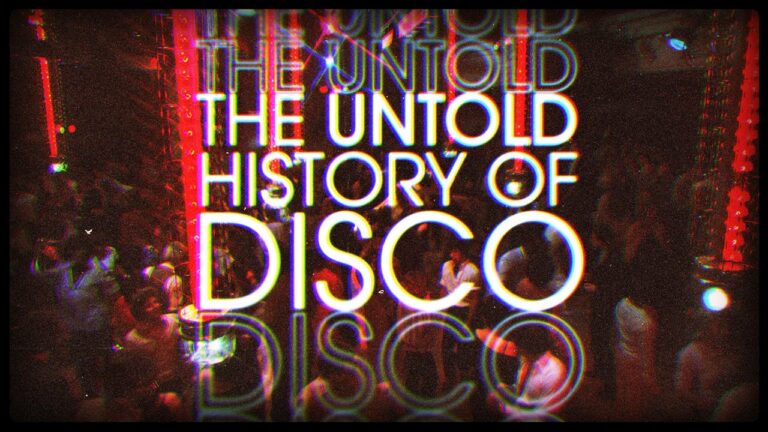
This progress is the lens that makes Noah Lefevre’s Polyphonic video essay The Untold History of Disco, and other investigations into the racial and sexual underpinnings of disco possible.
I certainly never heard of Stonewall as a kid, but many contemporary viewers, coming of age in a country that is, on the […]
|
|
|
|