|
Digest of new articles at openculture.com, your source for the best cultural and educational resources on the web ͏ ͏ ͏ ͏ ͏ ͏ ͏ ͏ ͏ ͏ ͏ ͏ ͏ ͏ ͏ ͏ ͏ ͏ ͏ ͏ ͏ ͏ ͏ ͏ ͏ ͏ ͏ ͏ ͏ ͏ ͏ ͏ ͏ ͏ ͏ ͏ ͏ ͏ ͏ ͏ ͏ ͏ ͏ ͏ ͏ ͏ ͏ ͏ ͏ ͏ ͏ ͏ ͏ ͏ ͏ ͏ ͏ ͏ ͏ ͏ ͏ ͏ ͏ ͏ ͏ ͏ ͏ ͏ ͏ ͏ ͏ ͏ ͏ ͏ ͏ ͏ ͏ ͏ ͏ ͏ ͏ ͏ ͏ ͏ ͏ ͏ ͏
|
|
Christmas cards aren’t just an anachronism.
They’re almost an endangered species, the victim of the Internet, postal rate increases, and the jettisoning of any time consuming tradition whose execution has been found to bring the opposite of joy.
Above, Victoria and Albert Museum curators Alice Power and Sarah Beattie take us on a backwards trip to a time when the exchange of Christmas cards was a source of true social merriment.
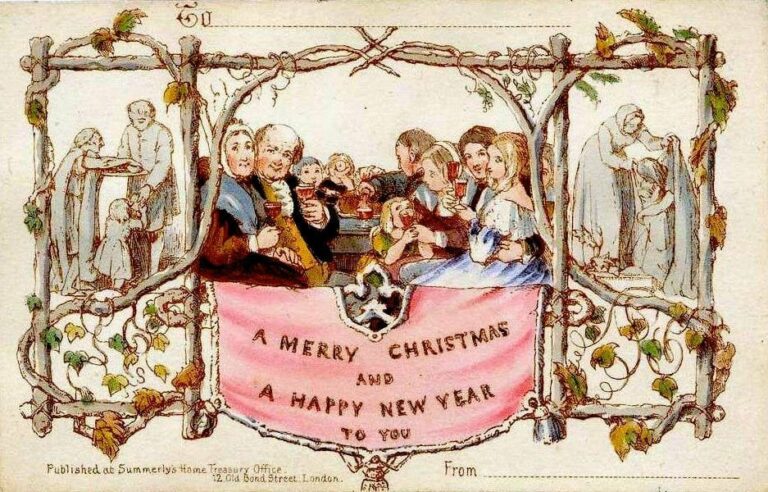
Christmas cards must hold a special place in both the V&A’s collections and heart, given that the museum’s founder, Henry Cole, inadvertently invented them in 1843.
As a well respected man about town, he received a great many more holiday letters than he had time or inclination to respond to, but neither did he wish to appear rude.
So he enlisted his friend, painter J.C. Horsley, to create a festive illustration with a built-in holiday greeting, leaving just enough space to personalize with a recipient’s name and perhaps, a handwritten line or two.
He then had enough postcard-sized reproductions […]
|
|
|
|
|
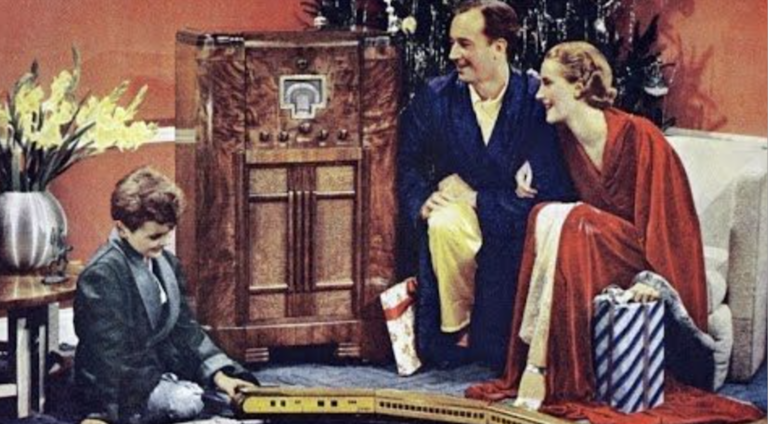
As Christmas approaches, we reach for our bookshelves and pull down Charles Dickens’ beloved tale of hardship, revelation, and a miser’s redemption in the holiday season. I speak, of course, of The Cricket on the Hearth, published in 1845 as the third of what would be Dickens’ five Christmas books. (The first, of which you may have heard, was A Christmas Carol.) From the very year of its publication, The Cricket on the Hearth found great success as a stage production, and it continued to be adapted even in the age of radio. The story was a century old by the time it aired on NBC, in the broadcast that opens the five-and-a-half-hour compilation of Christmas old-time radio above.
That video is just one of three uploaded in the past few weeks by the Youtube channel An Evening of Old-Time Radio. It collects a variety of Christmas-themed specials and broadcasts from shows like Lux Radio Theatre, The Coronet Little Show, and CBS Ceiling Unlimited (an aviation-promoting wartime effort created by Orson Welles).
The second volume features more than six […]
|
|
|
|
|
“Christmas time is here, by golly / Disapproval would be folly / Deck the halls with hunks of holly / Fill the cup and don’t say ‘when.'” So sings musical satirist Tom Lehrer on his hit 1959 album An Evening Wasted with Tom Lehrer — which was recorded in March of that year, not that it stopped him from taking an out-of-season jab at the holidays. “Kill the turkeys, ducks and chickens / Mix the punch, drag out the Dickens / Even though the prospect sickens / Brother, here we go again.” If it seems to you that he takes a dim view of Christmas, you should hear how he sings about everything else.
Now, more easily than ever, you can hear how Lehrer sings about everything else, by simply downloading his music from his web site. “All copyrights to lyrics or music written or composed by me have been relinquished, and therefore such songs are now in the public domain,” he writes. “All of my songs that have never been copyrighted, having been available for free for […]
|
|
|
|
|
If you’re looking for free outdoor activities to pull you from the digital realm, may we recommend mudlarking?
Lara Maiklem, author of Mudlarking: Lost and Found on the River Thames and A Field Guide to Larking, has developed a keen eye in the 20 years she’s been scavenging historic detritus from the foreshore of the Thames at low tide.
I never use a metal detector and I often walk little more than a mile in 5 hours, yet I can travel 2,000 years back in time through the objects that are revealed by the tide. Prehistoric flint tools, medieval pilgrim badges, Tudor shoes, Georgian wig curlers and Victorian pottery, ordinary objects left behind by the ordinary people who made London what it is today.
As she says in the short film above, her first find has become one of her most common – a clay pipe fragment.
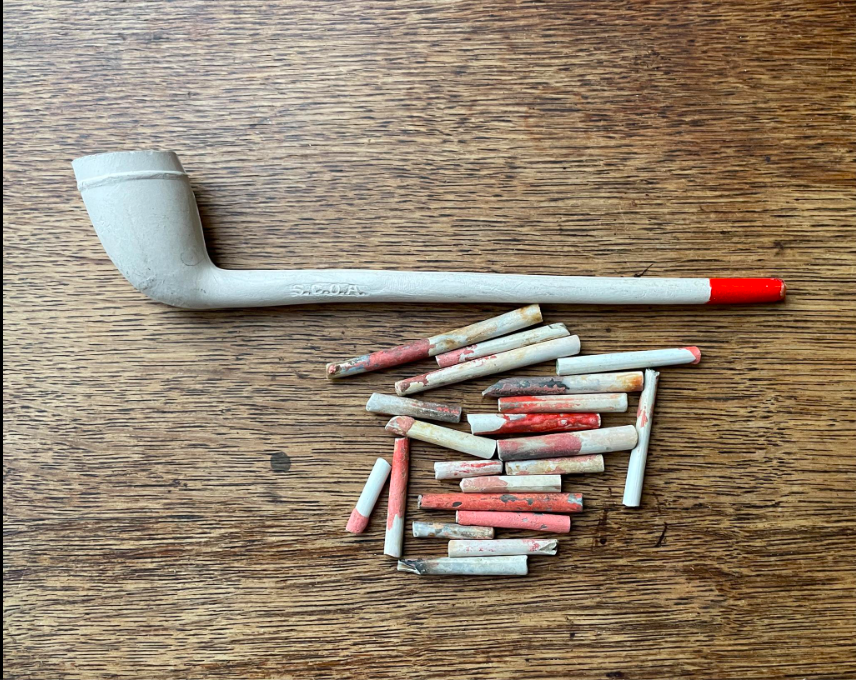
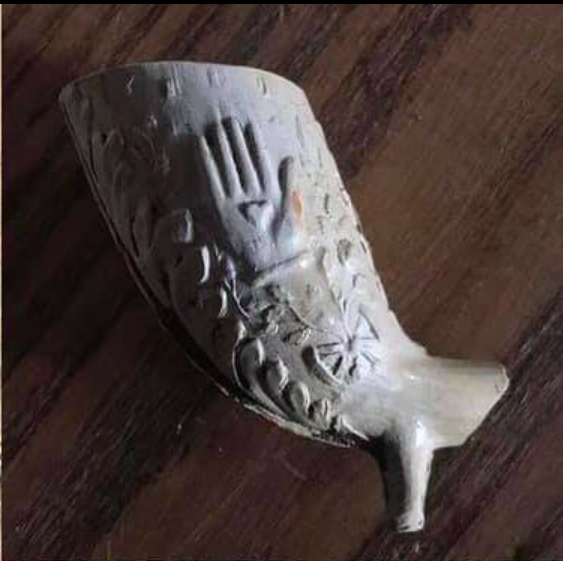
The term […]
|
|
|
|
|
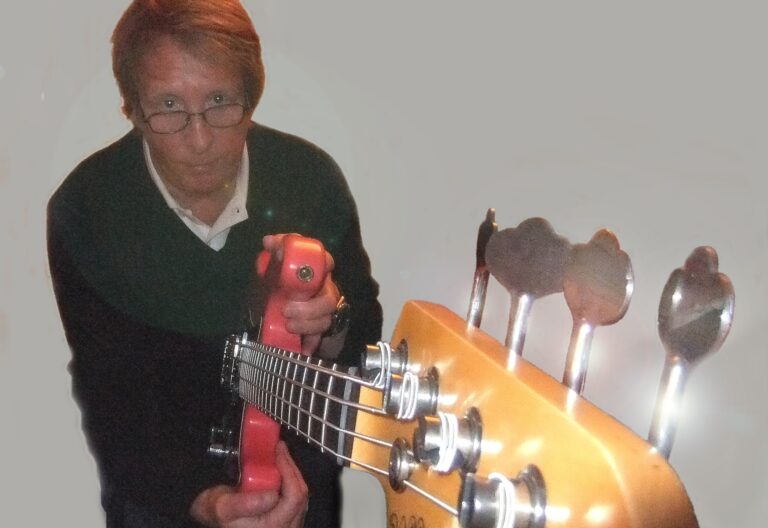
Bruce is best known as Elvis Costello’s bassist on about a dozen albums as The Attractions, but Bruce has been in bands since 1970 and has done numerous session gigs, most notably for Al Stewart’s early albums, plus The Pretenders, John Wesley Harding, Billy Bragg, and many more.
Your Nakedly Examined Music host Mark Linsenmayer interviews Bruce to discuss his work on “Blood Makes Noise” by Susanne Vega from 99.9 Degrees (1992), play clips from several of the most famous Attractions tunes (using when possible the 1978 Live at the El Mocambo album) plus “La La La La Loved You” by The Attractions (w/o Elvis) from Mad About the Wrong Boy (1980), the first half of the title track of Quiver’s Gone in the Morning (1972), and we conclude by listening to a cover of The Beatles “There’s a Place” by Spencer Brown and Bruce Thomas from Back to the Start (2018). Intro: “Radio Radio” by The Attractions feat. Fito Paez from Spanish Model (2021). For more about Bruce’s musical and literary projects, see brucethomas.co.uk.
Hear all of “Radio Radio” in […]
|
|
|
|