|
Digest of new articles at openculture.com, your source for the best cultural and educational resources on the web ͏ ͏ ͏ ͏ ͏ ͏ ͏ ͏ ͏ ͏ ͏ ͏ ͏ ͏ ͏ ͏ ͏ ͏ ͏ ͏ ͏ ͏ ͏ ͏ ͏ ͏ ͏ ͏ ͏ ͏ ͏ ͏ ͏ ͏ ͏ ͏ ͏ ͏ ͏ ͏ ͏ ͏ ͏ ͏ ͏ ͏ ͏ ͏ ͏ ͏ ͏ ͏ ͏ ͏ ͏ ͏ ͏ ͏ ͏ ͏ ͏ ͏ ͏ ͏ ͏ ͏ ͏ ͏ ͏ ͏ ͏ ͏ ͏ ͏ ͏ ͏ ͏ ͏ ͏ ͏ ͏ ͏ ͏ ͏ ͏ ͏ ͏
|
|
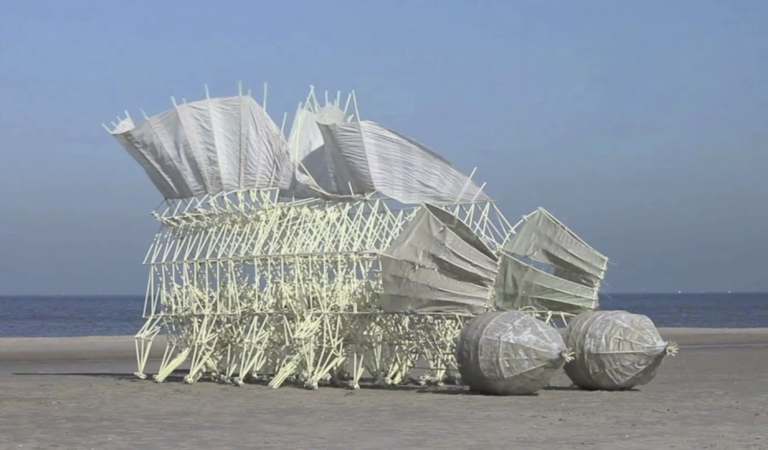
No cartoon Dutch landscape omits a windmill. With their wooden frames and large blades, those mechanical structures have been used in the Netherlands since at least the twelfth century, first to pump water out of potentially arable lowlands, and later for such uses as sawing wood and pounding grain. Today, of course, there exist much more efficient technologies for those jobs, but the windmill nevertheless remains a Dutch cultural icon. In the Netherlands the wind itself also blows as strong as ever, just waiting to be harnessed: if not by industry, then perhaps by art. Enter Theo Jansen, inventor of the strandbeest — Dutch for “beach beast,” an apt description of its nature.
Elaborately constructed with off-the-shelf materials like wood, PVC piping, and sheets of fabric, Jansen’s large and fantastical-looking strandbeesten walk through the sand as if moving under their own volition. In fact they’re wind-powered kinetic sculptures, articulated in such a way as to make their movements look wholly organic.
Created for more than thirty years now through Jansen’s intelligent design, the strandbeesten […]
|
|
|
|
|
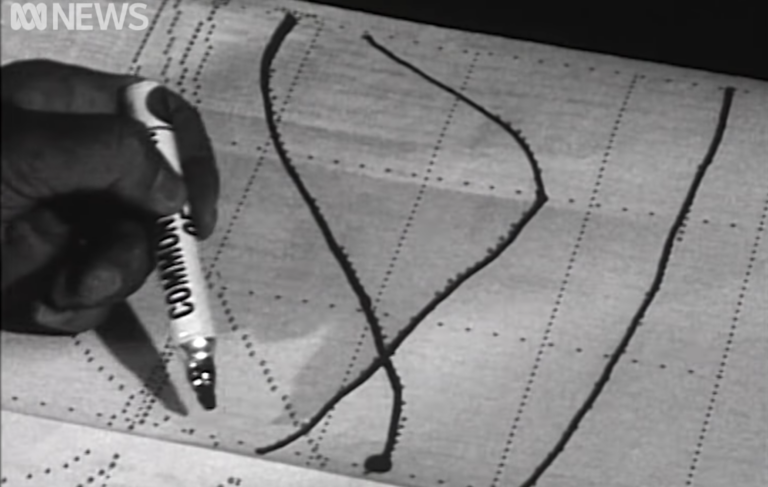
In 1704, Isaac Newton predicted the end of the world sometime around (or after, “but not before”) the year 2060, using a strange series of mathematical calculations. Rather than study what he called the “book of nature,” he took as his source the supposed prophecies of the book of Revelation. While such predictions have always been central to Christianity, it is startling for modern people to look back and see the famed astronomer and physicist indulging them. For Newton, however, as Matthew Stanley writes at Science, “laying the foundation of modern physics and astronomy was a bit of a sideshow. He believed that his truly important work was deciphering ancient scriptures and uncovering the nature of the Christian religion.”
Over three hundred years later, we still have plenty of religious doomsayers predicting the end of the world with Bible codes. But in recent times, their ranks have seemingly been joined by scientists whose only professed aim is interpreting data from climate research and sustainability estimates given population growth and dwindling resources. The scientific predictions do not draw on ancient […]
|
|
|
|
|
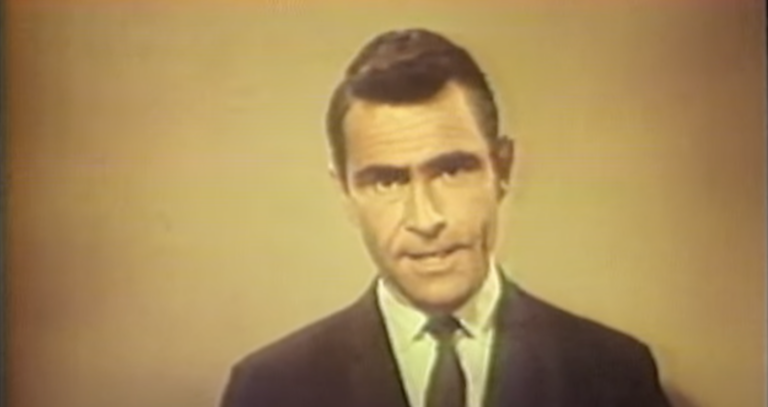
The Twilight Zone ran from 1959 to 1964, this concluding in a different culture than the one in which it had premiered. CBS broadcast the series’ first episode to an America that had neither heard of the Beatles nor elected John F. Kennedy to the presidency; its final episode went out to an America that had buried JFK and launched into a youth-oriented cultural revolution just months before. But Rod Serling, The Twilight Zone‘s creator and host, managed to retain a degree of the recognizability and authority he’d enjoyed in the era we call the “long 1950s” well into the sharply contrasting one we call “the 60s.”
At the end of the 1950s, American network television offered a steady, bland diet of sitcoms, Westerns, and cop shows. The Twilight Zone appeared as something new, an anthology series not so genre-bound — or rather, permitted to switch genre every episode — because Serling set its limits at those of the human imagination.
Ghost stories, post-apocalyptic scenarios, tales of alien invasion, superpower fantasies both comic and tragic: all of these narrative forms and more fell within […]
|
|
|
|
|
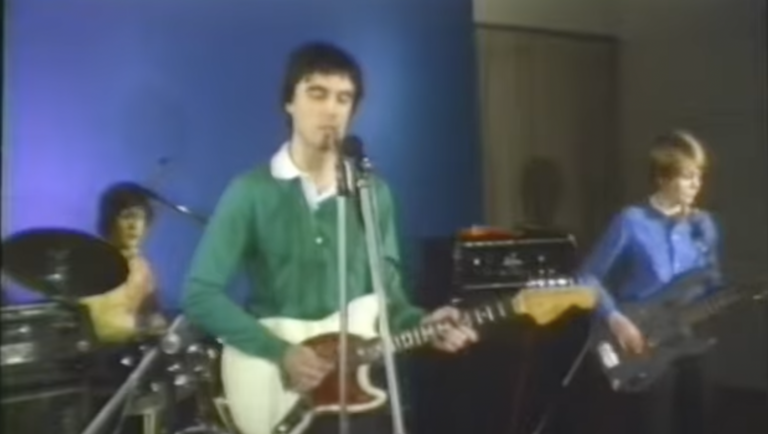
“This is a person who is profoundly uncomfortable addressing an audience and yet puts himself in that position,” David Byrne told Studio 360’s Kurt Anderson in 2019, as they watched some of the above footage of his 23-year-old self fronting a live Talking Heads’ performance back in 1976.
Everything was pretty new back in that Bicentennial year.
Talking Heads had formed the year before, when Byrne and drummer Chris Frantz, who’d been bandmates at the Rhode Island College of Design, moved to New York City with Frantz’s girlfriend, bassist Tina Weymouth.
The venue hosting this live performance, New York City’s legendary experimental art space, The Kitchen, was slightly less wet behind the ears, having opened its doors in 1971. (Some 30 years later, elder statesman Byrne was the guest of honor at its annual spring gala.)
However you define it – New Wave, no wave, post-punk art pop – the band’s sound was also fresh, though Byrne suggests, in the interview with Anderson, there was nothing new about his youthful cockiness:
[…]
|
|
|
|