|
Digest of new articles at openculture.com, your source for the best cultural and educational resources on the web ͏ ͏ ͏ ͏ ͏ ͏ ͏ ͏ ͏ ͏ ͏ ͏ ͏ ͏ ͏ ͏ ͏ ͏ ͏ ͏ ͏ ͏ ͏ ͏ ͏ ͏ ͏ ͏ ͏ ͏ ͏ ͏ ͏ ͏ ͏ ͏ ͏ ͏ ͏ ͏ ͏ ͏ ͏ ͏ ͏ ͏ ͏ ͏ ͏ ͏ ͏ ͏ ͏ ͏ ͏ ͏ ͏ ͏ ͏ ͏ ͏ ͏ ͏ ͏ ͏ ͏ ͏ ͏ ͏ ͏ ͏ ͏ ͏ ͏ ͏ ͏ ͏ ͏ ͏ ͏ ͏ ͏ ͏ ͏ ͏ ͏ ͏
All images here by David Romero
From the humblest home renovator to the mightiest auteur of skyscrapers, every architect shares the common experience of not building their projects. This is true even of Frank Lloyd Wright himself: in his lifetime he created 1,171 architectural works, 660 of which went unrealized. How those…
|
All images here by David Romero
From the humblest home renovator to the mightiest auteur of skyscrapers, every architect shares the common experience of not building their projects. This is true even of Frank Lloyd Wright himself: in his lifetime he created 1,171 architectural works, 660 of which went unrealized. How those never-built Wright designs would have fared in the physical realm has been a topic of great interest for the architect’s generation upon generation of fans.

But one lover of Wright’s work has gone well beyond speculation, creating faithful, photorealistic 3D renderings of these nonexistent structures, a few of which you can see at the site of the Frank Lloyd Wright Foundation.
Notably, the digital artist paying such painstaking homage to this most American of all architects hails from Spain. David Romero is the creator of the site Hooked on the Past, a showcase of his various architectural renderings.
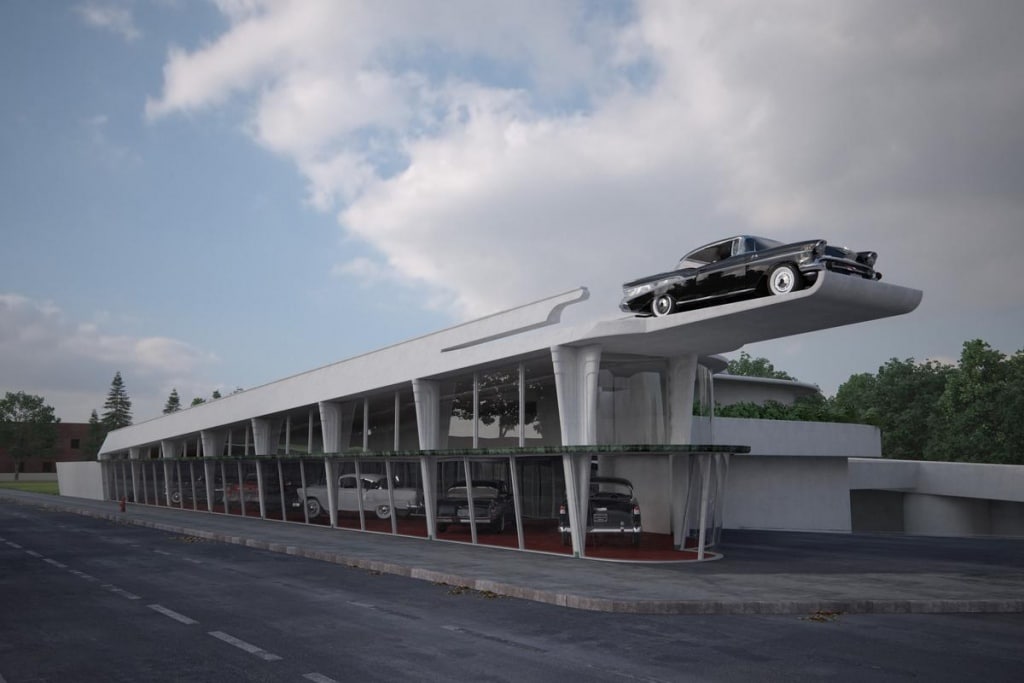
“The project started in 2018, when […]
|
|
|
Back in April 2020, animator Henning M. Lederer launched his “Books & Sleeves” project where he turns abstract geometric patterns, all featured on vintage book and record covers, into mesmerizing moving images. Above, you can watch the second installment of the project, which doesn’t disappoint.
In the past, we’ve also featured more…
|
|
|
|
It doesn’t take particularly long to be impressed by the paintings of Johannes Vermeer even today, three and a half centuries after he painted him. But an understanding of how he achieved the particular visual effects that still inspire appreciation around the world comes only after spending a bit more time with…
|
It doesn’t take particularly long to be impressed by the paintings of Johannes Vermeer even today, three and a half centuries after he painted him. But an understanding of how he achieved the particular visual effects that still inspire appreciation around the world comes only after spending a bit more time with his work, ideally in the company of a more knowledgeable viewer. Starting in the spring of this year, you’ll be able to spend time with nearly all of that work — no fewer than 25 of the 34 paintings unambiguously attributed to him — at Amsterdam’s Rijksmuseum. “With loans from all over the world,” says the Rijksmuseum’s site, “this promises to be the largest Vermeer exhibition ever.”
“The Rijksmuseum’s exhibition in 2023 will include masterpieces such as The Girl with a Pearl Earring (Mauritshuis, The Hague), The Geographer (Städel Museum, Frankfurt am Main), Lady Writing a Letter with her Maid (The National Gallery of Ireland, Dublin) and Woman Holding a Balance (The National Gallery of Art, Washington […]
|
|
|
Raise a glass to the city of Dion on the Eastern slopes of Mount Olympus, considered by the ancient Greeks a divine location, where Zeus held sway.
And while we’re at it, raise a glass to Zeus’ son, Dionysus the god of fertility and theater, and most famously, wine:
…hail to you, Dionysus,…
|
Raise a glass to the city of Dion on the Eastern slopes of Mount Olympus, considered by the ancient Greeks a divine location, where Zeus held sway.
And while we’re at it, raise a glass to Zeus’ son, Dionysus the god of fertility and theater, and most famously, wine:
…hail to you, Dionysus, god of abundant clusters! Grant that we may come again rejoicing to this season, and from that season onwards for many a year. – The Homeric hymn to Dionysus
In the summer of 1987, archaeologists working at an excavation site near the modern village of Dion unearthed a mosaic of thousands of stone tessarae depictng “ivy-crowned Dionysus, the loud-crying god, splendid son of Zeus and glorious Semele,” raising a drinking horn as he rides nude in a chariot pulled by sea panthers.
1800 some years earlier, it had adorned the floor of a sumptuous villa’s banquet hall.
The villa was destroyed by fire, possibly as the result of an earthquake, but a layer of rich Dion mud preserved the mosaic in […]
|
|
|
Last month, we delved into a proposal to use digital technology to clone the 2,500-year-old Parthenon Marbles currently housed in the British Museum.
The hope is that such uncanny facsimiles might finally convince museum Trustees and the British government to return the originals to Athens.
Today, we’ll take a closer…
|
Last month, we delved into a proposal to use digital technology to clone the 2,500-year-old Parthenon Marbles currently housed in the British Museum.
The hope is that such uncanny facsimiles might finally convince museum Trustees and the British government to return the originals to Athens.
Today, we’ll take a closer look at just how these treasures of antiquity, known to many as the Elgin marbles, wound up so far afield.
The most obvious culprit is Thomas Bruce, the 7th Earl of Elgin, who initiated the takeover while serving as Britain’s ambassador to the Ottoman Empire from 1798-1803.
Prior to setting sail for this posting, he hatched a plan to assemble a documentary team who would sketch and create plaster molds of the Parthenon marbles for the eventual edification of artists and architects back home. Better yet, he’d get the British government to pay for it.
The British government, eying the massive price tag of such a proposal, passed.
So Elgin used some of his heiress wife’s fortune to finance the project himself, hiring landscape painter Giovanni Battista Lusieri – described by […]
|
|
|
|