|
Digest of new articles at openculture.com, your source for the best cultural and educational resources on the web ͏ ͏ ͏ ͏ ͏ ͏ ͏ ͏ ͏ ͏ ͏ ͏ ͏ ͏ ͏ ͏ ͏ ͏ ͏ ͏ ͏ ͏ ͏ ͏ ͏ ͏ ͏ ͏ ͏ ͏ ͏ ͏ ͏ ͏ ͏ ͏ ͏ ͏ ͏ ͏ ͏ ͏ ͏ ͏ ͏ ͏ ͏ ͏ ͏ ͏ ͏ ͏ ͏ ͏ ͏ ͏ ͏ ͏ ͏ ͏ ͏ ͏ ͏ ͏ ͏ ͏ ͏ ͏ ͏ ͏ ͏ ͏ ͏ ͏ ͏ ͏ ͏ ͏ ͏ ͏ ͏ ͏ ͏ ͏ ͏ ͏ ͏
|
|
It took me four years to paint like Raphael, but a lifetime to paint like a child. – Pablo Picasso
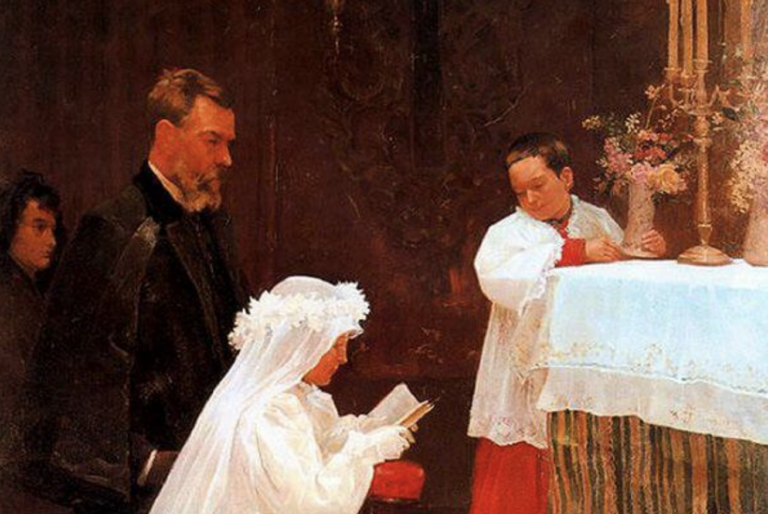
We think it’s safe to say that most of us have a preconceived notion of Picasso’s style, and The First Communion, above, isn’t it.
Picasso was just 15 when he completed this large-scale oil, having lost his 7-year-old sister, Conchita, to diphtheria one year before.
The stricken young artist had attempted to bargain with God, vowing to give up painting if she was spared. As Arianna Huffington writes in the biography Picasso: Creator and Destroyer:
…he was torn between wanting her saved and wanting her dead so that his gift would be saved. When she died, he decided that God was evil and destiny an enemy. At the same time, he was convinced that it was his ambivalence that had made it possible for God to kill Conchita. His guilt was enormous—the other side of his belief in his powers to affect the world around him. And it was compounded […]
|
|
|
|
|
Most of us have doodled in the margins of our books at one time or another, and some of us have even dared to write our own names. But very of few us, presumably, would have expected our handiwork to be marveled at twelve centuries hence. Yet that’s just what has happened to the marginalia left by a medieval Englishwoman we know only as Eadburg, who some time in the eighth century committed her name — as well as other symbols and figures — to the pages of a Latin copy of the Acts of the Apostles.
Eadburg did this with such secrecy that only advanced twenty-first century technology has allowed us to see it at all. That the readers in the Middle Ages sometimes jotted in their manuscripts isn’t unheard of.
But unlike most of them, Eadburg seems to have favored a drypoint stylus — i.e., a tool with nothing on it to leave a clear mark — which would have made her writing nearly impossible to notice with the naked eye. […]
|
|
|
|
|
Image by Paul Pearson, University College London
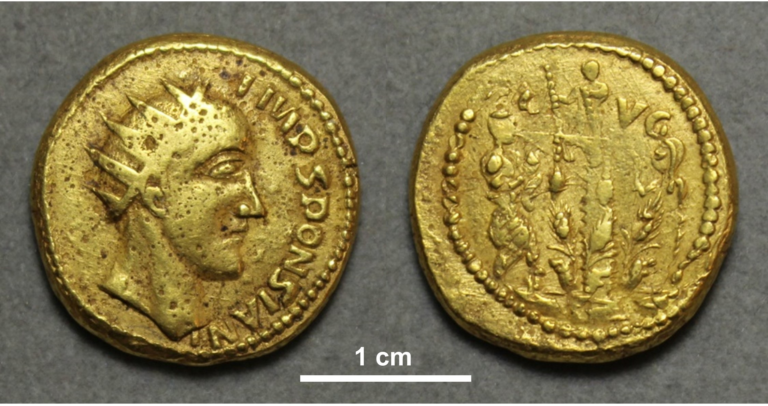
You may think you know your Roman emperors, but do you recognize the face on the coin above? His name was Sponsian, or Sponsianus, and he lived in the middle of the third century. Or at least he did according to certain theories: vanishingly little is known about him, and in fact, this very gold piece (above) is the only evidence we have that he ever existed. Given that numismatists have long written the coin off as an eighteenth-century fake, it’s possible that emperor Sponsian could be a wholly apocryphal figure — but it’s become a bit less likely since the coin went under the electron microscope earlier this year.
“Using modern imaging technology, the researchers said they found ‘deep micro-abrasion patterns’ that were ‘typically associated with coins that were in circulation for an extensive period of time,'” writes the New York Times‘ April Rubin.
“In addition, the researchers analyzed earthen deposits, finding what they called evidence that the coin had been buried for a […]
|
|
|
|
|
Quick, who’s your favorite female drummer?
Hardly a strange question!
(Yes, you are allowed to pick more than one favorite.)
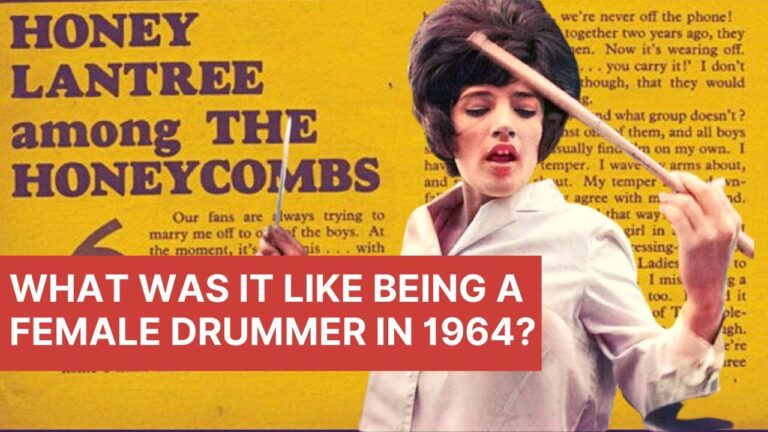
Things were decidedly different when drummer Honey Lantree, the only female member of the 60s British Invasion group the Honeycombs, took up the sticks.
Drums were not her original instrument. Her boyfriend, employer, and eventual bandmate Martin Murray was giving her a guitar lesson when she asked if she could take a whirl at his kit.
Murray recalled his surprise when she started whaling away like a vet:
She was just a born, natural drummer; she hadn’t played before and just went for it. I was aghast, staring at her, and said, “All right, you’re our new drummer.”
Lantree’s gender helped the Honeycombs secure press.
She snagged a celebrity endorsement for Carlton drums and turned 21 with a cake festooned with marzipan bees, and, more importantly, a #1 single, “Have I the Right.”

Of course, her gender also ensured that most of […]
|
|
|
|
|
A quick FYI. If you want to follow Open Culture on social media, we would encourage you to find us on Mastodon and now also Post. Right now, Mastodon feels like the early days of Twitter, when the discourse was more edifying and the mood less toxic. Meanwhile, Post is a new service (currently in beta) that hopes to promote learning and civil conversations–something that could be right up our alley. Here’s to new beginnings. Hope to see you there…
P.S. If you have favorite people/accounts to follow on Post or Mastodon, feel free to add them to the comments below.
|
|
|
|