|
Digest of new articles at openculture.com, your source for the best cultural and educational resources on the web ͏ ͏ ͏ ͏ ͏ ͏ ͏ ͏ ͏ ͏ ͏ ͏ ͏ ͏ ͏ ͏ ͏ ͏ ͏ ͏ ͏ ͏ ͏ ͏ ͏ ͏ ͏ ͏ ͏ ͏ ͏ ͏ ͏ ͏ ͏ ͏ ͏ ͏ ͏ ͏ ͏ ͏ ͏ ͏ ͏ ͏ ͏ ͏ ͏ ͏ ͏ ͏ ͏ ͏ ͏ ͏ ͏ ͏ ͏ ͏ ͏ ͏ ͏ ͏ ͏ ͏ ͏ ͏ ͏ ͏ ͏ ͏ ͏ ͏ ͏ ͏ ͏ ͏ ͏ ͏ ͏ ͏ ͏ ͏ ͏ ͏ ͏
|
|
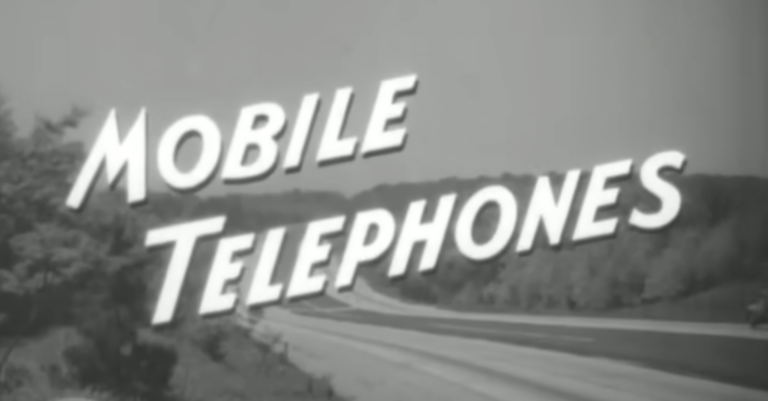
“Here comes a trailer truck out on the open highway, miles from the nearest town,” says the narrator of the short film above. Suddenly, it becomes “important for someone to get in touch with the drivers of this outfit. How can it be done?” Any modern-day viewer would respond to this question in the same way: you just call the guys. But Mobile Telephones dates from the nineteen-forties, well before the eponymous devices were in wide use — about four decades, in fact, before even the massive Motorola DynaTAC 8000X came on the market. The idea of calling someone not at home or the office, let alone a trucker on the road, would have seemed the stuff of science fiction.
Yet the engineers at Bell had made it possible, using a system that transmits conversations “partway by radio, partway by telephone lines.” This necessitated “a number of transmitting and receiving stations connected to telephone lines,” installed “at intervals along the highway so that one will always be in range of the moving vehicle.”
As dramatized in Mobile Telephones, the process […]
|
|
|
|
|
Art forgery is a sturdy trope of film and fiction. We’re all familiar with the spectacle of a rarified expert examining a work, while a wealthy collector anxiously wrings their hands nearby.
As Maggie Cao observes in the Guardian:
Forgeries expose some of the art world’s most psychologically complex figures: the collector and the counterfeiter. What compels the prototypical collector to accumulate objects of beauty is usually a peculiar devotion to the power of singularity. The collector worships art’s power to move us, a power we imagine emanates from unique objects. Meanwhile, what motivates the counterfeiter is an undue confidence in the possibilities of replication. To deceive a viewer with a copy is to affirm that copy’s interchangeability with the original.
But what if art forgery can be used for good?
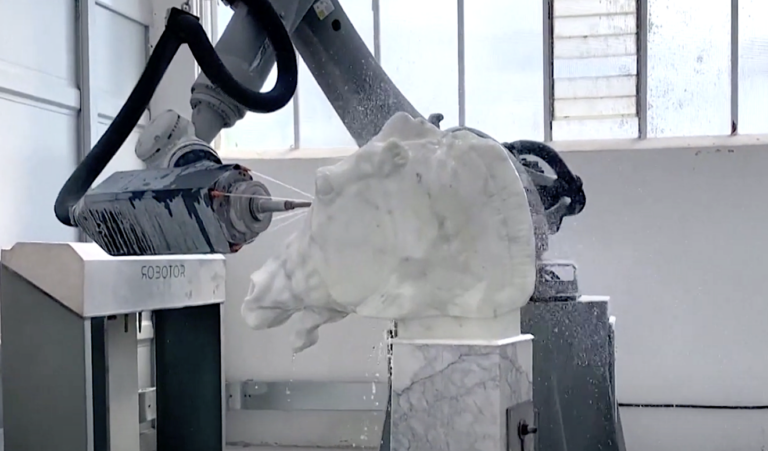
That’s the hope of Roger Michel, founder of the Institute for Digital Archaeology, who employs technological advances to preserve culturally significant objects and offer accessible tactile experiences to those with vision impairment.
Shortly after ISIS destroyed the Monumental Arch of […]
|
|
|
|
|
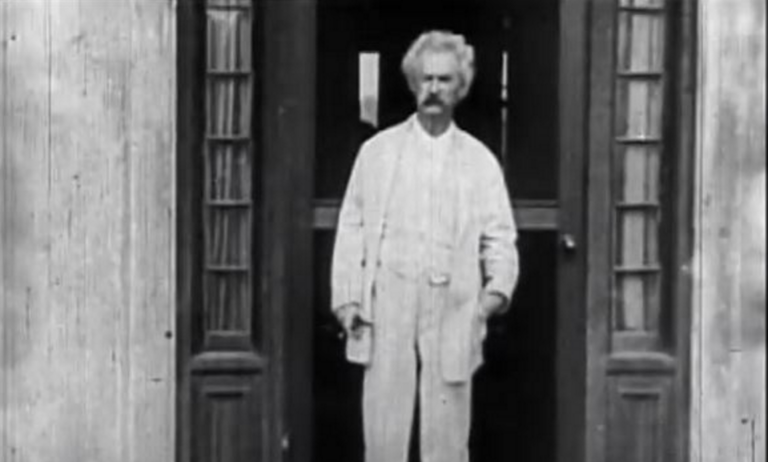
We know what Mark Twain looked like, and we think we know what he sounded like. Just above see what he looked like in motion, strolling around Stormfield, his house in Redding, Connecticut—signature white suit draped loosely around his frame, signature cigar puffing white smoke between his fingers. After Twain’s leisurely walk along the house’s façade, we see him with his daughters, Clara and Jean, seated indoors. Below you can see the original murky version, featured on our site way back in 2010. A digital restoration (top) does wonders for the watchability of this priceless silent artifact, so vividly capturing the writer/contrarian/raconteur’s essence that you’ll find yourself reaching to turn the volume up, expecting to hear that familiar curmudgeonly drawl.
Shot by Thomas Edison in 1909, the short film is most likely the only moving image of Twain in existence. We might assume that Edison also recorded Twain’s voice, since we seem to know it so well, from portrayals of the great American humorist in pop cultural touchstones like Star Trek: The Next Generation and parodies […]
|
|
|
|
|
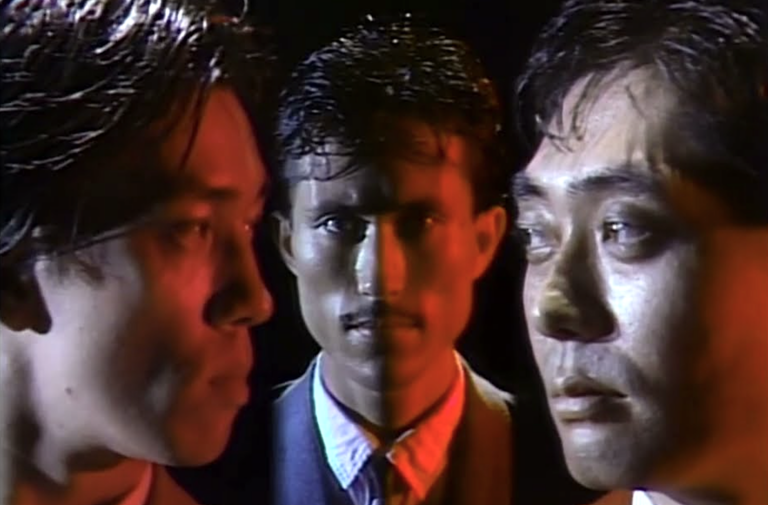
Music changes when technology changes. Few musicians have demonstrated as keen an awareness of that fact as Haruomi Hosono, Yukihiro Takahashi, and Ryuichi Sakamoto, who together as Yellow Magic Orchestra (YMO) burst onto the scene making sounds that most listeners of the late nineteen-seventies had never heard before — never heard in a musical context, at least. They’d never seen a band employ a computer programmer, nor bring onstage a device like Roland’s MC-8 Microcomposer, an early musical sequencer designed strictly for studio use. That YMO didn’t hesitate to make these unconventional choices, and many others besides, won them years as the most popular band in their native Japan.
It would be unimaginable for YMO to have emerged in any other place or time. “Japan had long since remade itself as a postwar economic engine, but by the late 1970s it was becoming something else: a global emblem of techno-utopianism and futuristic cool,” writes the New York Times‘ Clay Risen. “Sony released the Walkman in 1979, just as Kenzo Takada and Issey Miyake were taking over Paris fashion […]
|
|
|
|
|
A new deal to start a new year: Between now and January 31, 2023, Coursera is offering a $200 discount on its annual subscription plan called “Coursera Plus.” Normally priced at $399, Coursera Plus (now available for $199) gives you access to 90% of Coursera’s courses, Guided Projects, Specializations, and Professional Certificates, all of which are taught by top instructors from leading universities and companies (e.g. Yale, Duke, Google, Facebook, and more). The $199 annual fee–which translates roughly to 55 cents per day–could be a good investment for anyone interested in learning new subjects and skills in 2023, or earning certificates that can be added to your resume. Just as Netflix’s streaming service gives you access to unlimited movies, Coursera Plus gives you access to unlimited courses and certificates. It’s basically an all-you-can-eat deal.
You can try out Coursera Plus for 14 days, and if it doesn’t work for you, you can get your money back. Explore the offer (before January 31, 2023) here.
Note: Open Culture has a partnership […]
|
|
|
|