|
Digest of new articles at openculture.com, your source for the best cultural and educational resources on the web ͏ ͏ ͏ ͏ ͏ ͏ ͏ ͏ ͏ ͏ ͏ ͏ ͏ ͏ ͏ ͏ ͏ ͏ ͏ ͏ ͏ ͏ ͏ ͏ ͏ ͏ ͏ ͏ ͏ ͏ ͏ ͏ ͏ ͏ ͏ ͏ ͏ ͏ ͏ ͏ ͏ ͏ ͏ ͏ ͏ ͏ ͏ ͏ ͏ ͏ ͏ ͏ ͏ ͏ ͏ ͏ ͏ ͏ ͏ ͏ ͏ ͏ ͏ ͏ ͏ ͏ ͏ ͏ ͏ ͏ ͏ ͏ ͏ ͏ ͏ ͏ ͏ ͏ ͏ ͏ ͏ ͏ ͏ ͏ ͏ ͏ ͏
|
|
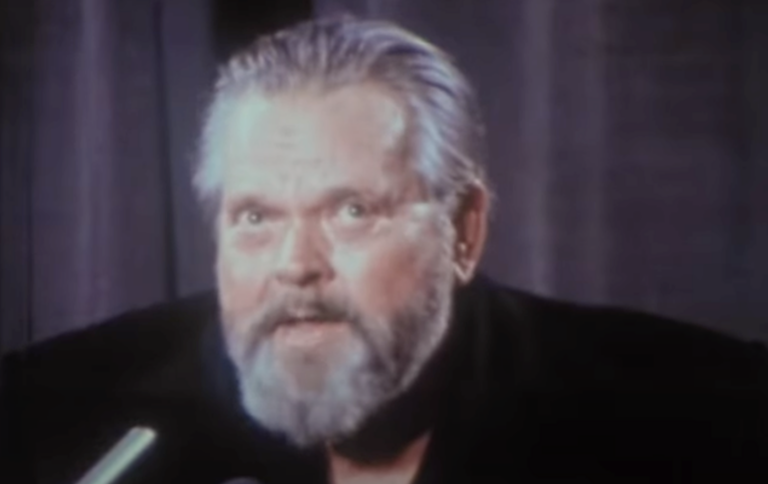
As we’ve previously noted here on Open Culture, Orson Welles was not given to mincing words about his colleagues. And the older he got, the fewer words he minced, as evidenced by the clip above from a talk he gave at a Paris film school in 1982. During the Q&A, he took a question that quoted Elia Kazan’s remarks on the difficulty of raising money in America for a film about Puerto Ricans. Or rather, he heard part of the question and launched right into his thundering response: “Mademoiselle, you have chosen the wrong metteur en scene, because Elia Kazan is a traitor.”
Welles took a minute to elaborate: “He is a man who sold to McCarthy all his companions at a time when he could continue to work in New York at high salary. And having sold all of his people to McCarthy, he then made a film called On the Waterfront which was a celebration of the informer. And therefore, no question which uses him as an example can be answered by me.” Welles made a […]
|
|
|
|
|
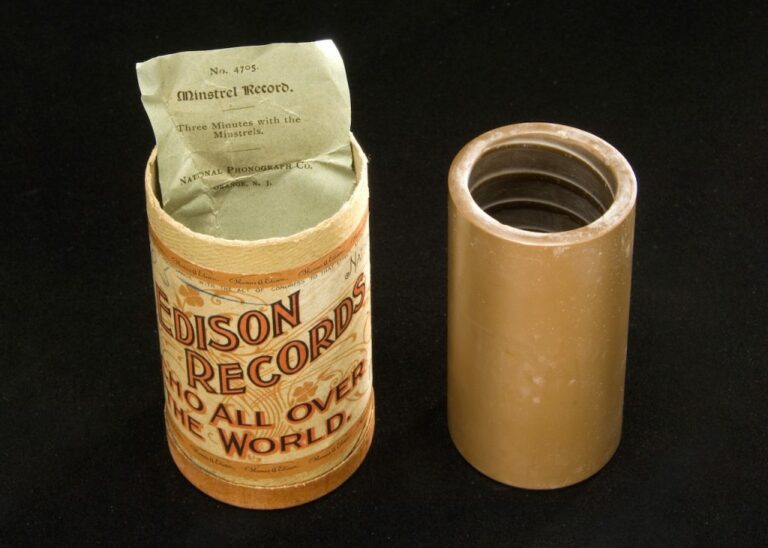
Three minutes with the minstrels / Arthur Collins, S. H. Dudley & Ancient City. Edison Record. 1899.
Long before vinyl records, cassette tapes, CDs and MP3s came along, people first experienced audio recordings through another medium — through cylinders made of tin foil, wax and plastic. In recent years, we’ve featured cylinder recordings from the 19th century that allow you to hear the voices of Leo Tolstoy, Tchaikovsky, Walt Whitman, Otto von Bismarck and other historic figures. Those recordings were originally recorded and played on a cylinder phonograph invented by Thomas Edison in 1877. But those were obviously just a handful of the cylinder recordings produced at the beginning of the recorded sound era.
Thanks to the University of California-Santa Barbara Cylinder Audio Archive, you can now download or stream a digital collection of more than 10,000 cylinder recordings. “This searchable database,” says UCSB, “features all types of recordings made from the late 1800s to early 1900s, including popular songs, vaudeville acts, classical and operatic music, comedic monologues, […]
|
|
|
|
|
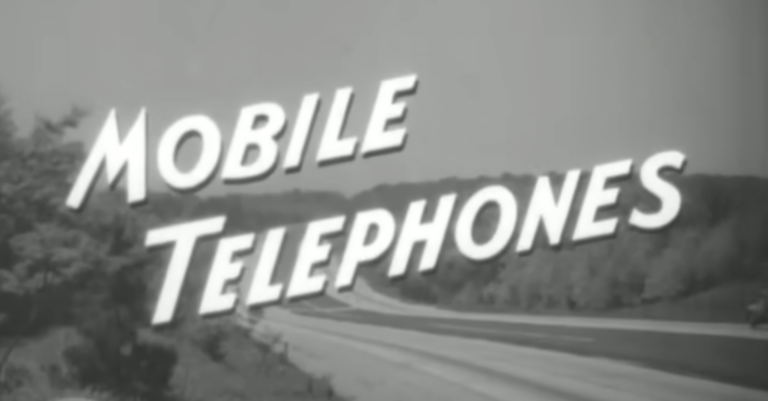
“Here comes a trailer truck out on the open highway, miles from the nearest town,” says the narrator of the short film above. Suddenly, it becomes “important for someone to get in touch with the drivers of this outfit. How can it be done?” Any modern-day viewer would respond to this question in the same way: you just call the guys. But Mobile Telephones dates from the nineteen-forties, well before the eponymous devices were in wide use — about four decades, in fact, before even the massive Motorola DynaTAC 8000X came on the market. The idea of calling someone not at home or the office, let alone a trucker on the road, would have seemed the stuff of science fiction.
Yet the engineers at Bell had made it possible, using a system that transmits conversations “partway by radio, partway by telephone lines.” This necessitated “a number of transmitting and receiving stations connected to telephone lines,” installed “at intervals along the highway so that one will always be in range of the moving vehicle.”
As dramatized in Mobile Telephones, the process […]
|
|
|
|
|
Art forgery is a sturdy trope of film and fiction. We’re all familiar with the spectacle of a rarified expert examining a work, while a wealthy collector anxiously wrings their hands nearby.
As Maggie Cao observes in the Guardian:
Forgeries expose some of the art world’s most psychologically complex figures: the collector and the counterfeiter. What compels the prototypical collector to accumulate objects of beauty is usually a peculiar devotion to the power of singularity. The collector worships art’s power to move us, a power we imagine emanates from unique objects. Meanwhile, what motivates the counterfeiter is an undue confidence in the possibilities of replication. To deceive a viewer with a copy is to affirm that copy’s interchangeability with the original.
But what if art forgery can be used for good?
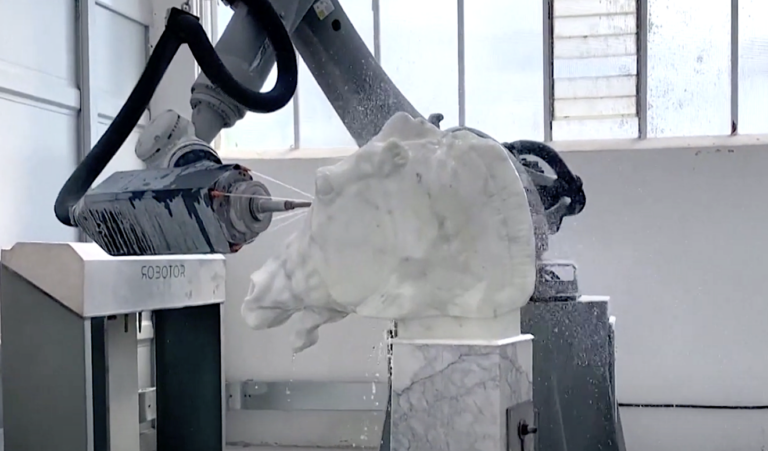
That’s the hope of Roger Michel, founder of the Institute for Digital Archaeology, who employs technological advances to preserve culturally significant objects and offer accessible tactile experiences to those with vision impairment.
Shortly after ISIS destroyed the Monumental Arch of […]
|
|
|
|
|
A new deal to start a new year: Between now and January 31, 2023, Coursera is offering a $200 discount on its annual subscription plan called “Coursera Plus.” Normally priced at $399, Coursera Plus (now available for $199) gives you access to 90% of Coursera’s courses, Guided Projects, Specializations, and Professional Certificates, all of which are taught by top instructors from leading universities and companies (e.g. Yale, Duke, Google, Facebook, and more). The $199 annual fee–which translates roughly to 55 cents per day–could be a good investment for anyone interested in learning new subjects and skills in 2023, or earning certificates that can be added to your resume. Just as Netflix’s streaming service gives you access to unlimited movies, Coursera Plus gives you access to unlimited courses and certificates. It’s basically an all-you-can-eat deal.
You can try out Coursera Plus for 14 days, and if it doesn’t work for you, you can get your money back. Explore the offer (before January 31, 2023) here.
Note: Open Culture has a partnership […]
|
|
|
|