|
Digest of new articles at openculture.com, your source for the best cultural and educational resources on the web ͏ ͏ ͏ ͏ ͏ ͏ ͏ ͏ ͏ ͏ ͏ ͏ ͏ ͏ ͏ ͏ ͏ ͏ ͏ ͏ ͏ ͏ ͏ ͏ ͏ ͏ ͏ ͏ ͏ ͏ ͏ ͏ ͏ ͏ ͏ ͏ ͏ ͏ ͏ ͏ ͏ ͏ ͏ ͏ ͏ ͏ ͏ ͏ ͏ ͏ ͏ ͏ ͏ ͏ ͏ ͏ ͏ ͏ ͏ ͏ ͏ ͏ ͏ ͏ ͏ ͏ ͏ ͏ ͏ ͏ ͏ ͏ ͏ ͏ ͏ ͏ ͏ ͏ ͏ ͏ ͏ ͏ ͏ ͏ ͏ ͏ ͏
|
|
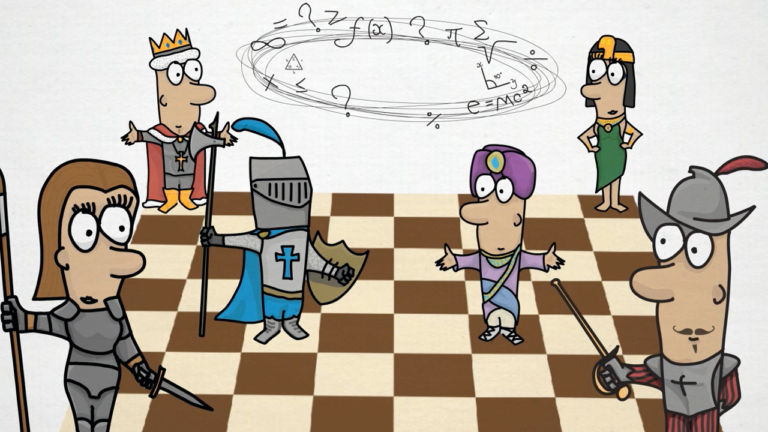
Though not a long book, The Art of War is nevertheless an intimidating one. Composed in the China of the fifth century BC, it comes down to us as perhaps the definitive analysis of military strategy, applicable equally to East, West, antiquity, and modernity alike. Hence the minor but still-productive industry that puts forth adaptations, extensions, and reinterpretations of The Art of War for non-military settings, transposing its lessons into law, business, sports, and other realms besides. But if you want a handle on what its author, the general and strategist Sun Tzu, actually wrote, watch the illustrated video above.
A production of Youtube channel Eudaimonia, previously featured here on Open Culture for a similarly animated exegesis of Machiavelli’s The Prince, it runs more than two and a half hours in full. Far though it exceeds the length of the average explainer video, it does reflect the tendency of Sun Tzu’s succinct observations to expand, when seriously considered, into much wider and more complex discussions. To each of the original text’s chapters the Eudaimonia video devotes a ten-to-fifteen-minute […]
|
|
|
|
|
Imagine if Franz Kafka were charged with picking the winning entries in The New Yorker’s weekly cartoon caption contest.
The punchlines might become a little more obscure.
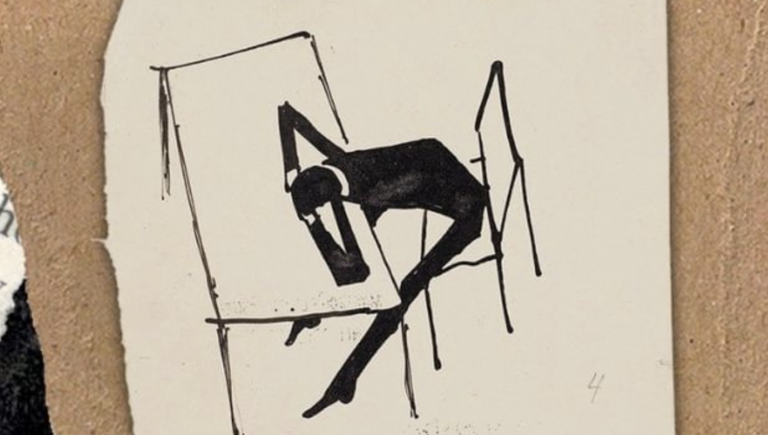
If that idea fills you with perverse pleasure, perhaps you should toddle over to Yale University Press’s Instagram to contribute some possible captions for eight of the inky drawings the tortured author made in a black notebook between 1901 and 1907.
The intended meaning of these images, included in the new book, Franz Kafka: The Drawings, are as up for grabs as any uncaptioned cartoon on the back page of The New Yorker.
In Conversations with Kafka, author Gustav Janouch recalled how their significance proved elusive even to their creator, and also the frustration his friend expressed regarding his artistic abilities:
I should so like to be able to draw. As a matter of fact, I am always trying to. But nothing comes of it. My drawings are purely personal picture writing, whose meaning […]
|
|
|
|
|
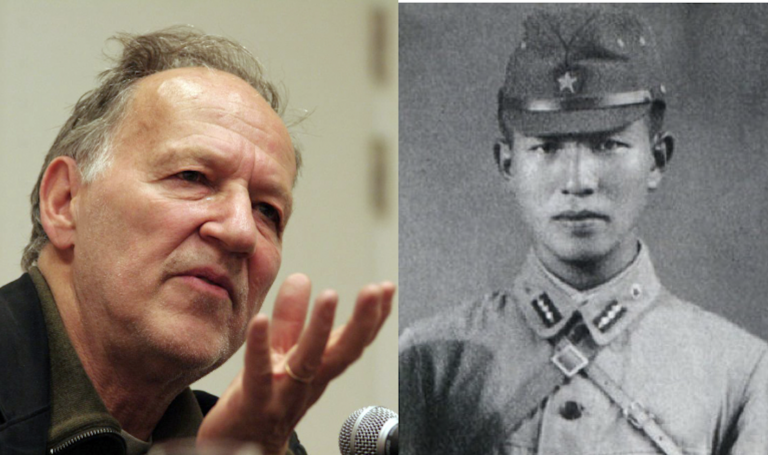
As everyone knows, Japan conceded defeat in the Second World War on August 15, 1945. But as many also know, certain individual Japanese soldiers refused to surrender, each continuing to fight the war for decades in his own way. The most famous was Lieutenant Onoda Hiroo, who hid out in the Philippines mounting guerrilla attacks — at first with a few fellow soldiers, and finally alone — until 1974. Onoda became a celebrity upon retuning to his homeland, and his admirers weren’t only Japanese. In Tokyo to direct an opera in 1997, Werner Herzog requested an introduction to one man only: the soldier who’d fought the war for 30 years.
Now Onoda has become the subject of one of Herzog’s latest projects: not a film, but a novel called The Twilight World. In his native German (brought into English by translator-critic Michael Hofmann), Herzog has written of not just his own meeting with Onoda but narrated Onoda’s own long experience in the Philippines.
“Onoda’s war is of no meaning for the cosmos, for history, for the course […]
|
|
|
|
|
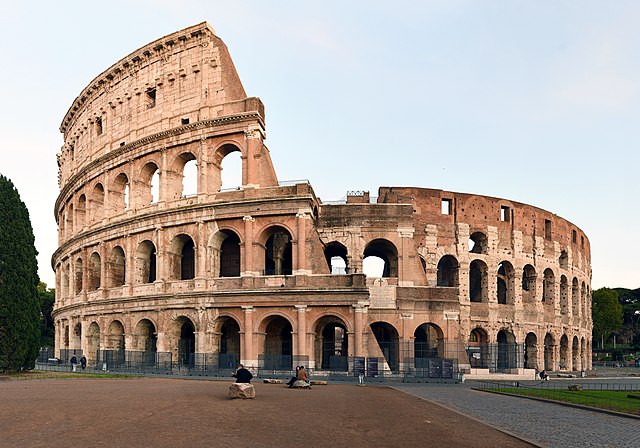
What happened to the missing half of the Colosseum? It may be a question about ancient Rome you were afraid to ask in school, as the title of Dr. Garret Ryan’s video above suggests. Or maybe, after seeing the massive ancient ruin’s jagged profile all your life on pizza boxes and softball t-shirts sponsored by your local Italian eatery, you never thought much of the Colosseum’ shape at all. You could spend hundreds of dollars and build a LEGO Colosseum, hundreds more and visit it yourself, or drive past it every day on your commute, and never think much about it.
Despite currently hosting more visitors per year than Trevi Fountain and the Sistine Chapel combined, the monument to bread and circus imperial Rome suffered from severe neglect in the millennia and a-half after it was used as a gladiator arena – “some 1,500 years of neglect and haphazard construction projects,” Tom Mueller writes at Smithsonian, “layered one upon another.” Used as a quarry after the 6th century, for most of its long, decaying life, the amphitheater and its “hypogeum” […]
|
|
|
|
|
When the World Wide Web made its public debut in the early nineteen-nineties, it fascinated many and struck some as revolutionary, but the idea of watching a film online would still have sounded like sheer fantasy. Yet on May 23rd, 1993, reported the New York Times‘ John Markoff, “a small audience scattered among a few dozen computer laboratories gathered” to “watch the first movie to be transmitted on the Internet — the global computer network that connects millions of scientists and academic researchers and hitherto has been a medium for swapping research notes and an occasional still image.”
That explanation speaks volumes about how life online was perceived by the average New York Times reader three decades ago. But it was hardly the average New York Times reader who tuned into the internet’s very first film screening, whose feature presentation was Wax or the Discovery of Television Among the Bees. Completed in 1991 by artist David Blair, this hybrid fiction and essay-film offered to its viewers what Times critic Stephen Holden called “a multi-generational family saga as it might be imagined […]
|
|
|
|