|
Digest of new articles at openculture.com, your source for the best cultural and educational resources on the web ͏ ͏ ͏ ͏ ͏ ͏ ͏ ͏ ͏ ͏ ͏ ͏ ͏ ͏ ͏ ͏ ͏ ͏ ͏ ͏ ͏ ͏ ͏ ͏ ͏ ͏ ͏ ͏ ͏ ͏ ͏ ͏ ͏ ͏ ͏ ͏ ͏ ͏ ͏ ͏ ͏ ͏ ͏ ͏ ͏ ͏ ͏ ͏ ͏ ͏ ͏ ͏ ͏ ͏ ͏ ͏ ͏ ͏ ͏ ͏ ͏ ͏ ͏ ͏ ͏ ͏ ͏ ͏ ͏ ͏ ͏ ͏ ͏ ͏ ͏ ͏ ͏ ͏ ͏ ͏ ͏ ͏ ͏ ͏ ͏ ͏ ͏
|
|
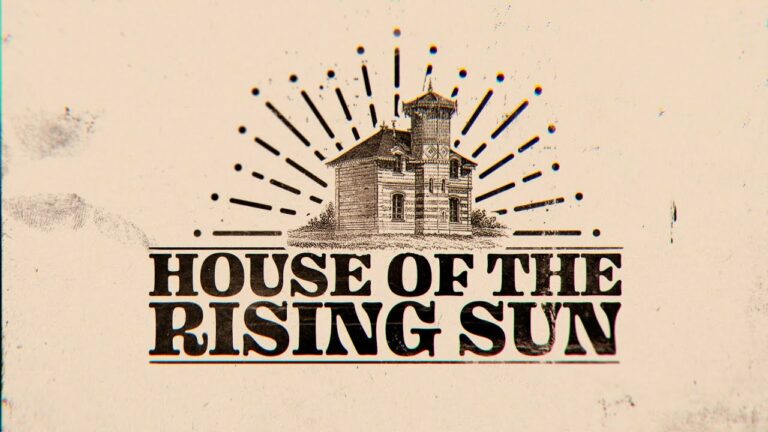
Everyone knows the song, a warning from a man or woman returning to the place that will destroy them. Yet they cannot turn back. The tragedy of “House of the Rising Sun” lies in its inevitability. “The narrator seems to have lost his free will,” writes Jim Beviglia, caught, perhaps, in the grip of an unbeatable addiction. As soon as we hear those first few notes, we know the story will end in ruin. But what kind of ruin takes place there? Is the House of the Rising Sun a brothel or a gambling den, or both? Was it a real place in New Orleans? Maybe a pub in England? Or a place in the anonymous songwriter’s imagination?
Eric Burdon and the Animals, who popularized the song worldwide when they recorded and released it in 1964, didn’t know. Even Alan Lomax couldn’t suss out the song’s origin, though he tried, and suspected it may have originated with an English farm worker named Harry Cox who sang a song called “She Was a Rum One” with a similar opening line.
Dave […]
|
|
|
|
|
Back in 2017, Coursera co-founder and former Stanford computer science professor Andrew Ng launched a five-part series of courses on “Deep Learning” on the edtech platform, a series meant to “help you master Deep Learning, apply it effectively, and build a career in AI.” These courses extended his initial Machine Learning course, which has attracted almost 5 million students since 2012, in an effort, he said, to build “a new AI-powered society.”
Ng’s goals are ambitious, to “teach millions of people to use these AI tools so they can go and invent the things that no large company, or company I could build, could do.” His new Machine Learning Specialization at Coursera takes him several steps further in that direction with an “updated version of [his] pioneering Machine Learning course,” notes Coursera’s description, providing “a broad introduction to modern machine learning.” The specialization‘s three courses include 1) Supervised Machine Learning: Regression and Classification, 2) Advanced Learning Algorithms, and 3) Unsupervised Learning, Recommenders, Reinforcement Learning. Collectively, the courses […]
|
|
|
|
|
The art of bonsai originated in China. As subsequently refined in Japan, its techniques produce miniature trees that give aesthetic pleasure to people all around Asia and the wider world beyond. This appreciation is reflected in the couple-on-the-street interview footage incorporated into “The Biology Behind Bonsai Trees,” the video above from Youtuber Jonny Lim, better known as The Backpacking Biologist. Not only does Lim gather positive views on bonsai around Los Angeles, he also finds in that same city a bonsai nursery run by Bob Pressler, who has spent more than half a century mastering the art.
Even Pressler admits that he doesn’t fully understand the biology of bonsai. Lim’s search for scientific answers sends him to “something called the apical meristem.” That’s the part of the tree made of “stem cells found at the tips of the shoots and roots.” Stem cells, as you may remember from their long moment in the news a few years ago, have the potential to turn into any kind of cell.
The cells of bonsai are the same size as those of regular trees, […]
|
|
|
|
|
Image by Wikimedia Commons
This Spotify playlist (play below) contains music by Prince and the Grateful Dead, Weezer and Billie Holliday, Kanye West and Johannes Brahms, Hans Zimmer and David Bowie, Wolfgang Amadeus Mozart and Radiohead. Perhaps you’d expect such a range from a 712-track playlist that runs nearly 66 hours. Yet what you’ll hear if you listen to it isn’t just the collection of a modern-day “eclectic” music-lover, but a neuroscientist-curated arrangement of pieces that all cause us to experience the same sensation: frisson.
As usual, it takes a French word to evoke a condition or experience that other terms simply don’t encompass. Quoting one definition that calls frisson “a sudden feeling or sensation of excitement, emotion or thrill,” Big Think’s Sam Gilbert also cites a recent study suggesting that “one can experience frisson when staring at a brilliant sunset or a beautiful painting; when realizing a deep insight or truth; when reading a particularly resonant line of poetry; or when watching the climax of a film.”
Gilbert notes […]
|
|
|
|
|
By the time the Beatles finished The White Album, it seemed they might not ever make another record together. “The group was disintegrating before my eyes,” recording engineer Geoff Emerick remembers. “It was ugly, like watching a divorce between four people. After a while, I had to get out.” Emerick left, but thankfully the band hung in a while longer and managed to patch things up in the studio to make their final record.
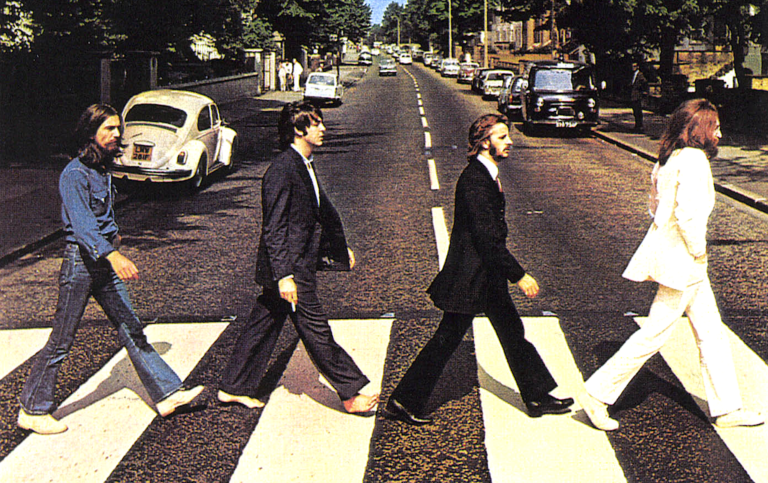
When they called Emerick to work on Abbey Road, they promised to get along for what would turn out to be their last album. (Emerick points out that on the cover they’re walking away from Abbey Road studios.) Not only did they manage to avoid personal conflict, but more importantly “the musical telepathy between them was mind-boggling.” As if to seal the moment of accord forever, they ended the album, and the Beatles, with a medley.
Abbey Road shows every member of the band rising to their full songwriting potential, especially George Harrison, who fully came into his own with “Something,” a song everyone knew would be […]
|
|
|
|