|
Digest of new articles at openculture.com, your source for the best cultural and educational resources on the web ͏ ͏ ͏ ͏ ͏ ͏ ͏ ͏ ͏ ͏ ͏ ͏ ͏ ͏ ͏ ͏ ͏ ͏ ͏ ͏ ͏ ͏ ͏ ͏ ͏ ͏ ͏ ͏ ͏ ͏ ͏ ͏ ͏ ͏ ͏ ͏ ͏ ͏ ͏ ͏ ͏ ͏ ͏ ͏ ͏ ͏ ͏ ͏ ͏ ͏ ͏ ͏ ͏ ͏ ͏ ͏ ͏ ͏ ͏ ͏ ͏ ͏ ͏ ͏ ͏ ͏ ͏ ͏ ͏ ͏ ͏ ͏ ͏ ͏ ͏ ͏ ͏ ͏ ͏ ͏ ͏ ͏ ͏ ͏ ͏ ͏ ͏
|
|
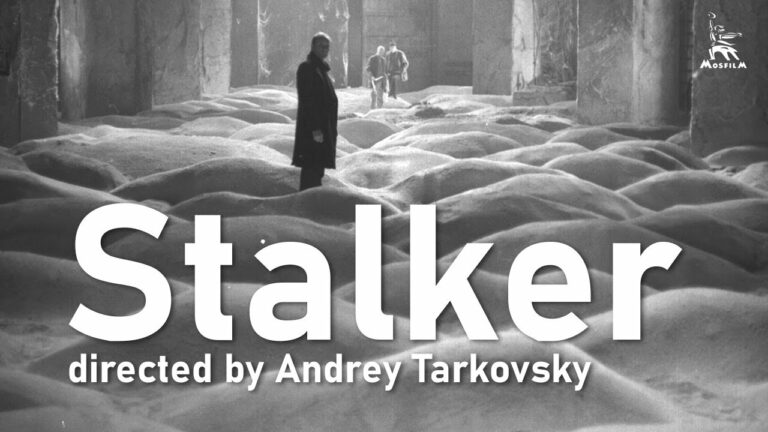
Andrei Tarkovsky understood cinema in a way no filmmaker had before — and, quite possibly, in a way no filmmaker has since. That impression is reinforced by any of his films, five of which are available to watch free on Youtube. You’ll find them on the Youtube channel of Mosfilm, which was once the Soviet Union’s biggest film studio. It was for Mosfilm that Tarkovsky directed his debut feature Ivan’s Childhood in 1962. Based on a folkloric war story by Soviet writer Vladimir Bogomolov, the film had already been made by another young director but rejected by the studio. Tarkovsky’s version both satisfied the higher-ups and, with its international success, introduced the world to his own distinctive cinematic vision.
“My discovery of Tarkovsky’s first film was like a miracle. Suddenly, I found myself standing at the door of a room the keys of which had, until then, never been given to me.” These are the words of Ingmar Bergman, to whom Tarkovsky would much later pay tribute with his final film, The Sacrifice, produced in Bergman’s homeland of Sweden.
But in […]
|
|
|
|
|
Museums are the memory of our culture and they’re the memory of our planet. – Dr. Kirk Johnson, Director, Smithsonian National Museum of Natural History
For many of us natural history museums are emblematic of school field trips, or rainy day outings with (or as) children.
There’s always something to be gleaned from the reconstructed dinosaur skeletons, dazzling minerals, and 100-year-old specimens on display.
The educational prospects are even greater for research scientists.
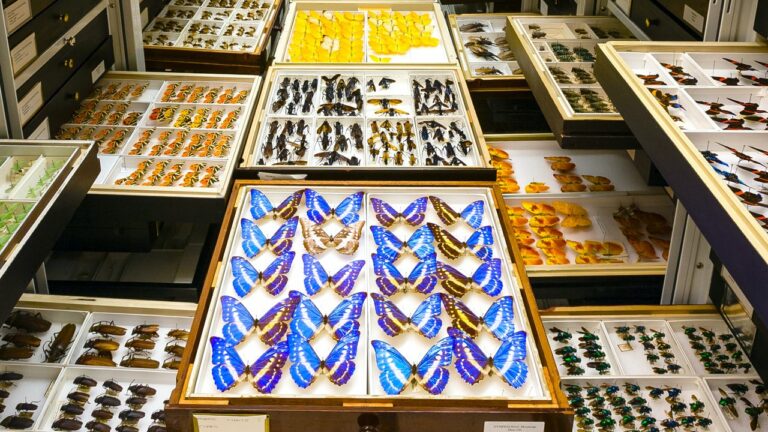
The above entry in Business Insider’s Big Business series takes us behind the scenes of the Smithsonian Natural History Museum, a federally-funded institution where more than 99% of its vast collection is housed in the basement, on upper floors and employees-only wings of exhibition floors, or at an offsite facility in neighboring Maryland.
The latter is poised to provide safe space for more of these treasures as climate change-related flooding poses an increasingly dire threat. The museum’s National Mall location, which draws more than 6 million visitors annually, is now virtually at sea level, and Congress is moving at a pace formerly known as glacial to approve […]
|
|
|
|
|
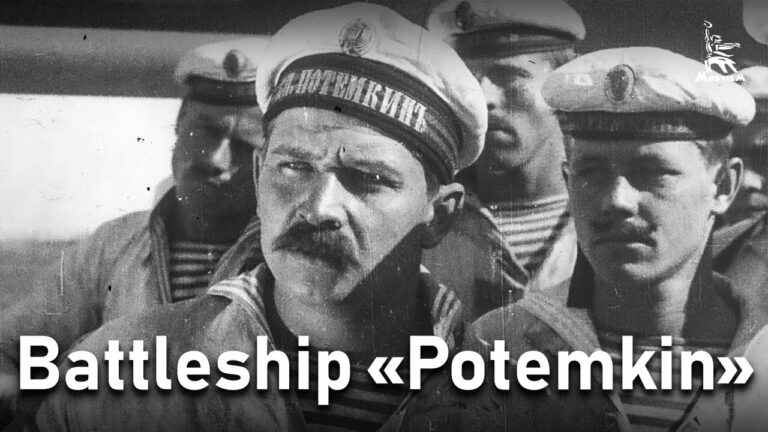
When it launched fifteen years ago, the movie podcast Battleship Pretension took its name from two well-known sources: an attitude popularly associated with cinephiles, and a 1925 motion picture by Sergei Eisenstein. To some, merely referencing a silent film made by a Soviet auteur in 1925 constitutes sufficient evidence of pretension in and of itself. But most, even those who’ve never seen a frame of Eisenstein’s work, do recognize that Battleship Potemkin has an important place in cinema history — and if they actually watch the movie, which is embedded just above, they’ll find that it looks and feels more familiar than they’d expected.
Like any work of wide and deep influence, Battleship Potemkin has often been parodied over its nearly 100 years of existence. But none of its scenes has been paid as much homage, tongue in cheek or elsewhere, than the massacre on the Odessa Steps, the symbolic entryway to that city in what’s now Ukraine.
“Czarist troops march down a long flight of steps, firing on the citizens who flee before them in a terrified tide,” […]
|
|
|
|
|
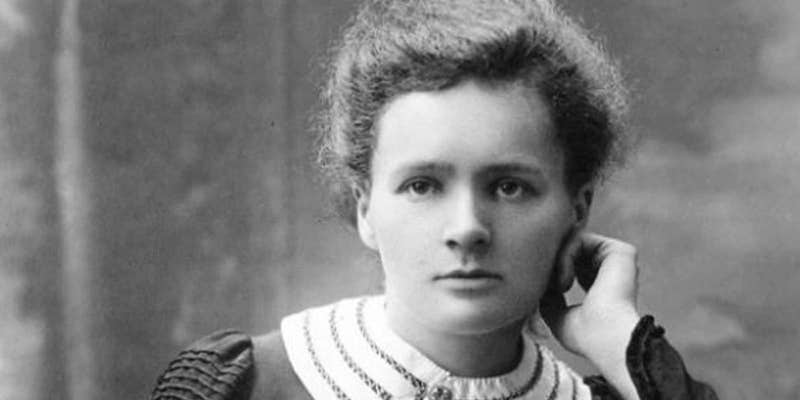
For her groundbreaking research on radioactivity, Marie Curie won the Nobel Prize. Or rather, she won two, one for physics and another for chemistry, making her the only Nobel Laureate in more than one science. What’s more, her first Nobel came in 1903, the very same year she completed her PhD thesis at the Sorbonne. In Recherches sur les substances radioactives (or Research on Radioactive Substances), Curie “talks about the discovery of the new elements radium and polonium, and also describes how she gained one of the first understandings of the new physical phenomenon of radioactivity.”
So says science Youtuber Toby Hendy in the introduction below to Curie’s thesis–a thesis that made her the first woman in France to receive a doctoral degree in physics. “Following on from the discovery of X-rays by Wilhelm Roentgen in 1895 and Henri Becquerel’s discovery that uranium salts emitted similar penetration properties,” says The Document Centre, Curie “investigated uranium rays as a starting point, but in the process discovered that the […]
|
|
|
|
|
In 1965, Lou Reed was a 23-year-old graduate stalled in a music and art career he wasn’t sure would take off. A few years earlier a doo-wop single recorded with high school friends had been released to no avail. More recently, a parody of dance-craze singles “Do the Ostrich”, created by Reed and performed by a pick-up band of musicians, had also made its way onto wax and then right out of people’s memories. However, John Cale was in that pick-up band, and soon the two were fast friends. It was Cale who helped record Reed’s demo tape of songs that year. And it was Reed who took the tape and mailed it back to himself as a “poor man’s copyright.”
That demo tape has now been unsealed and these never-before heard recordings are heading to LP and CD and streaming. Above you can hear a very early version of “I’m Waiting for the Man,” that would get radically reworked for the Velvet Underground’s debut album.
Over rudimentary guitar plucking, Reed’s demo is slower, has harmonies, and a more decided […]
|
|
|
|