|
Digest of new articles at openculture.com, your source for the best cultural and educational resources on the web ͏ ͏ ͏ ͏ ͏ ͏ ͏ ͏ ͏ ͏ ͏ ͏ ͏ ͏ ͏ ͏ ͏ ͏ ͏ ͏ ͏ ͏ ͏ ͏ ͏ ͏ ͏ ͏ ͏ ͏ ͏ ͏ ͏ ͏ ͏ ͏ ͏ ͏ ͏ ͏ ͏ ͏ ͏ ͏ ͏ ͏ ͏ ͏ ͏ ͏ ͏ ͏ ͏ ͏ ͏ ͏ ͏ ͏ ͏ ͏ ͏ ͏ ͏ ͏ ͏ ͏ ͏ ͏ ͏ ͏ ͏ ͏ ͏ ͏ ͏ ͏ ͏ ͏ ͏ ͏ ͏ ͏ ͏ ͏ ͏ ͏ ͏
|
|
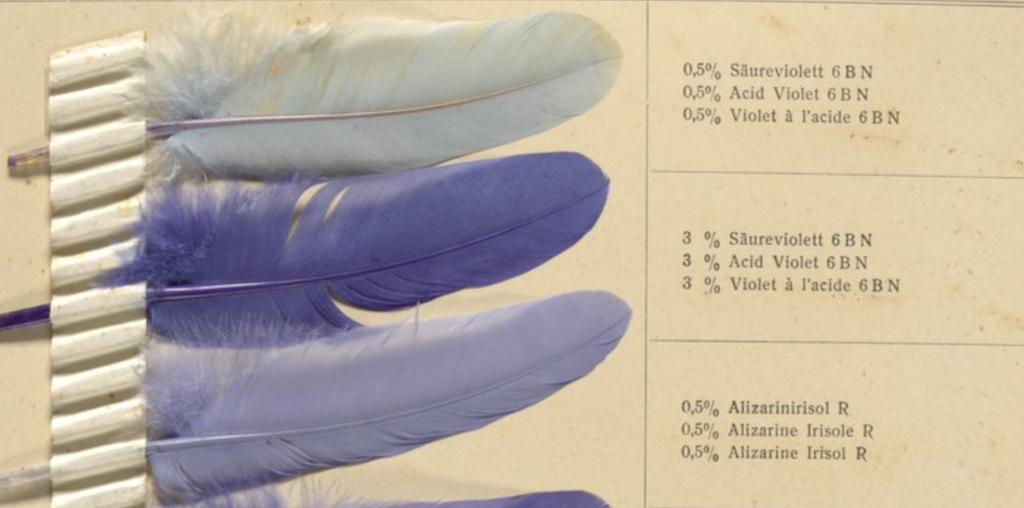
Perhaps the 143 colors showcased in The Bayer Company’s early 20th-century sample book, Shades on Feathers, could be collected in the field, but it would involve a lot of travel and patience, and the stalking of several endangered if not downright extinct avian species.
Far easier, and much less expensive, for milliners, designers and decorators to dye plain white feathers exotic shades, following the instructions in the sample book.
Such artificially obtained rainbows owe a lot to William Henry Perkin, a teenage student of German chemist August Wilhelm von Hofmann, who spent Easter vacation of 1856 experimenting with aniline, an organic base his teacher had earlier discovered in coal tar. Hoping to hit on a synthetic form of quinine, he accidentally hit on a solution that colored silk a lovely purple shade – an inadvertent eureka moment that ranks right up there with penicillin and the pretzel.
A Science Museum Group profile details what happened next:
Perkin named the colour mauve and the […]
|
|
|
|
|
For Gen X’ers who spent their twenties scouting the cities young people go to retire, and Millennials who spent their youth dancing to N’Sync, TLC, and the Spice Girls, nostalgia for simpler times just makes psychological sense. The 1990s was the last decade in which we had a shared set of references, “before the internet splintered mass culture,” Sadie Dingfelder writes at The Washington Post. “In the 90s, everyone listened to the same one or two radio stations in their city that played all the Top 40 hits, spanning all kinds of genres,” says DJ Matt Bailer.
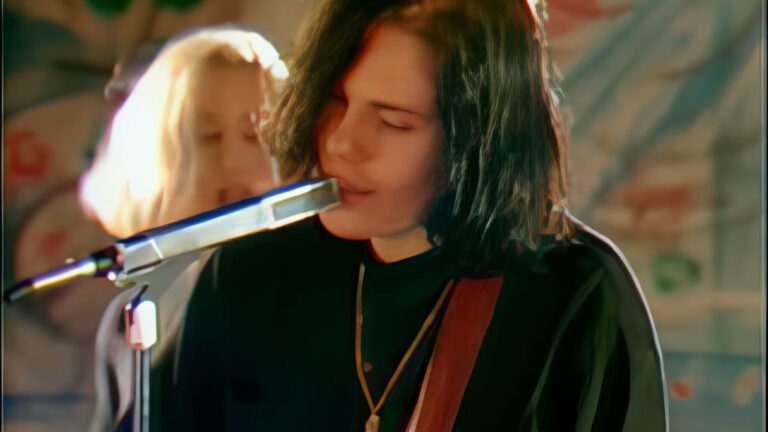
This means that everyone who heard “No Scrubs” enough times to sing each note also heard the Smashing Pumpkins’ biggest hits, and learned to love them equally. It means that we could love the music of Billy Corgan without being subjected to the terrible opinions of Billy Corgan. As the baby-faced singer/songwriter aged, he has become, in his own words, a “bitter contrarian,” “carnival barker,” and “class-A heel,” he says, referencing his later career in professional wrestling.
The assessment may seem mild considering Corgan’s appearances […]
|
|
|
|
|
We should probably not look to science to have cherished beliefs confirmed. As scientific understanding of the world has progressed over the centuries, it has brought on a loss of humans’ status as privileged beings at the center of the universe whose task is to subdue and conquer nature. (The stubborn persistence of those attitudes among the powerful has not served the species well.) We are not special, but we are still responsible, we have learned — maybe totally responsible for our lives on this planet. The methods of science do not lend themselves to soothing existential anxiety.
But what about the most cherished, and likely ancient, of human beliefs: faith in an afterlife? Ideas of an underworld, or heaven, or hell have animated human culture since its earliest origins. There is no society in the world where we will not find some belief in an afterlife existing comfortably alongside life’s most mundane events. Is it a harmful idea? Is there any real evidence to support it? And which version of an afterlife — if such a thing existed — […]
|
|
|
|
|
The Spanish filmmaker Eugenio Monesma has dedicated his life to capturing the traditions of his homeland and its surrounding areas. He began his career by first taking up a Super-8 camera at age 25 back in the nineteen-seventies, and in the decades since, his mission has taken him to the furthest corners of Spain and beyond in search of ever-older ways to preserve in detail. This places his work in the tradition of the anthropological or ethnographic documentary. But in a still-unconventional move in his field, he’s united the old with the new by creating his own Youtube channel on which to make his documentaries free to watch around the world.
Launched in 2020, Monesma’s channel has become a surprising hit. At the top of the post you can watch its most popular video, his short 1997 documentary on the making of combs from animal horns — which, as of this writing, has racked up nearly 8.5 million views. This happens to be one of the productions that took him beyond Spain’s borders, if only just: to the French village […]
|
|
|
|
|
Image by Louis Panassié, via Wikimedia Commons
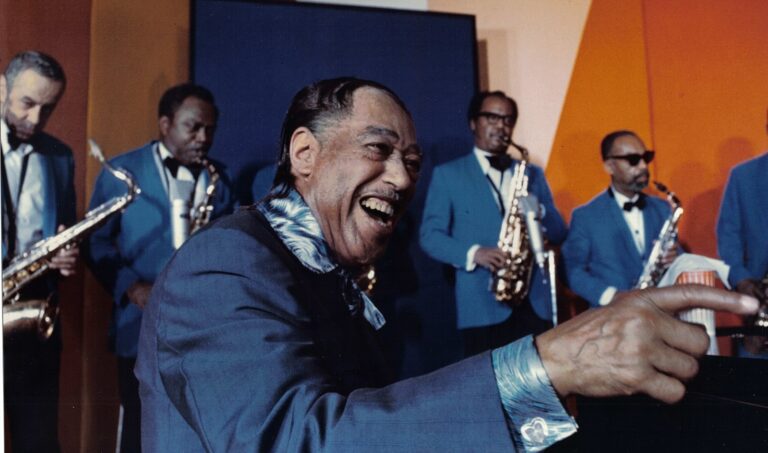
Duke Ellington has been commemorated in a variety of forms: statues, murals, schools, and even United States commemorative stamps and coins. In his lifetime he received a star on the Hollywood Walk of Fame, a Grammy Lifetime Achievement, a Presidential Medal of Freedom, and a Légion d’honneur. His posthumous honors even include a Special Pulitzer Prize awarded in 1999, the centennial year of his birth. 34 years earlier, in 1965, he’d been named for–but ultimately denied–a regular Pulitzer Prize for Music, a decision his appreciators are now trying to reverse.
“The jury that judged the entrants that year decided to do something different,” writes jazz critic Ted Gioia. “They recommended giving the honor to Duke Ellington for the ‘vitality and originality of his total productivity’ over the course of more than forty years.” This broke from tradition in that the Pulitzer Prize for Music usually honors a single work: in 1945 it went to Aaron Copland for his ballet Appalachian Spring; in 1958 it […]
|
|
|
|