|
Digest of new articles at openculture.com, your source for the best cultural and educational resources on the web ͏ ͏ ͏ ͏ ͏ ͏ ͏ ͏ ͏ ͏ ͏ ͏ ͏ ͏ ͏ ͏ ͏ ͏ ͏ ͏ ͏ ͏ ͏ ͏ ͏ ͏ ͏ ͏ ͏ ͏ ͏ ͏ ͏ ͏ ͏ ͏ ͏ ͏ ͏ ͏ ͏ ͏ ͏ ͏ ͏ ͏ ͏ ͏ ͏ ͏ ͏ ͏ ͏ ͏ ͏ ͏ ͏ ͏ ͏ ͏ ͏ ͏ ͏ ͏ ͏ ͏ ͏ ͏ ͏ ͏ ͏ ͏ ͏ ͏ ͏ ͏ ͏ ͏ ͏ ͏ ͏ ͏ ͏ ͏ ͏ ͏ ͏
|
|
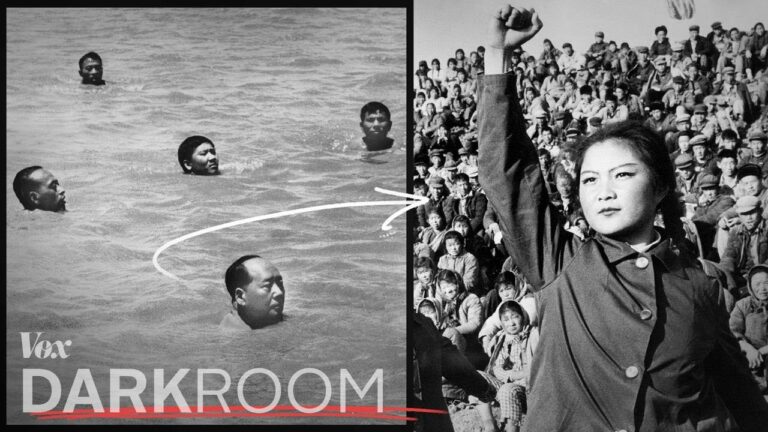
In 1958, Mao Zedong launched the Great Leap Forward. Eight years later, he announced the beginning of the Great Proletarian Cultural Revolution. Between those two events, of course, came the Great Chinese Famine, and historians now view all three as being “great” in the same pejorative sense. Though Chairman Mao may not have understood the probable consequences of policies like agricultural collectivization and ideological purification, he did understand the importance of his own image in selling those policies to the Chinese people: hence the famous 1966 photo of him swimming across the Yangtze River.
By that point, “the Chinese leader who had led a peasant army to victory in the Chinese Civil War and established the communist People’s Republic of China in 1949 was getting old.” So says Coleman Lowndes in the Vox Darkroom video above. Worse, Mao’s Great Leap Forward had clearly proven calamitous. The Chairman “needed to find a way to seal his legacy as the face of Chinese communism and a new revolution to lead.” And so he repeated one of his earlier feats, the swim across the […]
|
|
|
|
|
The 2022 Oscar winner for Best Picture was CODA, a story about a musically inclined girl with a deaf family. Kambri Crews, herself a CODA and author of a much darker story about this called Burn Down the Ground, joins your Pretty Much Pop host Mark Linsenmayer, writer Sarahlyn Bruck, and jack-of-many-intellectual-trades Al Baker to talk about how deaf culture interacts with film.
Films tend to show deafness as tragic, which is not necessarily how the deaf community views themselves. We talk about balancing the demands of a story, how real life works, and the need for positive representation. Also, deaf bowling!
In addition to CODA, we talk about The Sound of Metal, A Quiet Place, Children of a Lesser God, Mr. Holland’s Opus, See No Evil Hear No Evil, Eternals, Drive My Car, and more.
Note that this discussion was recorded in May but got bumped with all the shows wrapping up at that time and summer movies launching.
If you liked this, […]
|
|
|
|
|
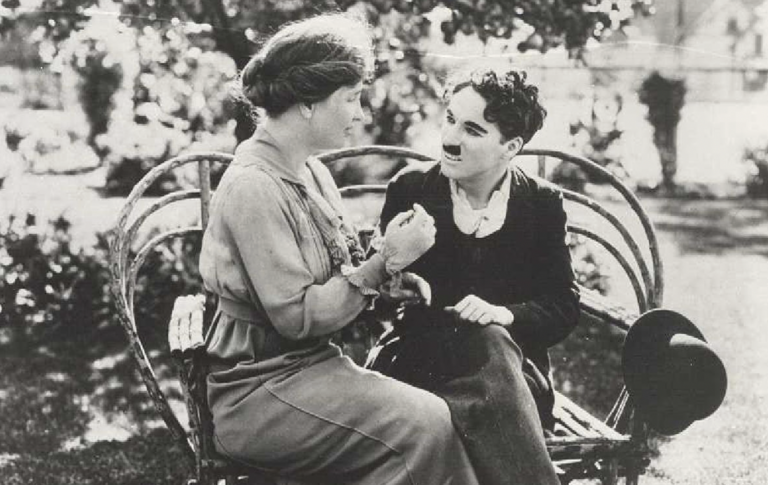
Charlie Chaplin had many high-profile fans in his day, including some of the luminaries of the early twentieth century. We could perhaps be forgiven for assuming that the writer and activist Hellen Keller was not among them, given the limitations her condition of deafness and blindness — or “deafblindness” — would naturally place on the enjoyment of film, even the silent films in which Chaplin made his name. But making that assumption would be to misunderstand the driving force of Keller’s life and career. If the movies were supposedly unavailable to her, then she’d make a point of not just watching them, but befriending their biggest star.
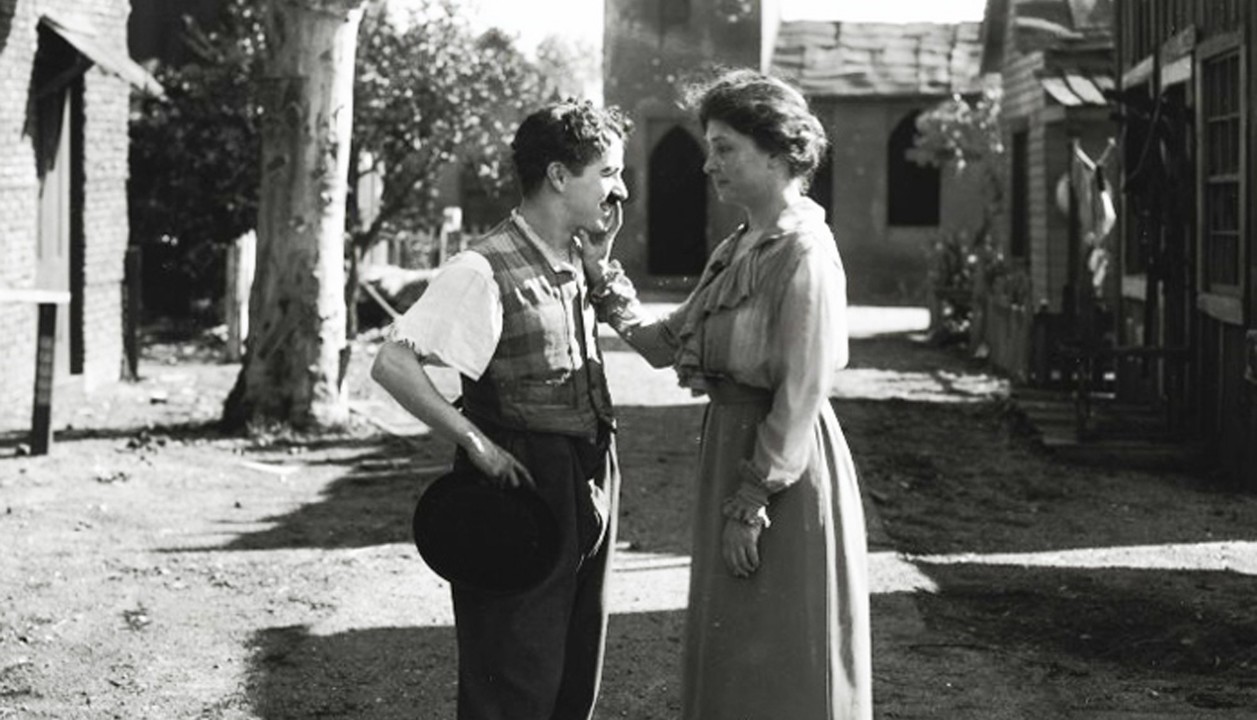
Keller met Chaplin in 1919 at his Hollywood studio, during the filming of Sunnyside. This, as biographers have revealed, was not one of the smoothest-going periods in the comedian-auteur’s life, but that didn’t stop him from enjoying his time with Keller, and even learning from her.
In her 1928 autobiography Midstream, she would remember that he’d been “shy, almost timid,” […]
|
|
|
Damien Hirst is into NFTs. Some will regard this as a reflection on the artist, and others a reflection on the technology. Whether you take those reflections to be positive or negative reveals something about your own concept of how the art world, the business world, and the digital world intersect. So will your reaction to The Currency, Hirst’s just-completed art project and technological experiment. Launched in July of last year, it produced 10,000 unique non-fungible tokens “that were each associated with corresponding artworks the British artist made in 2016,” as Artnet’s Caroline Goldstein writes. “The digital tokens were sold via a lottery system for $2,000.”
Hirst also laid down an unprecedented condition: he announced “that his collectors would have to make a choice between the physical artwork and its digital version, and set a one-year deadline — asking them, in effect, to vote for which had more lasting value.” For each buyer who chooses the original work, Hirst would assign its NFT to an inaccessible address, the closest thing to destroying it. And for each buyer who chooses the NFT, Hirst […]
|
Damien Hirst is into NFTs. Some will regard this as a reflection on the artist, and others a reflection on the technology. Whether you take those reflections to be positive or negative reveals something about your own concept of how the art world, the business world, and the digital world intersect. So will your reaction to The Currency, Hirst’s just-completed art project and technological experiment. Launched in July of last year, it produced 10,000 unique non-fungible tokens “that were each associated with corresponding artworks the British artist made in 2016,” as Artnet’s Caroline Goldstein writes. “The digital tokens were sold via a lottery system for $2,000.”
Hirst also laid down an unprecedented condition: he announced “that his collectors would have to make a choice between the physical artwork and its digital version, and set a one-year deadline — asking them, in effect, to vote for which had more lasting value.” For each buyer who chooses the original work, Hirst would assign its NFT to an inaccessible address, the closest thing to destroying it. And for each buyer who chooses the NFT, Hirst […]
|
|
|
|
|
The three artists that gallerists James Payne and Joanne Shurvell have chosen to represent New York City in their series Great Art Cities Explained are as refreshing as they are surprising.
Andy Warhol?
Nope.
Keith Haring?
No.
Jean-Michel Basquiat?
Uh-uh.
These gents would be the obvious choice, though only one of the three – Basquiat was a native New Yorker.
Instead, Payne and Shurvell aim their spotlight at three NYC-born Abstract Expressionists.
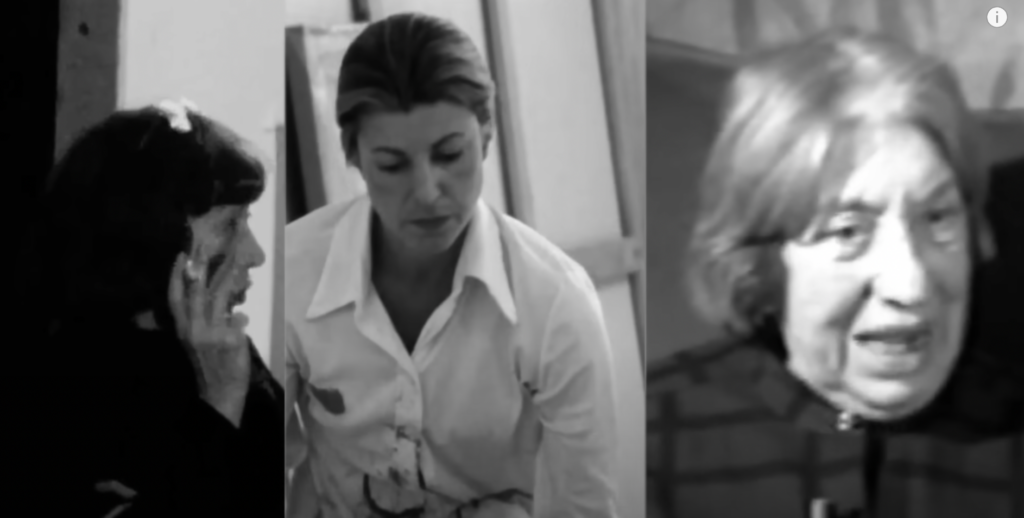
Three female NYC-born Abstract Expressionists – Lee Krasner, Elaine de Kooning, and Helen Frankenthaler.
These women’s contributions to the movement were considerable, but Krasner and deKooning spent much of their careers overshadowed by celebrated husbands – fellow Abstract Expressionists Jackson Pollock and Willem de Kooning.
The New York-based Abstract Expressionism deposed Paris as the center of the art world, and was the most macho of movements. Krasner, Frankenthaler, and Elaine de Kooning often heard their work described as “feminine”, “lyrical”, or “delicate”, the implication being that it was somehow less than.
Hans Hofmann, an Abstract Expressionist who ran the 8th Street atelier where Krasner studied after training at Cooper Union, the Art […]
|
|
|
|