|
Digest of new articles at openculture.com, your source for the best cultural and educational resources on the web ͏ ͏ ͏ ͏ ͏ ͏ ͏ ͏ ͏ ͏ ͏ ͏ ͏ ͏ ͏ ͏ ͏ ͏ ͏ ͏ ͏ ͏ ͏ ͏ ͏ ͏ ͏ ͏ ͏ ͏ ͏ ͏ ͏ ͏ ͏ ͏ ͏ ͏ ͏ ͏ ͏ ͏ ͏ ͏ ͏ ͏ ͏ ͏ ͏ ͏ ͏ ͏ ͏ ͏ ͏ ͏ ͏ ͏ ͏ ͏ ͏ ͏ ͏ ͏ ͏ ͏ ͏ ͏ ͏ ͏ ͏ ͏ ͏ ͏ ͏ ͏ ͏ ͏ ͏ ͏ ͏ ͏ ͏ ͏ ͏ ͏ ͏
|
|
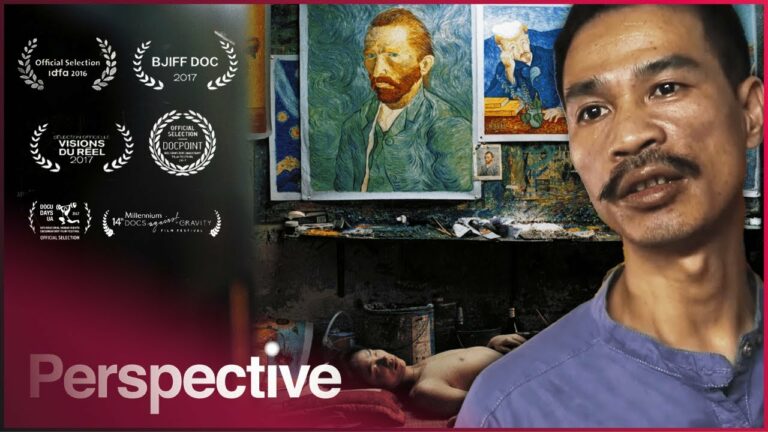
There are many reasons to look down on art forgery, from its illegality to its lack of originality. But much like any other human endeavor, you need a great deal of skill and stamina to do it well. Certain individual forgers have lived on in history: Han Van Meegeren, say, who tricked the Nazis with his Vermeers, or Elmyr de Hory, whose skills at imitating the styles of Picasso, Matisse, Modigliani, and Renoir landed him in Orson Welles’ F for Fake. If Zhao Xiaoyong doesn’t yet figure among the names of the best-known art forgers, it’s not because nobody’s made a movie about him.
That movie is Yu Haibo and Kiki Tianqi Yu’s documentary China’s Van Goghs, which you can watch just above. Much of it takes place in the village of Dafen in China’s Guangdong province, home to thousands and thousands of oil painters, all of whom make their living making replicas (in various sizes) of famous paintings by the likes of Leonardo, Rembrandt, Dalí, Basquiat, and — above all, it seems — Van Gogh. It speaks to the […]
|
|
|
|
|
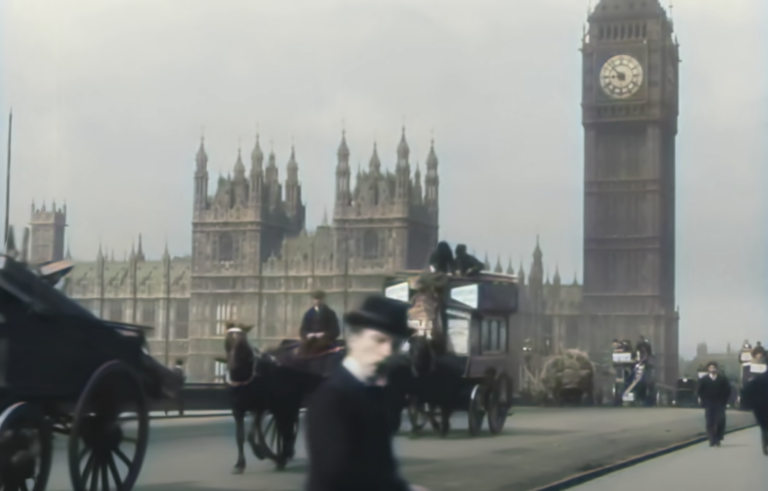
Auguste and Louis Lumière thought that cinema didn’t have a future. Fortunately, they came to that conclusion only after producing a body of work that comprises some of the earliest films ever made, as well as invaluable glimpses of the end of the nineteenth century and the dawn of the twentieth, an era that has now passed out of living memory. Using the motion-photography system that they developed themselves, the Lumière brothers captured life around them in not just their native France, but Switzerland, Italy, England, the United States, and even more exotic lands like Egypt, Turkey, and Japan — all of which you can see in the compilation video above.
The smooth color footage you see here is not, of course, what the Lumière brothers showed to their wide-eyed audiences well over a century ago. It all comes specially prepared by Youtuber Denis Shirayev, who specializes in enhancing old film with current technologies, some of them driven by machine learning.
If this sounds familiar, it may be because we’ve featured a good deal of Shirayev’s work here on […]
|
|
|
|
|
It took me four years to paint like Raphael, but a lifetime to paint like a child. – Pablo Picasso
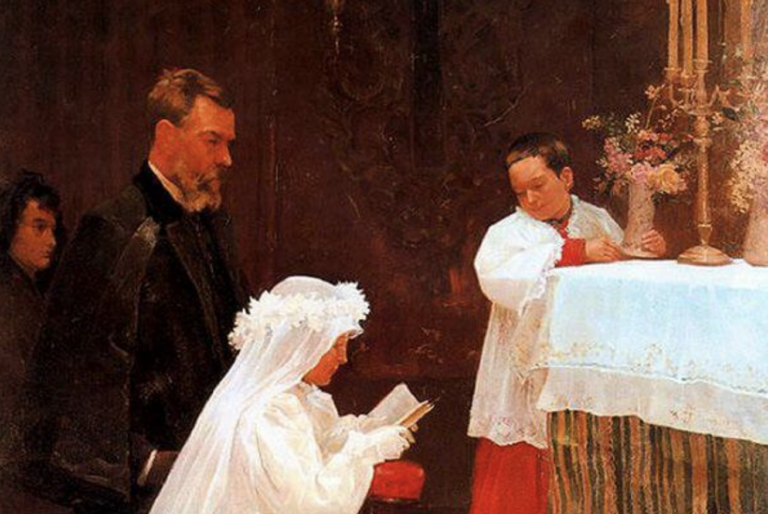
We think it’s safe to say that most of us have a preconceived notion of Picasso’s style, and The First Communion, above, isn’t it.
Picasso was just 15 when he completed this large-scale oil, having lost his 7-year-old sister, Conchita, to diphtheria one year before.
The stricken young artist had attempted to bargain with God, vowing to give up painting if she was spared. As Arianna Huffington writes in the biography Picasso: Creator and Destroyer:
…he was torn between wanting her saved and wanting her dead so that his gift would be saved. When she died, he decided that God was evil and destiny an enemy. At the same time, he was convinced that it was his ambivalence that had made it possible for God to kill Conchita. His guilt was enormous—the other side of his belief in his powers to affect the world around him. And it was compounded […]
|
|
|
|