|
Digest of new articles at openculture.com, your source for the best cultural and educational resources on the web ͏ ͏ ͏ ͏ ͏ ͏ ͏ ͏ ͏ ͏ ͏ ͏ ͏ ͏ ͏ ͏ ͏ ͏ ͏ ͏ ͏ ͏ ͏ ͏ ͏ ͏ ͏ ͏ ͏ ͏ ͏ ͏ ͏ ͏ ͏ ͏ ͏ ͏ ͏ ͏ ͏ ͏ ͏ ͏ ͏ ͏ ͏ ͏ ͏ ͏ ͏ ͏ ͏ ͏ ͏ ͏ ͏ ͏ ͏ ͏ ͏ ͏ ͏ ͏ ͏ ͏ ͏ ͏ ͏ ͏ ͏ ͏ ͏ ͏ ͏ ͏ ͏ ͏ ͏ ͏ ͏ ͏ ͏ ͏ ͏ ͏ ͏
|
|
As a white Midwestern child of the ‘70s, I received two messages loud and clear: disco was a breathtakingly glamorous, sexy urban scene, and “disco sucks.”
Culturally, the latter prevailed.
It was the opinion voiced most loudly by the popular boys.
Dissenters pushed back at their own peril.
I didn’t know what YMCA was about, and I’m not convinced the ski jacketed, puka-necklaced alpha males at my school did either.
(My father, who sang along joyfully whenever it came on the car radio, definitely did.)
Disco’s been dead for a long time now.
In the four plus decades since disgruntled Chicago radio DJ Steve Dahl commandeered a baseball stadium for a Disco Demolition Night where fans tossed around homophobic and racist epithets while destroying records, there’s been notable social progress.
This progress is the lens that makes Noah Lefevre’s Polyphonic video essay The Untold History of Disco, and other investigations into the racial and sexual underpinnings of disco possible.
I certainly never heard of Stonewall as a kid, but many contemporary viewers, coming of age in a country that is, on the […]
|
|
|
|
|
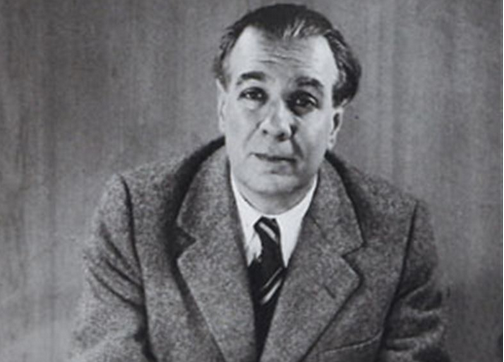
Image by Grete Stern, via Wikimedia Commons
I will admit it: I’m one of those oft-maligned non-sports people who becomes a football (okay, soccer) enthusiast every four years, seduced by the colorful pageantry, cosmopolitan air, nostalgia for a game I played as a kid, and an embarrassingly sentimental pride in my home country’s team. I don’t lose all my critical faculties, but I can’t help but love the World Cup even while recognizing the corruption, deepening poverty and exploitation, and host of other serious sociopolitical issues surrounding it. And as an American, it’s simply much easier to put some distance between the sport itself and the jingoistic bigotry and violence—“sentimental hooliganism,” to use Franklin Foer’s phrase—that very often attend the game in various parts of the world.
In Argentina, as in many soccer-mad countries with deep social divides, gang violence is a routine part of futbol, part of what Argentine writer Jorge Luis Borges termed a horrible “idea of supremacy.” Borges found it impossible to separate the fan culture from the game itself, once […]
|
|
|
|
|
Chantal Akerman’s Jeanne Dielman, 23 quai du Commerce, 1080 Bruxelles is a three-and-a-half hour film in which nothing happens. That, in any case, will be the description offered by many who will view it for the first time in the coming months. Their curiosity will have been piqued by its triumph in the just-released results of Sight and Sound magazine’s critics poll to determine the greatest films of all time. Conducted just once per decade since 1952, it has only seen two other top-spot upsets in that time: when Citizen Kane displaced Bicycle Thieves in 1962, and when Vertigo displaced Citizen Kane half a century later.
The top ten on this year’s Sight and Sound critics poll is as follows:
- Jeanne Dielman 23, quai du Commerce, 1080 Bruxelles (Chantal Akerman, 1975)
- Vertigo (Alfred Hitchcock, 1958)
- Citizen Kane (Orson Welles, 1941)
- Tokyo Story (Yasujirō Ozu, 1953)
- In the Mood for Love (Wong Kar Wai, 2000)
- 2001: A Space Odyssey (Stanley Kubrick, 1968)
- Beau travail (Claire Denis, 1998)
- Mulholland Dr. (David Lynch, 2001)
- Man with a Movie Camera (Dziga Vertov, 1929)
- Singin’ in the Rain (Gene […]
|
|
|
|
|
It’s bittersweet whenever a pioneering, long overlooked female scientist is finally given the recognition she deserves, especially so when the scientist in question is a person of color.
Chemist Alice Ball’s youth and drive – just 23 in 1915, when she discovered a gentle, but effective method for treating leprosy – make her an excellent role model for students with an interest in STEM.
But in a move that’s only shocking for its familiarity, an opportunistic male colleague, Arthur Dean, finagled a way to claim credit for her work.
We’ve all heard the tales of female scientists who were integral team players on important projects, who ultimately saw their role vastly downplayed upon publication or their names left off of a prestigious award.
But Dean’s claim that he was the one who had discovered an injectable water-soluble method for treating leprosy with oil from the seeds of the chaulmoogra fruit is all the more galling, given that he did so after Alice Ball’s tragically early death at the age of […]
|
|
|
|
|
“Chevrolet,” a new track on Neil Young’s 42nd studio album World Record, takes you on a long, rambling road trip, covering a lot of different terrain over 15 minutes, with some verses lasting more than two minutes. Above, you can watch Neil Young and Crazy Horse (Nils Lofgren, Billy Talbot and Ralph Molina) play the song for the very first time. It’s also the same cut that appears on the album. It’s a pretty remarkable display of musicianship, and a great new Neil Young track.
Related Content
Neil Young Plays “Hey, Hey, My, My” with Devo: Watch a Classic Scene from the Improvised Movie Human Highway (1980)
Neil Young Releases a Never-Before-Heard Version of His 1979 Classic, “Powderfinger”: Stream It Online
When Neil Young & Rick “Super Freak” James Formed the 60’s Motown Band, The Mynah Birds
“More Barn!” The […]
|
|
|
|