|
Digest of new articles at openculture.com, your source for the best cultural and educational resources on the web ͏ ͏ ͏ ͏ ͏ ͏ ͏ ͏ ͏ ͏ ͏ ͏ ͏ ͏ ͏ ͏ ͏ ͏ ͏ ͏ ͏ ͏ ͏ ͏ ͏ ͏ ͏ ͏ ͏ ͏ ͏ ͏ ͏ ͏ ͏ ͏ ͏ ͏ ͏ ͏ ͏ ͏ ͏ ͏ ͏ ͏ ͏ ͏ ͏ ͏ ͏ ͏ ͏ ͏ ͏ ͏ ͏ ͏ ͏ ͏ ͏ ͏ ͏ ͏ ͏ ͏ ͏ ͏ ͏ ͏ ͏ ͏ ͏ ͏ ͏ ͏ ͏ ͏ ͏ ͏ ͏ ͏ ͏ ͏ ͏ ͏ ͏
|
|
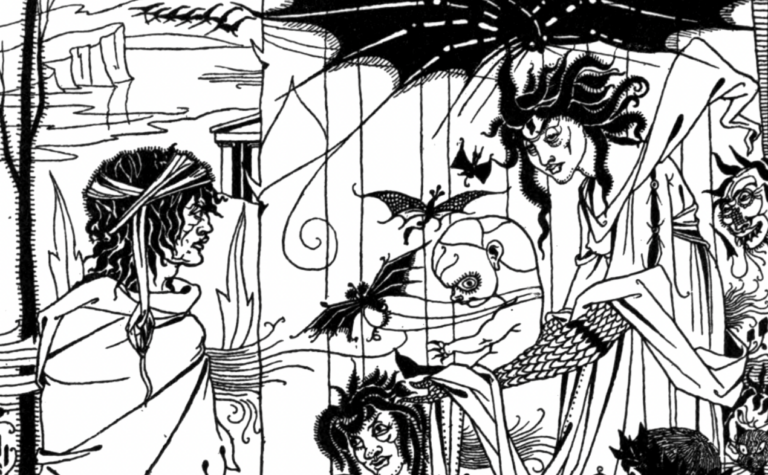
Late in life, Kingsley Amis declared that he would henceforth read only novels opening with the sentence “A shot rang out.” On one level, this would have sounded bizarre coming from one of Britain’s most prominent men of letters. But on another it aligned with his long-demonstrated appreciation of genre fiction, including not just stories of crime but also of high technology and space exploration. His lifelong interest in the latter inspired the Christian Gauss Lectures he delivered at Princeton in 1958, published soon thereafter as New Maps of Hell: A Survey of Science Fiction, a book that sees him trace the history of the genre well back beyond his own boyhood — about eighteen centuries beyond it.
“Histories of science fiction, as opposed to ‘imaginative literature,’ usually begin, not with Plato or The Birds of Aristophanes or the Odyssey, but with a work of the late Greek prose romancer Lucian of Samosata,” Amis writes. He refers to what scholars now know as A True Story (Ἀληθῆ διηγήματα), a […]
|
|
|
|
|
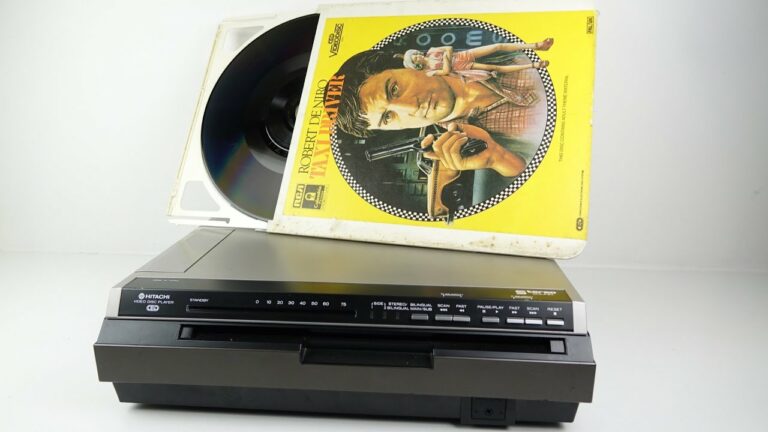
Anyone over 30 remembers a time when it was impossible to imagine home video without physical media. But anyone over 50 remembers a time when it was difficult to choose which kind of media to bet on. Just as the “computer zoo” of the early 1980s forced home-computing enthusiasts to choose between Apple, IBM, Commodore, Texas Instruments, and a host of other brands, each with its own technological specifications, the market for home-video hardware presented several different alternatives. You’ve heard of Sony’s Betamax, for example, which has been a punchline ever since it lost out to JVC’s VHS. But that was just the realm of video tape; have you ever watched a movie on a vinyl record?
Four decades ago, it was difficult for most consumers to imagine home video at all. “Get records that let you have John Travolta dancing on your floor, Gene Hackman driving though your living room, the Godfather staying at your house,” booms the narrator of the television commercial above.
How, you ask? By purchasing a SelectaVision player and compatible video […]
|
|
|
|
|
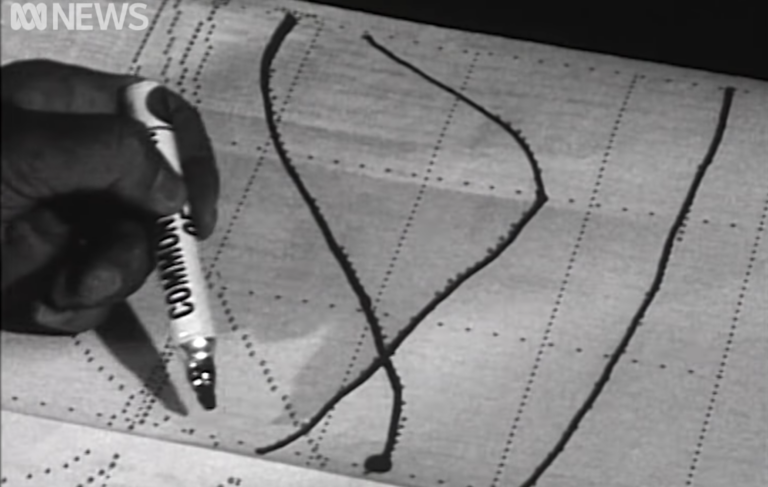
In 1704, Isaac Newton predicted the end of the world sometime around (or after, “but not before”) the year 2060, using a strange series of mathematical calculations. Rather than study what he called the “book of nature,” he took as his source the supposed prophecies of the book of Revelation. While such predictions have always been central to Christianity, it is startling for modern people to look back and see the famed astronomer and physicist indulging them. For Newton, however, as Matthew Stanley writes at Science, “laying the foundation of modern physics and astronomy was a bit of a sideshow. He believed that his truly important work was deciphering ancient scriptures and uncovering the nature of the Christian religion.”
Over three hundred years later, we still have plenty of religious doomsayers predicting the end of the world with Bible codes. But in recent times, their ranks have seemingly been joined by scientists whose only professed aim is interpreting data from climate research and sustainability estimates given population growth and dwindling resources. The scientific predictions do not draw on ancient […]
|
|
|
|
|
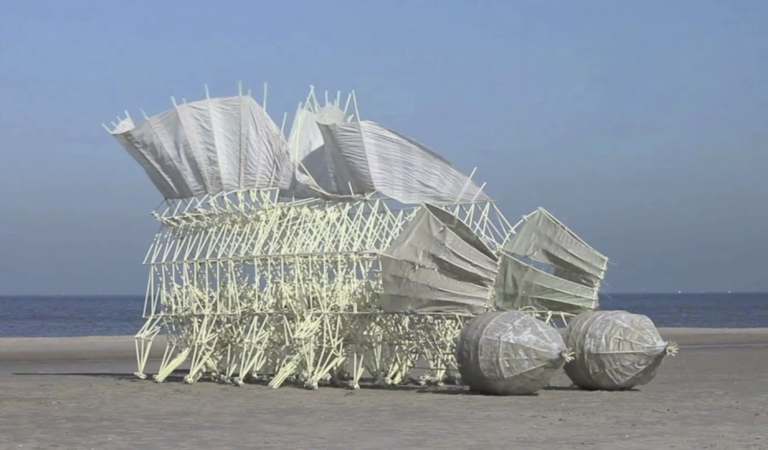
No cartoon Dutch landscape omits a windmill. With their wooden frames and large blades, those mechanical structures have been used in the Netherlands since at least the twelfth century, first to pump water out of potentially arable lowlands, and later for such uses as sawing wood and pounding grain. Today, of course, there exist much more efficient technologies for those jobs, but the windmill nevertheless remains a Dutch cultural icon. In the Netherlands the wind itself also blows as strong as ever, just waiting to be harnessed: if not by industry, then perhaps by art. Enter Theo Jansen, inventor of the strandbeest — Dutch for “beach beast,” an apt description of its nature.
Elaborately constructed with off-the-shelf materials like wood, PVC piping, and sheets of fabric, Jansen’s large and fantastical-looking strandbeesten walk through the sand as if moving under their own volition. In fact they’re wind-powered kinetic sculptures, articulated in such a way as to make their movements look wholly organic.
Created for more than thirty years now through Jansen’s intelligent design, the strandbeesten […]
|
|
|
|