|
Digest of new articles at openculture.com, your source for the best cultural and educational resources on the web ͏ ͏ ͏ ͏ ͏ ͏ ͏ ͏ ͏ ͏ ͏ ͏ ͏ ͏ ͏ ͏ ͏ ͏ ͏ ͏ ͏ ͏ ͏ ͏ ͏ ͏ ͏ ͏ ͏ ͏ ͏ ͏ ͏ ͏ ͏ ͏ ͏ ͏ ͏ ͏ ͏ ͏ ͏ ͏ ͏ ͏ ͏ ͏ ͏ ͏ ͏ ͏ ͏ ͏ ͏ ͏ ͏ ͏ ͏ ͏ ͏ ͏ ͏ ͏ ͏ ͏ ͏ ͏ ͏ ͏ ͏ ͏ ͏ ͏ ͏ ͏ ͏ ͏ ͏ ͏ ͏ ͏ ͏ ͏ ͏ ͏ ͏
|
|
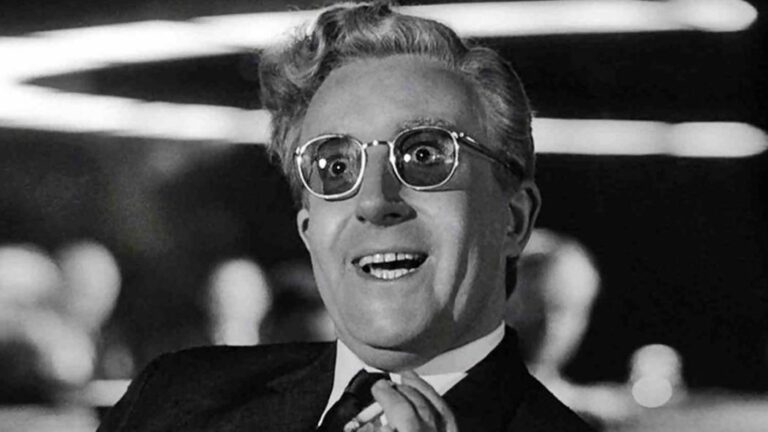
Having by now seen Stanley Kubrick’s Dr. Strangelove or: How I Learned to Stop Worrying and Love the Bomb (1964) more times than I can remember, it surprises me to meet someone who’s never seen it at all. When I do, my first impulse is always to suggest a screening right then and there. This would seem to put me in company with Oliver Stone, who in recent years has been documented engaging in at least one instance of high-profile Strangelove evangelism. As for the new inductee into the Strangelove viewership, he went more than 60 years without having seen the film, but for the last couple of decades had the credible excuse of busyness: it isn’t just a part-time gig, after all, being the president of Russia.
Stone seized the opportunity to watch Dr. Strangelove with Vladimir Putin in the course of filming The Putin Interviews, a four-part documentary series broadcast on Showtime in 2017. This wasn’t the first time Stone had made a subject of his own interactions with a head of state whom many Americans consider malevolent: in 2008’s South of […]
|
|
|
|
|
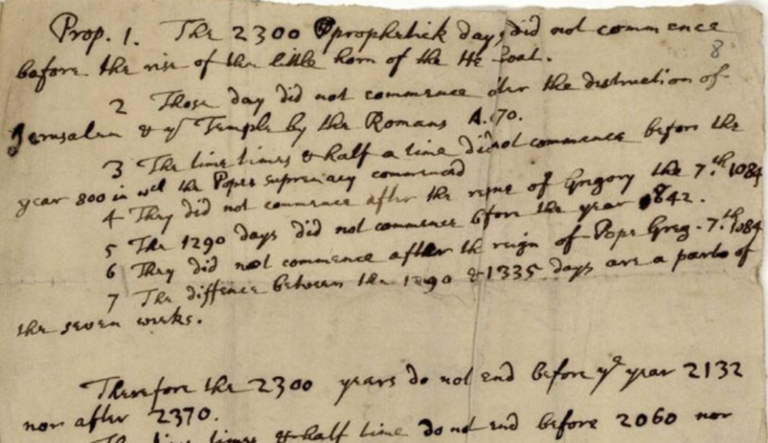
We have become quite used to pronouncements of doom, from scientists predicting the sixth mass extinction due to the measurable effects of climate change, and from religionists declaring the apocalypse due to a surfeit of sin. It’s almost impossible to imagine these two groups of people agreeing on anything other than the ominous portent of their respective messages. But in the early days of the scientific revolution—the days of Shakespeare contemporary Francis Bacon, and later 17th century Descartes—it was not at all unusual to find both kinds of reasoning, or unreasoning, in the same person, along with beliefs in magic, divination, astrology, etc.
Yet even in this maelstrom of heterodox thought and practices, Sir Isaac Newton stood out as a particularly odd co-existence of esoteric biblical prophecy, occult beliefs, and a rigid, formal mathematics that not only adhered to the inductive scientific method, but also expanded its potential by applying general axioms to specific cases.
Yet many of Newton’s general principles would seem totally inimical to the naturalism of most physicists […]
|
|
|
|
|
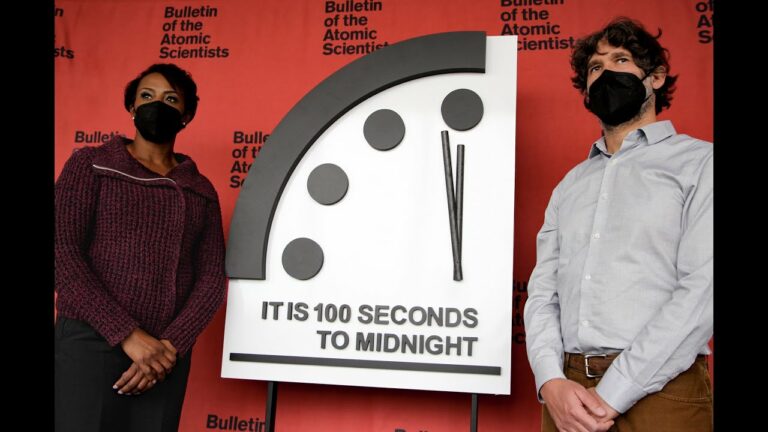
Image via The Bulletin of the Atomic Scientists
Last year, the fates handed the New York Times‘ Maria Cramer an enviably striking lede: “Humanity is 100 seconds away from total annihilation. Again.” That we all know immediately what she was writing about speaks to the power of graphic design. Specifically, it speaks to the power of graphic design as practiced by Martyl Langsdorf, who happened to be married to ex-Manhattan Project physicist Alexander Langsdorf. This connection got her the gig of creating a cover for the June 1947 issue of the Bulletin of the Atomic Scientists. She came up with a simple image: the upper-left corner of a clock, its hands at seven minutes to midnight.
Asked later why she set the clock to that time in particular, Langsdorf explained that “it looked good to my eye.” That quote appears in a post at the Bulletin addressing frequently asked questions about what’s now known as the Doomsday Clock, “a design that warns the public about how close we are […]
|
|
|
|
|
The original rock supergroup, Cream, lasted two years, changed the course of rock music, barely held together because of rancor between members and said goodbye in 1968. Their farewell concert at the Royal Albert Hall in London was one for the ages. Maybe not their best performance, but one of their most energetic. And inside the cavernous Hall, the three men laid down a wall of undeniable sound.
Too bad that it wasn’t properly documented, despite a series of cameras there that evening. A Youtube denizen called Mike Lefton has tried to rectify the history by assembling a cut of the 70-minute concert that plays in real time. It’s the kind of fan project for which YouTube is designed—something not professional enough for official release, but vitally important for the fans.
Go on to the BezosBorg site (you know, it rhymes with Glamazon), and you can find a concert film offered on Blu-Ray. What’s wrong with that, you might ask? Cream fans will tell you. Instead of letting the band play, the official Farewell Concert leaves off several songs, and includes a […]
|
|
|
|