|
Digest of new articles at openculture.com, your source for the best cultural and educational resources on the web ͏ ͏ ͏ ͏ ͏ ͏ ͏ ͏ ͏ ͏ ͏ ͏ ͏ ͏ ͏ ͏ ͏ ͏ ͏ ͏ ͏ ͏ ͏ ͏ ͏ ͏ ͏ ͏ ͏ ͏ ͏ ͏ ͏ ͏ ͏ ͏ ͏ ͏ ͏ ͏ ͏ ͏ ͏ ͏ ͏ ͏ ͏ ͏ ͏ ͏ ͏ ͏ ͏ ͏ ͏ ͏ ͏ ͏ ͏ ͏ ͏ ͏ ͏ ͏ ͏ ͏ ͏ ͏ ͏ ͏ ͏ ͏ ͏ ͏ ͏ ͏ ͏ ͏ ͏ ͏ ͏ ͏ ͏ ͏ ͏ ͏ ͏
|
|
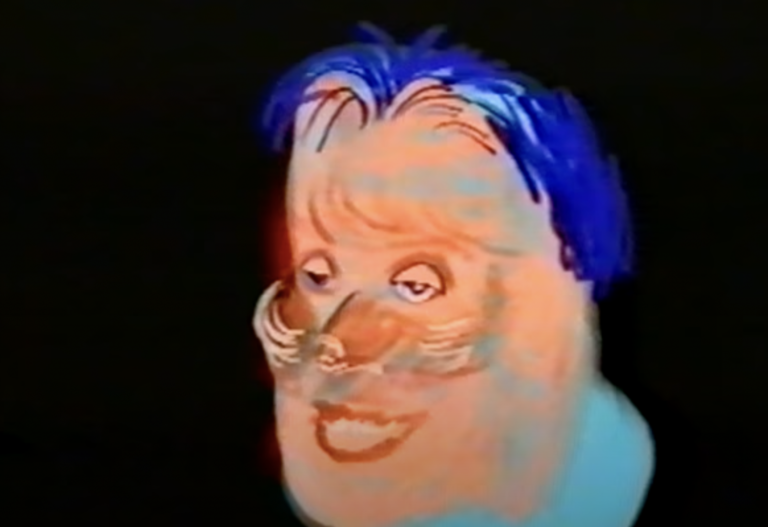
Think of the television graphics you remember from the nineteen-eighties — or, perhaps more likely, the nineteen-eighties television graphics you’ve seen lately on Youtube. Much of it looks cheesy today, but some examples have become appealingly retro over the decades, and certain works remain genuinely impressive as pieces of digital art. Nowadays we can, in theory, replicate and even outdo the finest TV imagery of the eighties on our computers, or even our phones. But in the days before high-powered personal computing, let alone smartphones, how did such brilliantly colored, energetically animated, and sometimes genuinely artistic graphics get made? The answer, nine times out of ten, was on the Quantel Paintbox.
Introduced in 1981, the Paintbox was a custom-designed digital graphic workstation that cost about $250,000 USD, or more than $623,000 today. To major television stations and networks that money was well spent, buying as it did the unprecedentedly fast production of images and animations for broadcast. ”It used to be that we had a staff of artists who drew and drew,” the New York Times quotes ABC’s director of production development as […]
|
|
|
|
|
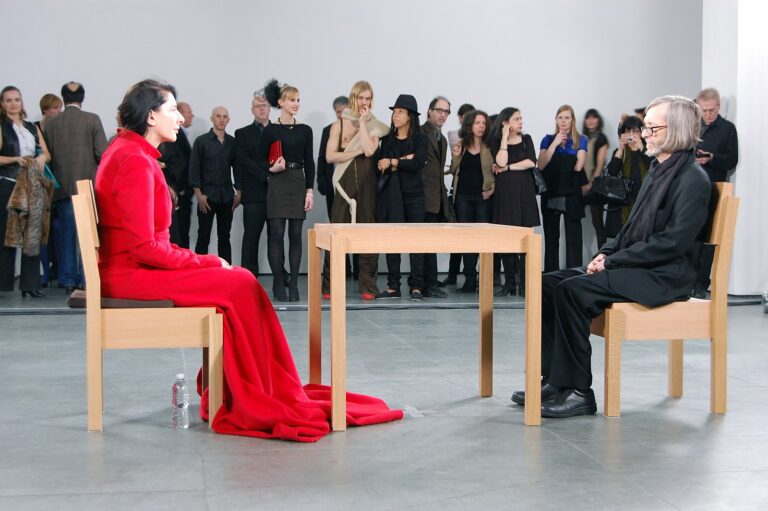
For a couple of months in 2010, Marina Abramović spent her days wordlessly and motionlessly sitting at a table in the atrium of the Museum of Modern Art. Any visitor could sit in the chair opposite her, for as long as they liked. In response, Abramović said nothing and did almost nothing (even during visits from Lou Reed, Bjork, or her long-ago lover and collaborator, the late Ulay). The whole experience constituted a piece of performance art, titled The Artist Is Present. As with many works of that form, to ask why Abramović did it is to miss the point. Nothing like it had been done before, and it thus promised to enter uncharted artistic, social, and emotional territory.
A dozen years later, the artist will be present again, but this time with a highly specific motive in mind: to raise money for the besieged nation of Ukraine. “Abramović has partnered with New York’s Sean Kelly Gallery and Artsy to offer a performance art meet-and-greet… or at least meet-and-silently-stare,” writes Hyperallergic’s Sarah Rose Sharp.
“Through March 25, interested parties can […]
|
|
|
|
|
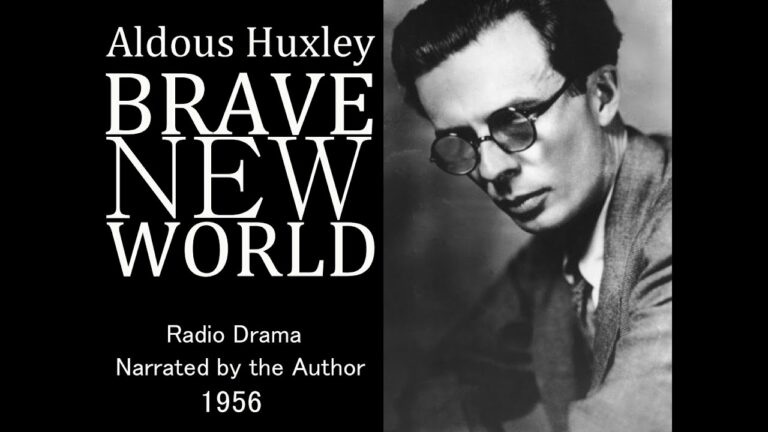
The CBS Radio Workshop was an “experimental dramatic radio anthology series” that aired between 1956 and 1957. And it started with style–with a dramatized adaptation of Brave New World, narrated by Aldous Huxley himself. The broadcast aired on January 27 and February 3 1956. The remaining 84 programs in the CBS Radio Workshop series drew on the work of Antoine de Saint-Exupéry, James Thurber, H.L. Mencken, Mark Twain, Robert Heinlein, Eugene O’Neil, Balzac, Carl Sandburg, and so many more. You can hear many of those episodes online here.
Related Content
Aldous Huxley Predicts in 1950 What the World Will Look Like in the Year 2000
When Aldous Huxley, Dying of Cancer, Left This World Tripping on LSD, Experiencing “the Most Serene, the Most Beautiful Death” (1963)
[…]
|
|
|
|
|
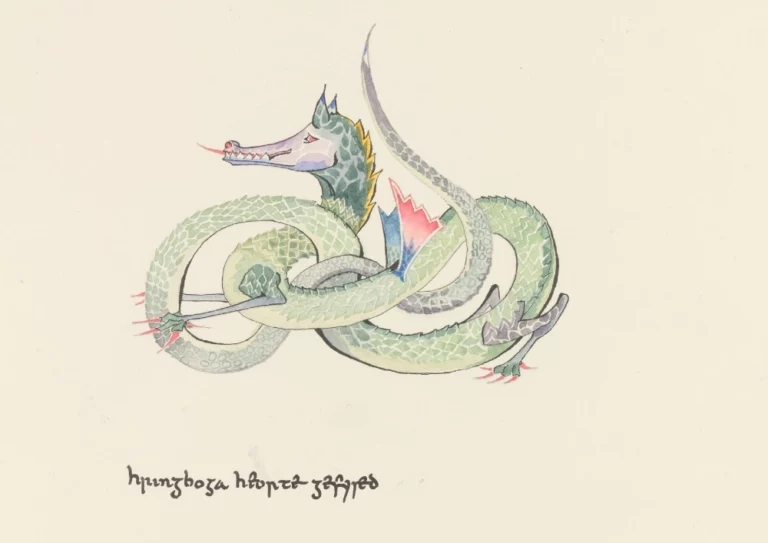
J. R. R. Tolkien managed to write the Lord of the Rings trilogy, which ought to be accomplishment enough for one mortal. But he also wrote the The Hobbit, the gateway for generations of children into his major work, as well as a host of other works of fiction, poetry, and scholarship, many of them not published until after his death in 1973. And those are only his writings: a lifelong artist, Tolkien also produced a great many drawings and paintings, book-cover designs, and pictures meant to delight his own children as well as the children of others.
Yet somehow more material has remained in the vault, and only now brought out for proper public consideration. As reported earlier this month by Artnet’s Sarah Cascone, Tolkien’s estate “has released a new website featuring artworks, some previously unseen,” all created by the man himself.
“In addition to a number of detailed maps, the estate has released illustrations Tolkien created for The Hobbit, The Lord of the Rings, and The Silmarillion, as […]
|
|
|
|
|
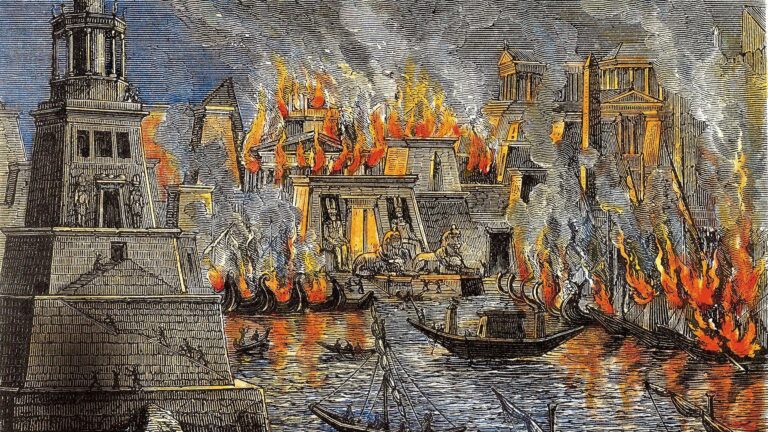
The Library of Alexandria has been physically gone for about eighteen centuries now, but the institution endures as a powerful symbol. Today we have the internet, which none can deny is at least well on its way to becoming a digital store of all human knowledge. But despite having emerged from an ever more enormously complex technological infrastructure, the internet is difficult to capture in a legible mental picture. The Library of Alexandria, by contrast, actually stood in Egypt for some 300 years after its commissioning by Ptolemy I and II, and early in the second century B.C. it bid fair to hold practically all written knowledge in existence within its walls (and those of its “daughter library” the Serapeum, constructed when the main building ran out of space).
Interesting enough as a lost work of ancient architecture, the Library of Alexandria is remembered for its contents — not that history has been able to remember in much detail what those contents actually were. “Some ancient authors claimed that it contained 700,000 books,” says ancient-history scholar Garret Ryan in […]
|
|
|
|