|
Digest of new articles at openculture.com, your source for the best cultural and educational resources on the web ͏ ͏ ͏ ͏ ͏ ͏ ͏ ͏ ͏ ͏ ͏ ͏ ͏ ͏ ͏ ͏ ͏ ͏ ͏ ͏ ͏ ͏ ͏ ͏ ͏ ͏ ͏ ͏ ͏ ͏ ͏ ͏ ͏ ͏ ͏ ͏ ͏ ͏ ͏ ͏ ͏ ͏ ͏ ͏ ͏ ͏ ͏ ͏ ͏ ͏ ͏ ͏ ͏ ͏ ͏ ͏ ͏ ͏ ͏ ͏ ͏ ͏ ͏ ͏ ͏ ͏ ͏ ͏ ͏ ͏ ͏ ͏ ͏ ͏ ͏ ͏ ͏ ͏ ͏ ͏ ͏ ͏ ͏ ͏ ͏ ͏ ͏
|
|
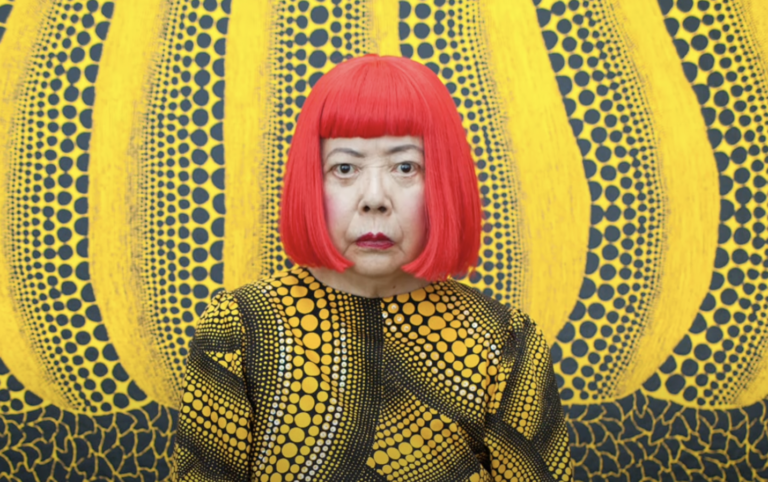
Yayoi Kusama turned 93 this past Tuesday, and she remains not just artistically productive but globally beloved. Her work itself continues to appeal to an ever wider range of viewers of all nationalities and ages. “Yayoi Kusama is a Japanese artist who is sometimes called ‘the princess of polka dots’,” says the brief introduction to her life and work offered at Take Kids. “Although she makes lots of different types of art – paintings, sculptures, performances and installations – they have one thing in common, DOTS!” That’s certainly one way of describing her, though anyone who’s followed her 70-year-long career will notice the conspicuous absence of other, equally important elements of her art’s development: mental illness, for instance, or enormous numbers of phalluses.
Yet even the new video essay on Kusama from Great Art Explained, a Youtube channel very much pitched to an adult viewership, takes as its focus the artist’s relationship with variously sized two-dimensional solid circles. At the age of ten, says the channel’s creator James Payne, she “had her first hallucination, which she described as flashes […]
|
|
|
|
|
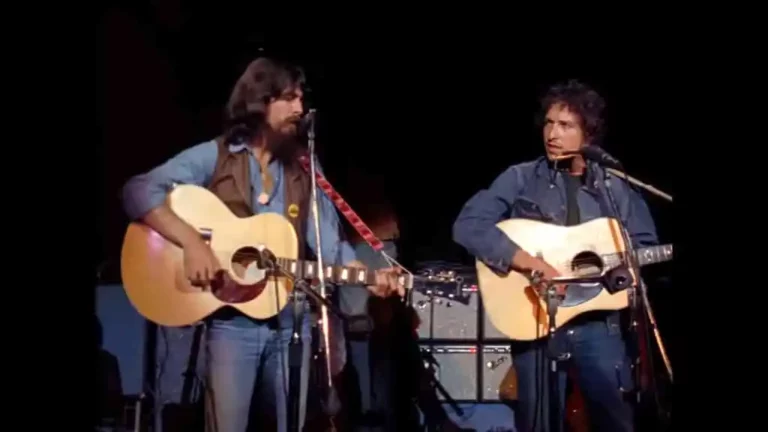
“Dylan… was really into the whole idea of it for the refugees….” says George Harrison over the restored footage above from 1971’s Concert for Bangladesh. The quiet Beatle’s scouser lilt will surely tug at your heartstrings, as will Harrison and Dylan’s careful rehearsal take of “If Not for You,” a song they did not end up playing together during the concert. It’s a significant shared moment nonetheless. As fans know, “If Not for You” became a keystone song for both artists at the turn of the 70s.
Dylan wrote the song the year previous as the first track on his 1970 New Morning, a record critics heralded as a return to form after the panned double album, Self Portrait. Harrison himself sat in on a session for the song and recorded a “languid early version,” notes Beatles Bible, “at Columbia’s Studio B in New York.”
The track is “thought to be Harrison’s first recorded instance of slide guitar,” a technique that would characterize the sound of his double debut, All Things Must Pass. His presence arguably helped shape the direction of Dylan’s recording, which Dylan himself […]
|
|
|
|
|
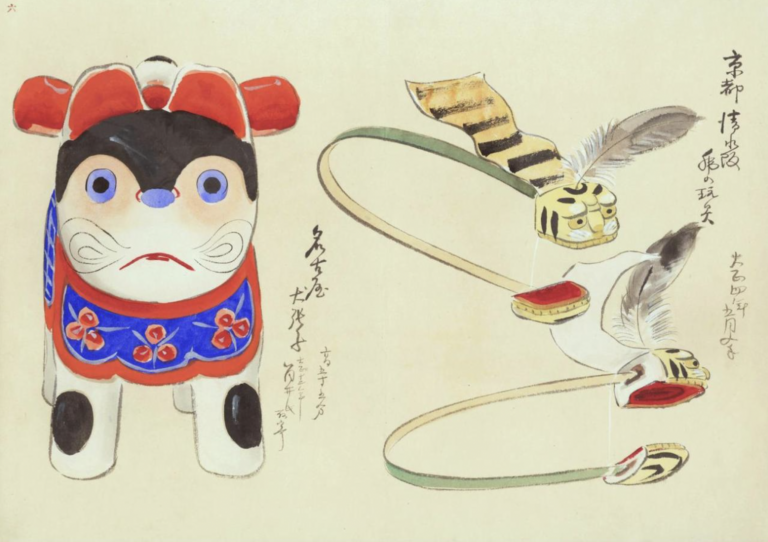
After two centuries of isolation, Japan re-opened to the world in the 1860s, at which point Westerners immediately became enamored with things Japanese. It was in that very same decade that Vincent Van Gogh began collecting ukiyo-e woodblock prints, which inspired him to create “the art of the future.” But not every Westerner was drawn first to such elevated fruits of Japanese culture. When the American educator William Elliot Griffis went to Japan in 1876 he marveled at a country that seemed to be a paradise of play: “We do not know of any country in the world in which there are so many toy-shops, or so many fairs for the sale of things which delight children,” he wrote.
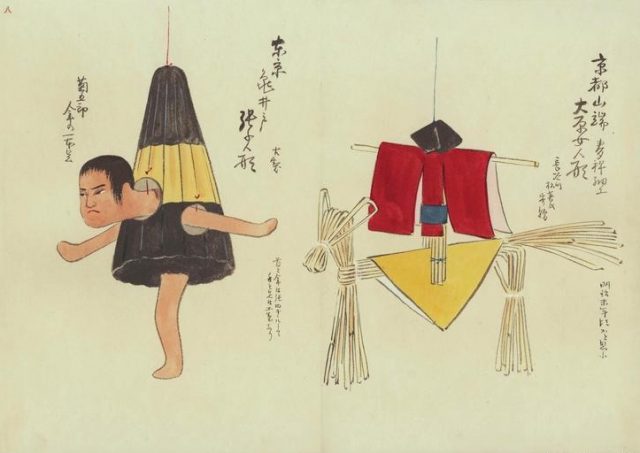
That quote comes from Matt Alt’s Pure Invention: How Japan’s Pop Culture Conquered the World. “While Western tastemakers voraciously consumed prints, glassware, textiles, and other grown-up delights, it was in fact toys that formed the backbone of Japan’s burgeoning export […]
|
|
|
|
|
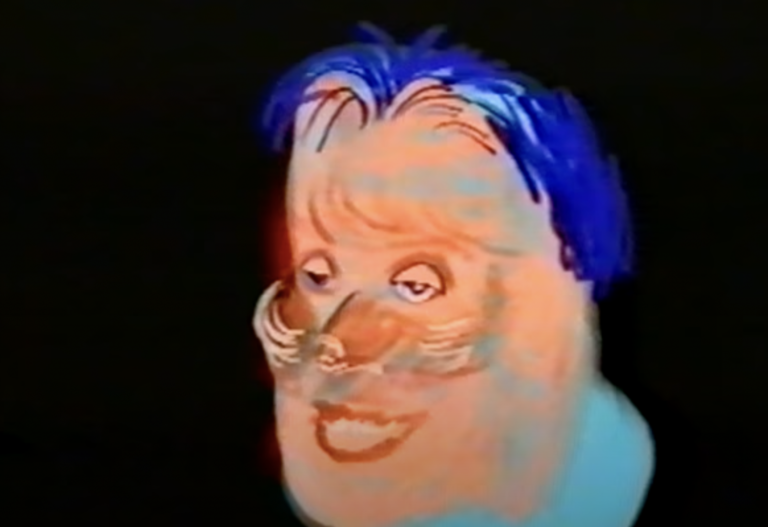
Think of the television graphics you remember from the nineteen-eighties — or, perhaps more likely, the nineteen-eighties television graphics you’ve seen lately on Youtube. Much of it looks cheesy today, but some examples have become appealingly retro over the decades, and certain works remain genuinely impressive as pieces of digital art. Nowadays we can, in theory, replicate and even outdo the finest TV imagery of the eighties on our computers, or even our phones. But in the days before high-powered personal computing, let alone smartphones, how did such brilliantly colored, energetically animated, and sometimes genuinely artistic graphics get made? The answer, nine times out of ten, was on the Quantel Paintbox.
Introduced in 1981, the Paintbox was a custom-designed digital graphic workstation that cost about $250,000 USD, or more than $623,000 today. To major television stations and networks that money was well spent, buying as it did the unprecedentedly fast production of images and animations for broadcast. ”It used to be that we had a staff of artists who drew and drew,” the New York Times quotes ABC’s director of production development as […]
|
|
|
|
|
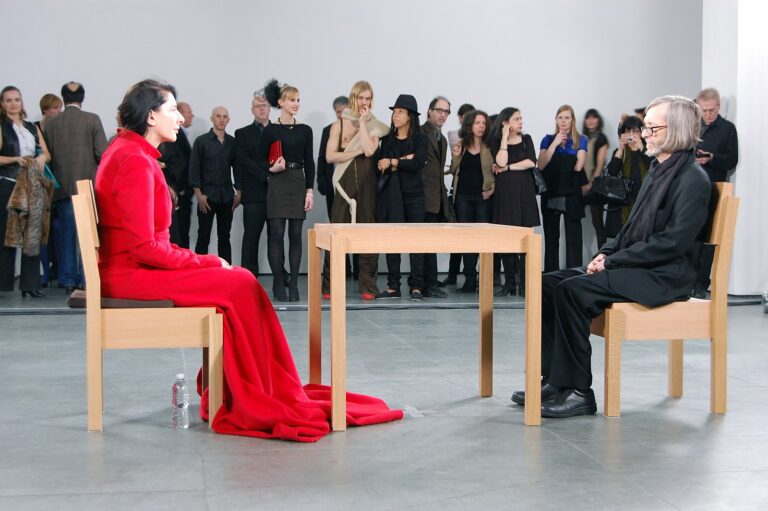
For a couple of months in 2010, Marina Abramović spent her days wordlessly and motionlessly sitting at a table in the atrium of the Museum of Modern Art. Any visitor could sit in the chair opposite her, for as long as they liked. In response, Abramović said nothing and did almost nothing (even during visits from Lou Reed, Bjork, or her long-ago lover and collaborator, the late Ulay). The whole experience constituted a piece of performance art, titled The Artist Is Present. As with many works of that form, to ask why Abramović did it is to miss the point. Nothing like it had been done before, and it thus promised to enter uncharted artistic, social, and emotional territory.
A dozen years later, the artist will be present again, but this time with a highly specific motive in mind: to raise money for the besieged nation of Ukraine. “Abramović has partnered with New York’s Sean Kelly Gallery and Artsy to offer a performance art meet-and-greet… or at least meet-and-silently-stare,” writes Hyperallergic’s Sarah Rose Sharp.
“Through March 25, interested parties can […]
|
|
|
|