|
Digest of new articles at openculture.com, your source for the best cultural and educational resources on the web ͏ ͏ ͏ ͏ ͏ ͏ ͏ ͏ ͏ ͏ ͏ ͏ ͏ ͏ ͏ ͏ ͏ ͏ ͏ ͏ ͏ ͏ ͏ ͏ ͏ ͏ ͏ ͏ ͏ ͏ ͏ ͏ ͏ ͏ ͏ ͏ ͏ ͏ ͏ ͏ ͏ ͏ ͏ ͏ ͏ ͏ ͏ ͏ ͏ ͏ ͏ ͏ ͏ ͏ ͏ ͏ ͏ ͏ ͏ ͏ ͏ ͏ ͏ ͏ ͏ ͏ ͏ ͏ ͏ ͏ ͏ ͏ ͏ ͏ ͏ ͏ ͏ ͏ ͏ ͏ ͏ ͏ ͏ ͏ ͏ ͏ ͏
|
|
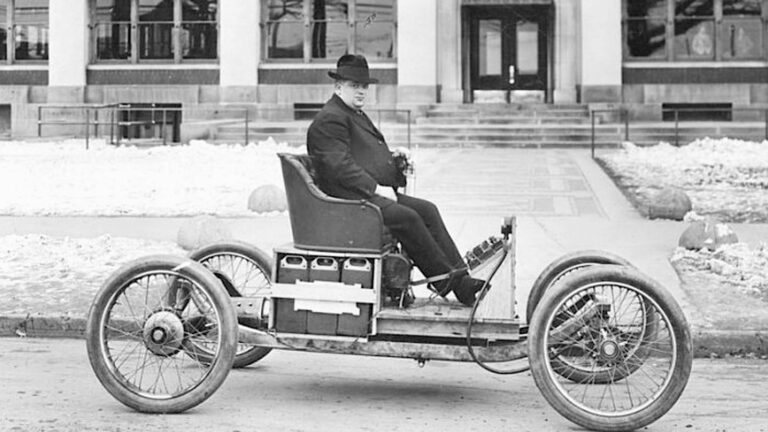
Few inventions have come to define twenty-first century mobility as much as the electric car. As reported at EVBox by Joseph D. Simpson and Wesley van Barlingen, the number of electric vehicles on the road has exploded from “negligible” in 2010 to “as many as 10 million” by the end of 2021. Electric vehicle manufacturer Tesla “is the most valuable automotive company on the planet,” worth “an estimated $1 trillion.” That company takes its name from inventor and alternating-current pioneer Nikola Tesla, but it was under the influence of Tesla’s rival Thomas Edison that the electric car went through much of its early evolution.
“At about the time Ford Motor Co. was founded in 1903, Edison had made inroads with battery technology and started offering nickel-iron batteries for several uses, including automobiles,” writes Wired‘s Dan Strohl. At the turn of the 20th century, the vehicles on American roads ran on three different kinds of power: 40 percent used steam, almost as many used electricity, and round 20 percent used gasoline.
Never hesitant to […]
|
|
|
|
|
The history of birth control is almost as old as the history of the wheel.
Pessaries dating to Mesopotamia and ancient Egypt provide the launching pad for documentarian Lindsay Holiday‘s overview of birth control throughout the ages and around the world.
Holiday’s History Tea Time series frequently delves into women’s history, and her pledge to donate a portion of the above video’s ad revenue to Pathfinder International serves as reminder that there are parts of the world where women still lack access to affordable, effective, and safe means of contraception.
One goal of the World Health Organization’s Ending Preventable Maternal Mortality initiative is for 65% of women to be able to make informed and empowered decisions regarding sexual relations, contraceptive use, and their reproductive health by 2025.
As Holiday points out, expense, social stigma, and religious edicts have impacted ease of access to birth control for centuries.
The further back you go, you can be certain that some methods advocated by midwives and medicine women have been lost to history, owing to unrecorded oral tradition and the sensitive nature of […]
|
|
|
|
|
For the past 15 years, we’ve been busy rummaging around the internet and adding courses to an ever-growing list of Free Online Courses, which now features 1,700 courses from top universities. Let’s give you the quick overview: The list lets you download audio & video lectures from schools like Stanford, Yale, MIT, Oxford, Harvard and many other institutions. Generally, the courses can be accessed via YouTube, iTunes or university web sites, and you can listen to the lectures anytime, anywhere, on your computer or smart phone. We haven’t done a precise calculation, but there’s about 50,000 hours of free audio & video lectures here. Enough to keep you busy for a very long time–something that’s useful during these socially distant times.
Right now you’ll find 200 free philosophy courses, 105 free history courses, 170 free computer science courses, 85 free physics courses and 55 Free Literature Courses in the collection, and that’s just beginning to scratch the surface. You can peruse sections covering […]
|
|
|
|
|
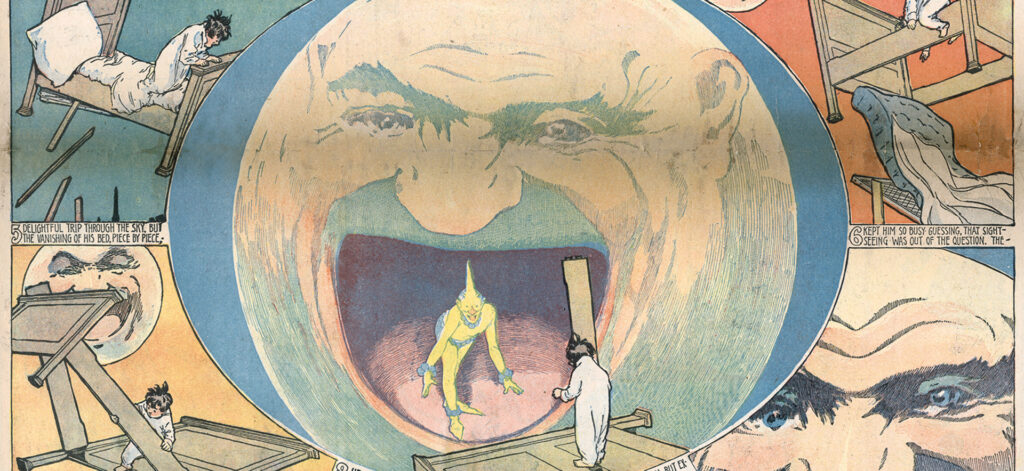
The popularity of graphic novels (and more than a few extremely lucrative superhero movie franchises) have conferred respectability on comics.
Handsome reissues of such stunning early works as Winsor McKay’s Little Nemo in Slumberland, George Herriman’s Krazy Kat, and Frank King’s Walt and Skeezix suggest that readers’ appetite for vintage comics extends deeper and further back than mere nostalgia for the Sunday funnies of their youth.
Artist Andy Bleck’s Andy’s Early Comics Archive is an excellent resource for those seeking to discover early examples of the form that have yet to be reissued in a collected edition. (Fair warning: reflecting the attitudes of the time, the collection does inevitably contains some racist imagery. Such imagery won’t be on display in this post.)
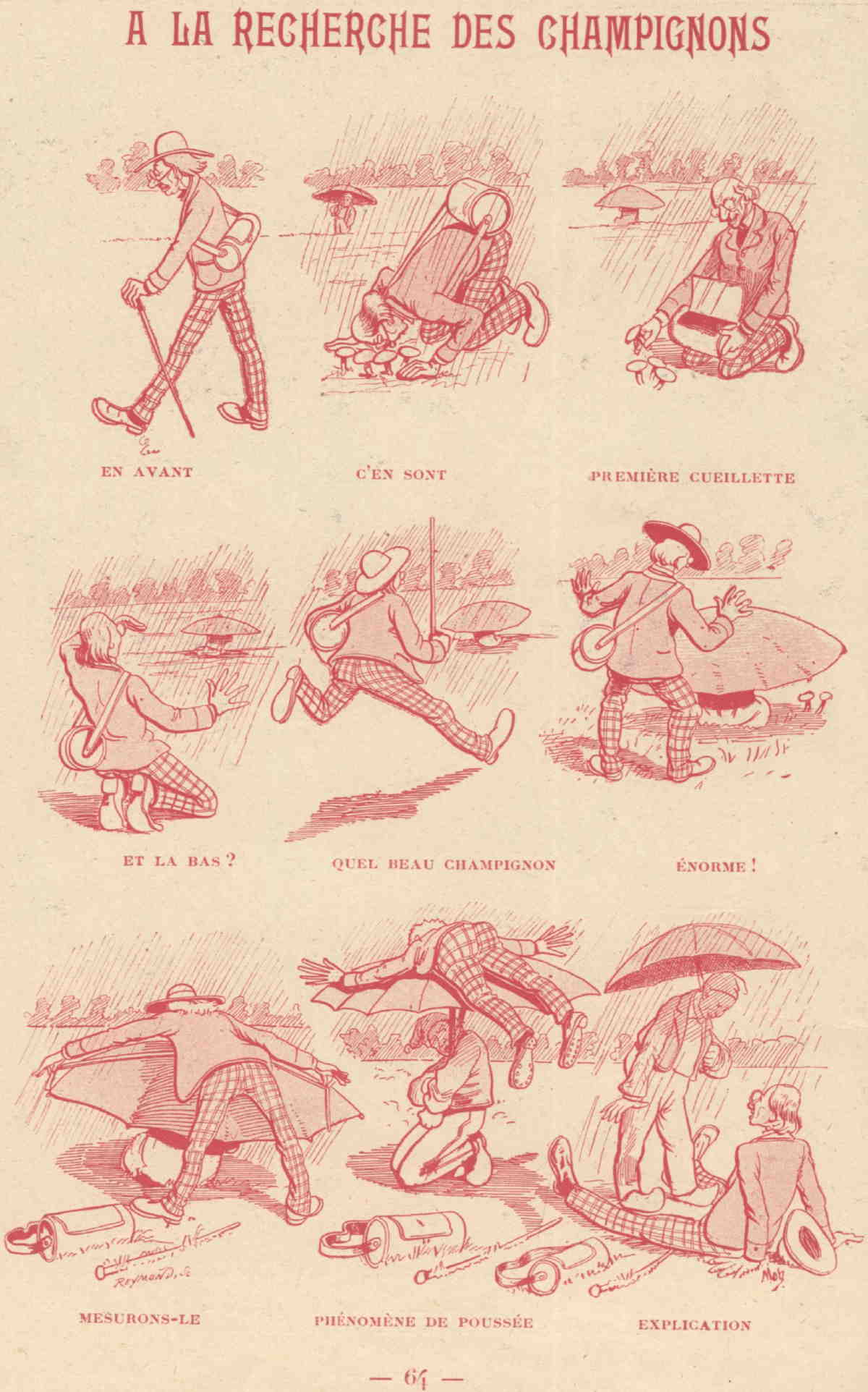
Bleck, the creator of Konky Kru, a beautifully simple, wordless series, as well as several self-published mini comics, takes a historian’s interest in his subject, beginning with the William Hogarth engravings A Harlot’s Progress from […]
|
|
|
|
|
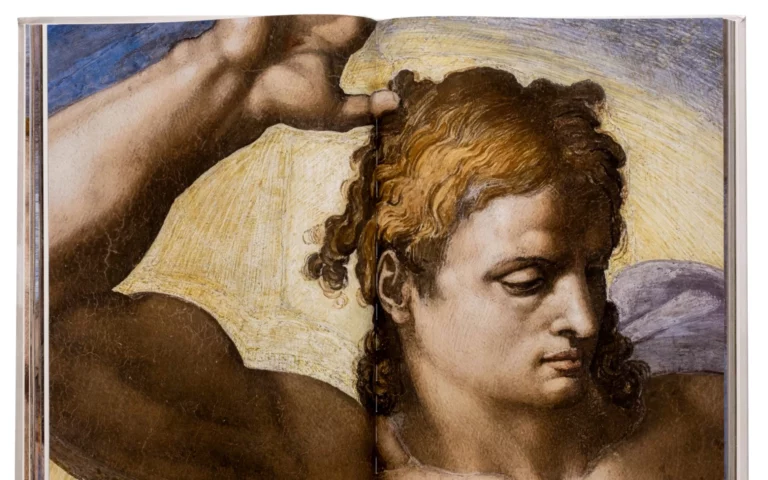
Michelangelo didn’t want to paint the ceiling of the Sistine Chapel. Having considered himself more of a sculptor than a painter — and, given his skill with stone, not without cause — he felt that taking on such an ambitious project could bring him to ruin. But one does not simply turn down a job offer from the Vatican, and especially not when one is among the most respected artists in sixteenth-century Italy. In the event, Michelangelo proved equal to the task, or rather, much more than equal: he completed his ceiling frescoes in 1512 for Pope Julius II, and 23 years later was commissioned again by Pope Paul III to paint the Last Judgment over the altar.
Long before Michelangelo touched a brush to the Sistine Chapel’s ceiling, a team of painters including Sandro Botticelli, Pietro Perugino, and Pinturicchio had already adorned the building’s interior with frescoes depicting the lives of Moses and Jesus Christ.
Taken together, the Sistine Chapel has long been regarded as one of the greatest achievements […]
|
|
|
|