|
Digest of new articles at openculture.com, your source for the best cultural and educational resources on the web ͏ ͏ ͏ ͏ ͏ ͏ ͏ ͏ ͏ ͏ ͏ ͏ ͏ ͏ ͏ ͏ ͏ ͏ ͏ ͏ ͏ ͏ ͏ ͏ ͏ ͏ ͏ ͏ ͏ ͏ ͏ ͏ ͏ ͏ ͏ ͏ ͏ ͏ ͏ ͏ ͏ ͏ ͏ ͏ ͏ ͏ ͏ ͏ ͏ ͏ ͏ ͏ ͏ ͏ ͏ ͏ ͏ ͏ ͏ ͏ ͏ ͏ ͏ ͏ ͏ ͏ ͏ ͏ ͏ ͏ ͏ ͏ ͏ ͏ ͏ ͏ ͏ ͏ ͏ ͏ ͏ ͏ ͏ ͏ ͏ ͏ ͏
|
|
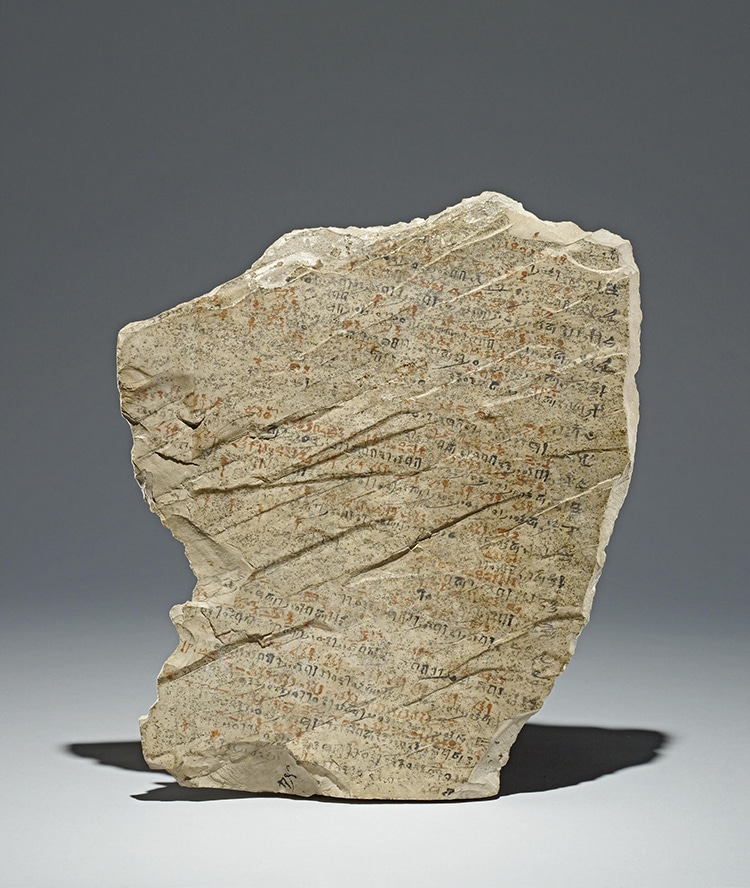
Image via The British Museum
We marvel today at what we consider the wonders of ancient Egypt, but at some point, they all had to have been built by people more or less like ourselves. (This presumes, of course, that you’ve ruled out all the myriad theories involving supernatural beings or aliens from outer space.) Safe to say that, whenever in human history work has been done, work has been skipped, especially when that work is performed by large groups. It would’ve taken great numbers indeed to build the pyramids, but even less colossally scaled tombs couldn’t have been built alone. And when a tomb-builder took the day off, he needed an excuse suitable to be written in stone — on at any rate, on stone.
“Ancient Egyptian employers kept track of employee days off in registers written on tablets,” writes Madeleine Muzdakis at My Modern Met. One such artifact “held by the British Museum and dating to 1250 BCE is an incredible window into ancient work-life balance.” Called ostraca, these […]
|
|
|
|
|
Over 40 months, 40 animators contributed to making a short animation. The process went something like this: An animator created a three second segment, then passed it to another animator in a different country. Then, that next animator made a new contribution, inching things forward.
Above you can watch the final product. It’s the brainchild of Nathan Boey. Enjoy.
via The Kids Should See This
|
|
|
|
|
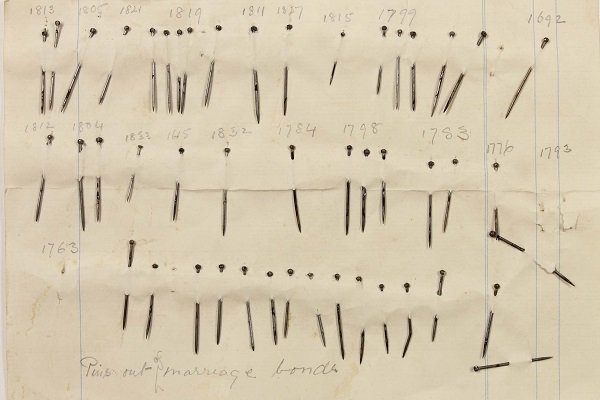
Before the word processor, before White-Out, before Post It Notes, there were straight pins. Or, at least that’s what Jane Austen used to make edits in one of her rare manuscripts. In 2011, Oxford’s Bodleian Library acquired the manuscript of Austen’s abandoned novel, The Watsons. In announcing the acquisition, the Bodleian wrote:
The Watsons is Jane Austen’s first extant draft of a novel in process of development and one of the earliest examples of an English novel to survive in its formative state. Only seven manuscripts of fiction by Austen are known to survive. The Watsons manuscript is extensively revised and corrected throughout, with crossings out and interlinear additions.
Janeausten.ac.uk (the web site where Austen’s manuscripts have been digitized) takes a deeper dive into the curious quality of The Watsons manuscript, noting:
The manuscript is written and corrected throughout in brown iron-gall ink. The pages are filled in a neat, even hand with signs of concurrent writing, erasure, and revision, interrupted by occasional passages of heavy interlinear correction…. The manuscript is without chapter divisions, though […]
|
|
|
|
|
Donald Trump, as his supporters and detractors alike can agree, is immune to humor. All the parody, satire, ridicule, and insult with which he was ceaselessly bombarded during his four years as the President of the United States of America had, to a first approximation, no effect whatsoever. If anything, it just made him more powerful. “There has been tremendous scorn for and fun made of Trump, and indeed Trump supporters,” says the late humorist P.J. O’Rourke in the clip above from a 2106 Intelligence Squared event. But “when you are angry at the establishment, and you see the establishment not just disagreeing with your candidate but mocking your candidate, there is an element that says, ‘They’re mocking me.'”
As a result, “every time you went out to make fun of Trump, you increased his support, because people were feeling scorned.” The result of the 2016 election, which happened the next month, would seem to have borne this out. “When people feel they are outsiders,” O’Rourke says, “you cannot convince them by mocking them.” This may, at first, sound somewhat rich […]
|
|
|
|
|
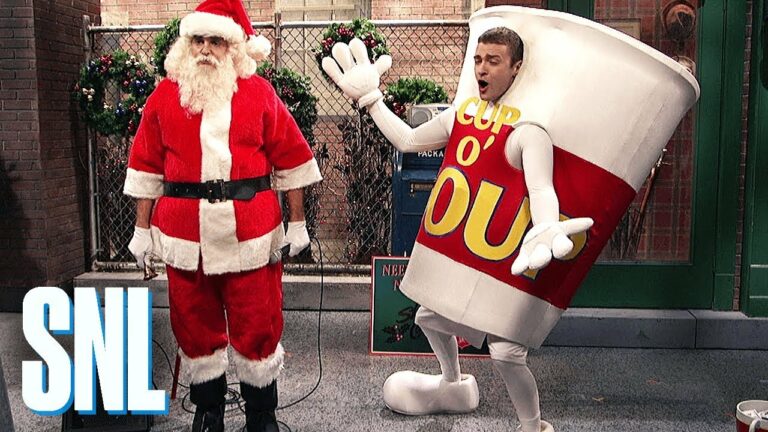
Who do you think of when you think of Saturday Night Live?
The original cast?
Creator Lorne Michaels?
Whoever hosted last week’s episode?
What about the guy who makes and holds the cue cards?
Wally Feresten is just one of the backstage heroes to be celebrated in Creating Saturday Night Live, a fascinating look at how the long-running television sketch show comes together every week.
Like many of those interviewed Feresten is more or less of a lifer, having come aboard in 1990 at the age of 25.
He estimates that he and his team of 8 run through some 1000 14” x 22” cards cards per show. Teleprompters would save trees, but the possibility of technical issues during the live broadcast presents too big of a risk.
This means that any last minute changes, including those made mid-broadcast, must be handled in a very hands on way, with corrections written in all caps over carefully applied white painter’s tape or, worst case scenario, on brand new cards.
(After a show wraps, its cards enjoy a second act as dropcloths for […]
|
|
|
|