|
Digest of new articles at openculture.com, your source for the best cultural and educational resources on the web ͏ ͏ ͏ ͏ ͏ ͏ ͏ ͏ ͏ ͏ ͏ ͏ ͏ ͏ ͏ ͏ ͏ ͏ ͏ ͏ ͏ ͏ ͏ ͏ ͏ ͏ ͏ ͏ ͏ ͏ ͏ ͏ ͏ ͏ ͏ ͏ ͏ ͏ ͏ ͏ ͏ ͏ ͏ ͏ ͏ ͏ ͏ ͏ ͏ ͏ ͏ ͏ ͏ ͏ ͏ ͏ ͏ ͏ ͏ ͏ ͏ ͏ ͏ ͏ ͏ ͏ ͏ ͏ ͏ ͏ ͏ ͏ ͏ ͏ ͏ ͏ ͏ ͏ ͏ ͏ ͏ ͏ ͏ ͏ ͏ ͏ ͏
|
|
The sensual intelligence housed in the tabernacle of my palate beckons me to pay the greatest attention to food. – Salvador Dali
Looking for an easy, low-cost recipe for a quick weeknight supper?
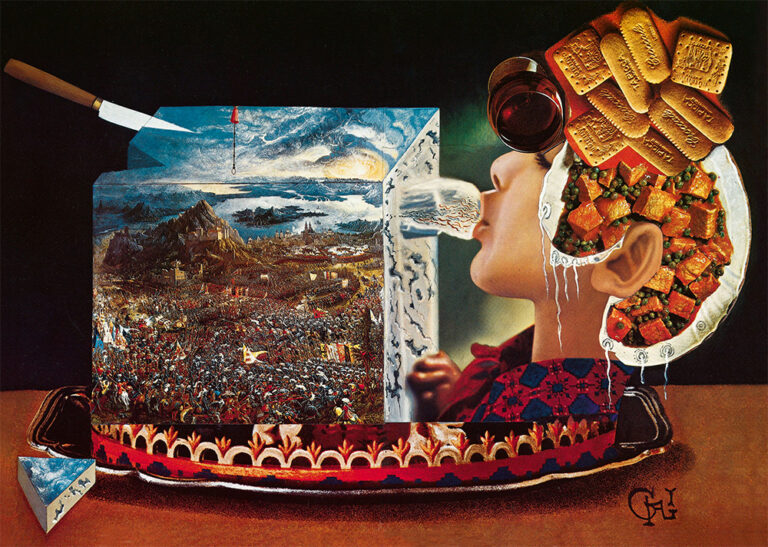
Salvador Dali’s Bush of Crayfish in Viking Herb is not that recipe.
It’s presentation may be Surreal, but it’s not an entirely unrealistic thing to prepare as The Art Assignment’s Sarah Urist Green discovers, above.
The recipe, published in Les Diners de Gala, Dali’s over-the-top cult cookery book from 1973, has pedigree.
Dali got it off a chef at Paris’ fabled Tour d’Argent, who later had second thoughts about giving away trade secrets, and balked at sharing exact measurements for the dish:
Bush of Crawfish in Viking Herbs
In order to realize this dish, it is necessary to have crawfish of 2 ounces each. Prepare the following ingredients for a broth: ‘fumet’ (scented reduced bullion) of fish, of consommé, of white wine, Vermouth, Cognac, salt, pepper, sugar and dill (aromatic herb). Poach the crawfish in this broth for […]
|
|
|
|
|
For more than two hours, Quentin Tarantino’s Once Upon a Time… in Hollywood builds up to the Manson murders. Or rather, it seems to be building up to the Manson murders, but then takes a sharp turn on Cielo Drive; when the credits roll, the real-life killers are dead and the real-life victims alive. Such revisionist revenge is of a piece with other recent Tarantino pictures like Inglourious Basterds, which ends with the massacre of Hitler and Goebbels, among other Nazis, and Django Unchained, wherein the titular slave lays waste to the house of the master. Long well known for borrowing from other movies, Tarantino seems to have found just as rich a source of material in history books.
Once Upon a Time… in Hollywood “creates a new story using existing characters and situations, and many of them just happen to be real.” So says Kirby Ferguson in the video essay above, “Tarantino’s Copying: Then Vs. Now.” The film’s large cast of secondary characters includes such 1960s celebrities as Steve McQueen and Bruce Lee, as well as countless other figures […]
|
|
|
|
|
Animator/musician David Heatley, comedian Daniel Lobell, and academic/3anuts author Daniel Leonard join your Pretty Much Pop host Mark Linsenmayer to discuss Charlie Brown and his author Charles Schulz from Peanuts’ 1950 inception through the classic TV specials through to the various post-mortem products still emerging.
What’s the enduring appeal, and is it strictly for kids? We talk about the challenges of the strip format, the characters as archetypes, Schulz as depressed existentialist, religion in Peanuts, and whether the strip is actually supposed to be funny.
Some articles we used for the discussion include:
|
|
|
|
|
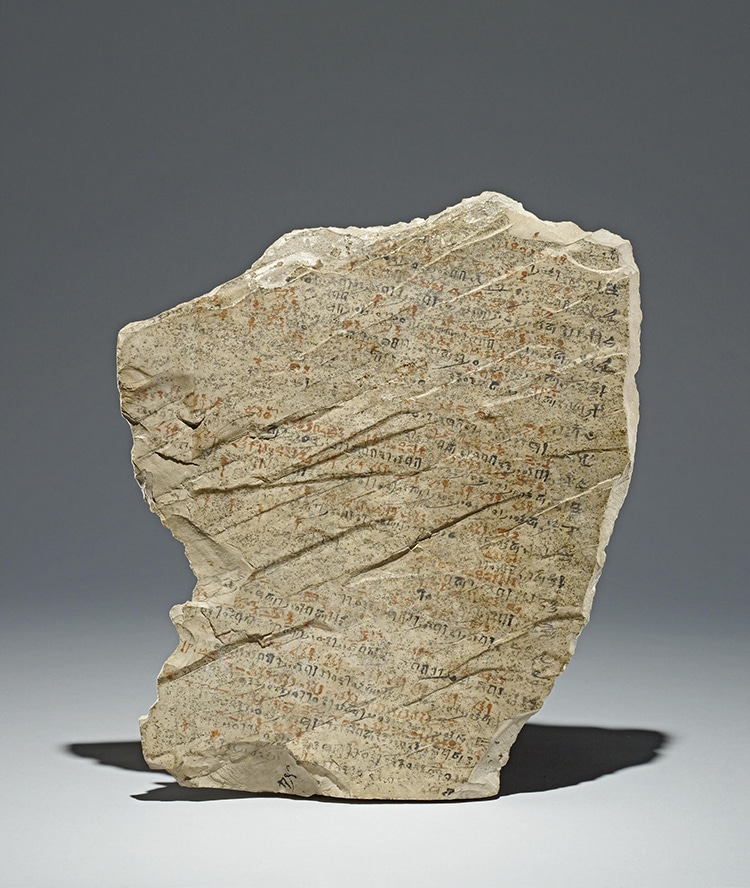
Image via The British Museum
We marvel today at what we consider the wonders of ancient Egypt, but at some point, they all had to have been built by people more or less like ourselves. (This presumes, of course, that you’ve ruled out all the myriad theories involving supernatural beings or aliens from outer space.) Safe to say that, whenever in human history work has been done, work has been skipped, especially when that work is performed by large groups. It would’ve taken great numbers indeed to build the pyramids, but even less colossally scaled tombs couldn’t have been built alone. And when a tomb-builder took the day off, he needed an excuse suitable to be written in stone — on at any rate, on stone.
“Ancient Egyptian employers kept track of employee days off in registers written on tablets,” writes Madeleine Muzdakis at My Modern Met. One such artifact “held by the British Museum and dating to 1250 BCE is an incredible window into ancient work-life balance.” Called ostraca, these […]
|
|
|
|
|
Over 40 months, 40 animators contributed to making a short animation. The process went something like this: An animator created a three second segment, then passed it to another animator in a different country. Then, that next animator made a new contribution, inching things forward.
Above you can watch the final product. It’s the brainchild of Nathan Boey. Enjoy.
via The Kids Should See This
|
|
|
|