|
Digest of new articles at openculture.com, your source for the best cultural and educational resources on the web ͏ ͏ ͏ ͏ ͏ ͏ ͏ ͏ ͏ ͏ ͏ ͏ ͏ ͏ ͏ ͏ ͏ ͏ ͏ ͏ ͏ ͏ ͏ ͏ ͏ ͏ ͏ ͏ ͏ ͏ ͏ ͏ ͏ ͏ ͏ ͏ ͏ ͏ ͏ ͏ ͏ ͏ ͏ ͏ ͏ ͏ ͏ ͏ ͏ ͏ ͏ ͏ ͏ ͏ ͏ ͏ ͏ ͏ ͏ ͏ ͏ ͏ ͏ ͏ ͏ ͏ ͏ ͏ ͏ ͏ ͏ ͏ ͏ ͏ ͏ ͏ ͏ ͏ ͏ ͏ ͏ ͏ ͏ ͏ ͏ ͏ ͏
|
|
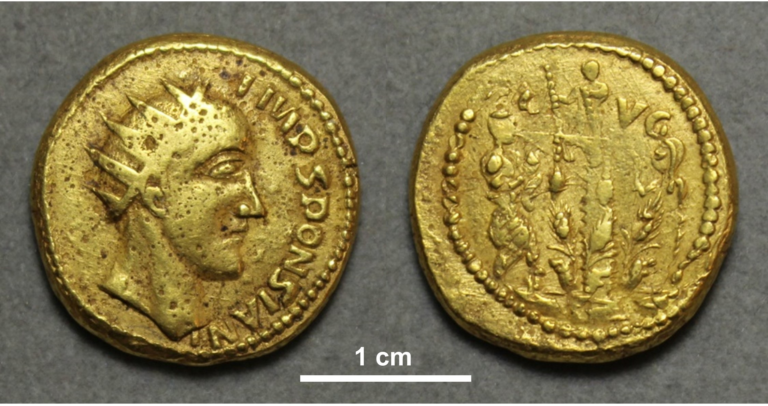
Image by Paul Pearson, University College London
You may think you know your Roman emperors, but do you recognize the face on the coin above? His name was Sponsian, or Sponsianus, and he lived in the middle of the third century. Or at least he did according to certain theories: vanishingly little is known about him, and in fact, this very gold piece (above) is the only evidence we have that he ever existed. Given that numismatists have long written the coin off as an eighteenth-century fake, it’s possible that emperor Sponsian could be a wholly apocryphal figure — but it’s become a bit less likely since the coin went under the electron microscope earlier this year.
“Using modern imaging technology, the researchers said they found ‘deep micro-abrasion patterns’ that were ‘typically associated with coins that were in circulation for an extensive period of time,'” writes the New York Times‘ April Rubin.
“In addition, the researchers analyzed earthen deposits, finding what they called evidence that the coin had been buried for a […]
|
|
|
|
|
Quick, who’s your favorite female drummer?
Hardly a strange question!
(Yes, you are allowed to pick more than one favorite.)
Things were decidedly different when drummer Honey Lantree, the only female member of the 60s British Invasion group the Honeycombs, took up the sticks.
Drums were not her original instrument. Her boyfriend, employer, and eventual bandmate Martin Murray was giving her a guitar lesson when she asked if she could take a whirl at his kit.
Murray recalled his surprise when she started whaling away like a vet:
She was just a born, natural drummer; she hadn’t played before and just went for it. I was aghast, staring at her, and said, “All right, you’re our new drummer.”
Lantree’s gender helped the Honeycombs secure press.
She snagged a celebrity endorsement for Carlton drums and turned 21 with a cake festooned with marzipan bees, and, more importantly, a #1 single, “Have I the Right.”

Of course, her gender also ensured that most of […]
|
|
|
|
|
A quick FYI. If you want to follow Open Culture on social media, we would encourage you to find us on Mastodon and now also Post. Right now, Mastodon feels like the early days of Twitter, when the discourse was more edifying and the mood less toxic. Meanwhile, Post is a new service (currently in beta) that hopes to promote learning and civil conversations–something that could be right up our alley. Here’s to new beginnings. Hope to see you there…
P.S. If you have favorite people/accounts to follow on Post or Mastodon, feel free to add them to the comments below.
|
|
|
|
|
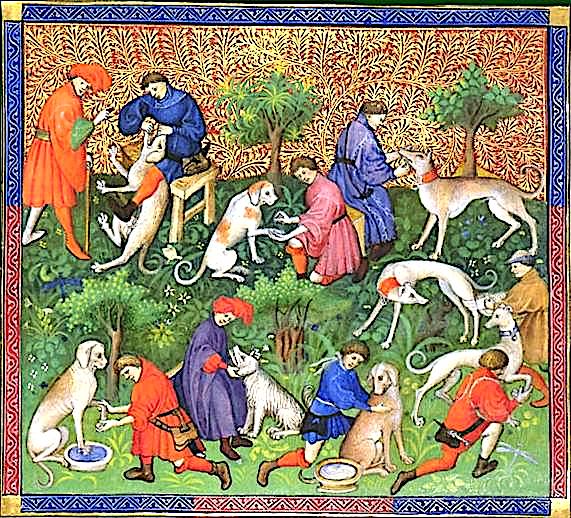
The Rovers, Fidos, and Spots of the world have been regarded since time immemorial as man’s best friends. But they haven’t always been named Rover, Fido, and Spot: early fifteenth-century English dog owners preferred to give their pets names like Nosewise, Garlik, Pretyman, and Gaylarde. Or at least the author of a fifteenth-century English manuscript thought those names suitable for dogs at the time, according to a thread posted just a few days ago by Twitter user WeirdMedieval. Other canine monikers officially endorsed by the author (whose precise identity remains unclear) include Filthe, Salmon, Havegoodday, Hornyball, and Argument, none of which you’re likely to meet in the dog park today.
The complete list of 1,065 dog names is included in David Scott-Macnab’s academic paper “The Names of All Manner of Hounds: A Unique Inventory in a Fifteenth-Century Manuscript” (or here on Imgur).
Meant to cover hunting dogs including “running hounds, terriers and greyhounds,” the compilation includes “numerous recognizable proper names, including several […]
|
|
|
|
|
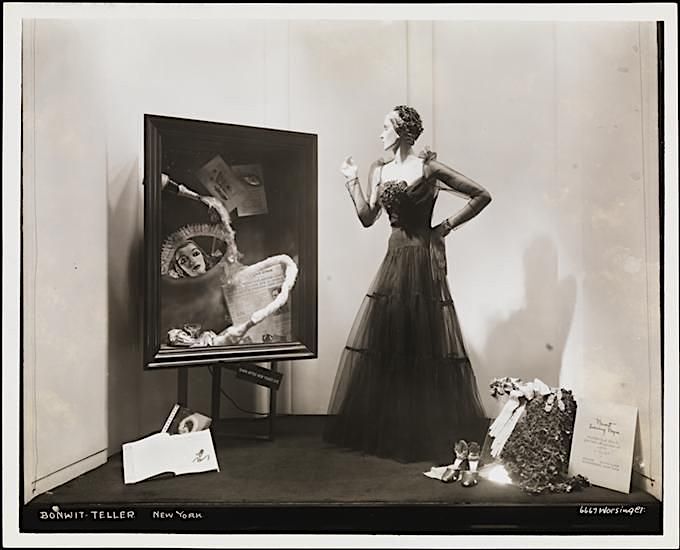
If you want to understand the history of art in twentieth-century America, you can’t overlook the corner of Fifth Avenue and 56th Street in New York City. No, not Trump Tower, but the building it replaced: Bonwit Teller, the luxury department store that had stood on the site since 1929. Then as now, any shop on Fifth Avenue has to find a way to set itself apart, and by 1939 Bonwit Teller had built a “reputation for having Manhattan’s screwiest window displays.” So says Time magazine, covering a minor debacle that year over one of the installations by “the world’s No. 1 surrealist, Salvador Dalí.”
Dalí had previously dressed Bonwit Teller’s windows without incident in 1936, riding high on the buzz from his first American exhibition that same year. When invited back by the store to create a new display, writes Tim McNeese in Salvador Dalí, “he decided to use the windows to depict the ‘Narcissus complex,'” divided into day and night. “In the Day window, Narcissus is personified,” says The […]
|
|
|
|