|
Digest of new articles at openculture.com, your source for the best cultural and educational resources on the web ͏ ͏ ͏ ͏ ͏ ͏ ͏ ͏ ͏ ͏ ͏ ͏ ͏ ͏ ͏ ͏ ͏ ͏ ͏ ͏ ͏ ͏ ͏ ͏ ͏ ͏ ͏ ͏ ͏ ͏ ͏ ͏ ͏ ͏ ͏ ͏ ͏ ͏ ͏ ͏ ͏ ͏ ͏ ͏ ͏ ͏ ͏ ͏ ͏ ͏ ͏ ͏ ͏ ͏ ͏ ͏ ͏ ͏ ͏ ͏ ͏ ͏ ͏ ͏ ͏ ͏ ͏ ͏ ͏ ͏ ͏ ͏ ͏ ͏ ͏ ͏ ͏ ͏ ͏ ͏ ͏ ͏ ͏ ͏ ͏ ͏ ͏
ChatGPT, the system that understands natural language and responds in kind, has caused a sensation since its launch less than three months ago. If you’ve tried it out, you’ll surely have wondered what it will soon revolutionize — or, as the case may be, what it will destroy. Among ChatGPT’s first victims, holds one…
|
ChatGPT, the system that understands natural language and responds in kind, has caused a sensation since its launch less than three months ago. If you’ve tried it out, you’ll surely have wondered what it will soon revolutionize — or, as the case may be, what it will destroy. Among ChatGPT’s first victims, holds one now-common view, will be a form of writing that generations have grown up practicing throughout their education. “The essay, in particular the undergraduate essay, has been the center of humanistic pedagogy for generations,” writes Stephen Marche in The Atlantic. “It is the way we teach children how to research, think, and write. That entire tradition is about to be disrupted from the ground up.”
If ChatGPT becomes able instantaneously to whip up a plausible-sounding academic essay on any given topic, what future could there be for the academic essay itself? The host of YouTube channel EduKitchen puts more or less that very question to Noam Chomsky — a thinker who can be relied upon for views on education — in […]
|
|
|
In the year 1966, “it seemed to Western youth that The Beatles knew — that they had the key to current events and were somehow orchestrating them through their records.” So writes Ian McDonald in the critical study Revolution in the Head: The Beatles’ Records and the Sixties. But some had been looking to…
|
In the year 1966, “it seemed to Western youth that The Beatles knew — that they had the key to current events and were somehow orchestrating them through their records.” So writes Ian McDonald in the critical study Revolution in the Head: The Beatles’ Records and the Sixties. But some had been looking to John Lennon, Paul McCartney, George Harrison, and Ringo Starr as pop-culture oracles since they put out their first album in 1963. Unlike the youth-oriented stars who came before, they fully inhabited the roles of both performers and creators. If anyone knew how to read the zeitgeist of that decade, surely it was the Beatles.
Hence the appearance of each Beatle in Melody Maker magazine’s “Blind Date” feature, which captured its subjects’ spontaneous reactions to the singles on the charts at the moment. When Lennon sat for a Blind Date in January of 1964, he gave his verdict on songs from Manfred Mann, Gerry and the Pacemakers, Ray Charles, and Ricky Nelson — as well as the now-less-well-known Marty Wilde, Millicent Martin, and The Bruisers.
You can […]
|
|
|
Back in 2016, we showed you Queen’s “Bohemian Rhapsody” getting played on a 1905 fairground organ. But now we’re stepping it up a level, and letting you behold this: organist Joshua Stafford performing the same Queen classic on a Midmer-Losh pipe organ. Built with 33,112 pipes, it’s apparently the “largest pipe organ ever constructed, the…
|
|
|
|
No matter how much coffee you drink, you never drink the same coffee twice. Coffee-drinkers understand this instinctively, even those who only drink their coffee at home using the same beans and the same brewing process day in and day out. For even in the most controlled coffee-making conditions we can achieve in our everyday…
|
No matter how much coffee you drink, you never drink the same coffee twice. Coffee-drinkers understand this instinctively, even those who only drink their coffee at home using the same beans and the same brewing process day in and day out. For even in the most controlled coffee-making conditions we can achieve in our everyday lives, variations have a way of creeping in. Endless scrutiny of those variations is all in a day’s work for someone like Matt Perger, who’s come out on or near the top of several barista championships, and who founded the online coffee-education service Barista Hustle and its associated Youtube channel.
In the channel’s most popular video by far, Perger delivers an 80-minute lecture on “advanced coffee making” at Assembly Coffee in London. After covering the adjectives used to describe the flavor of coffee in general — from “weak,” “delicate,” and “tea-like” to “luscious,” “bitter,” and “overwhelming” — he moves on to the vocabulary of extraction.
The most important stage in the coffee-making process as far as the resulting taste is concerned, extraction is accomplished by […]
|
|
|
All images here by David Romero
From the humblest home renovator to the mightiest auteur of skyscrapers, every architect shares the common experience of not building their projects. This is true even of Frank Lloyd Wright himself: in his lifetime he created 1,171 architectural works, 660 of which went unrealized. How those…
|
All images here by David Romero
From the humblest home renovator to the mightiest auteur of skyscrapers, every architect shares the common experience of not building their projects. This is true even of Frank Lloyd Wright himself: in his lifetime he created 1,171 architectural works, 660 of which went unrealized. How those never-built Wright designs would have fared in the physical realm has been a topic of great interest for the architect’s generation upon generation of fans.
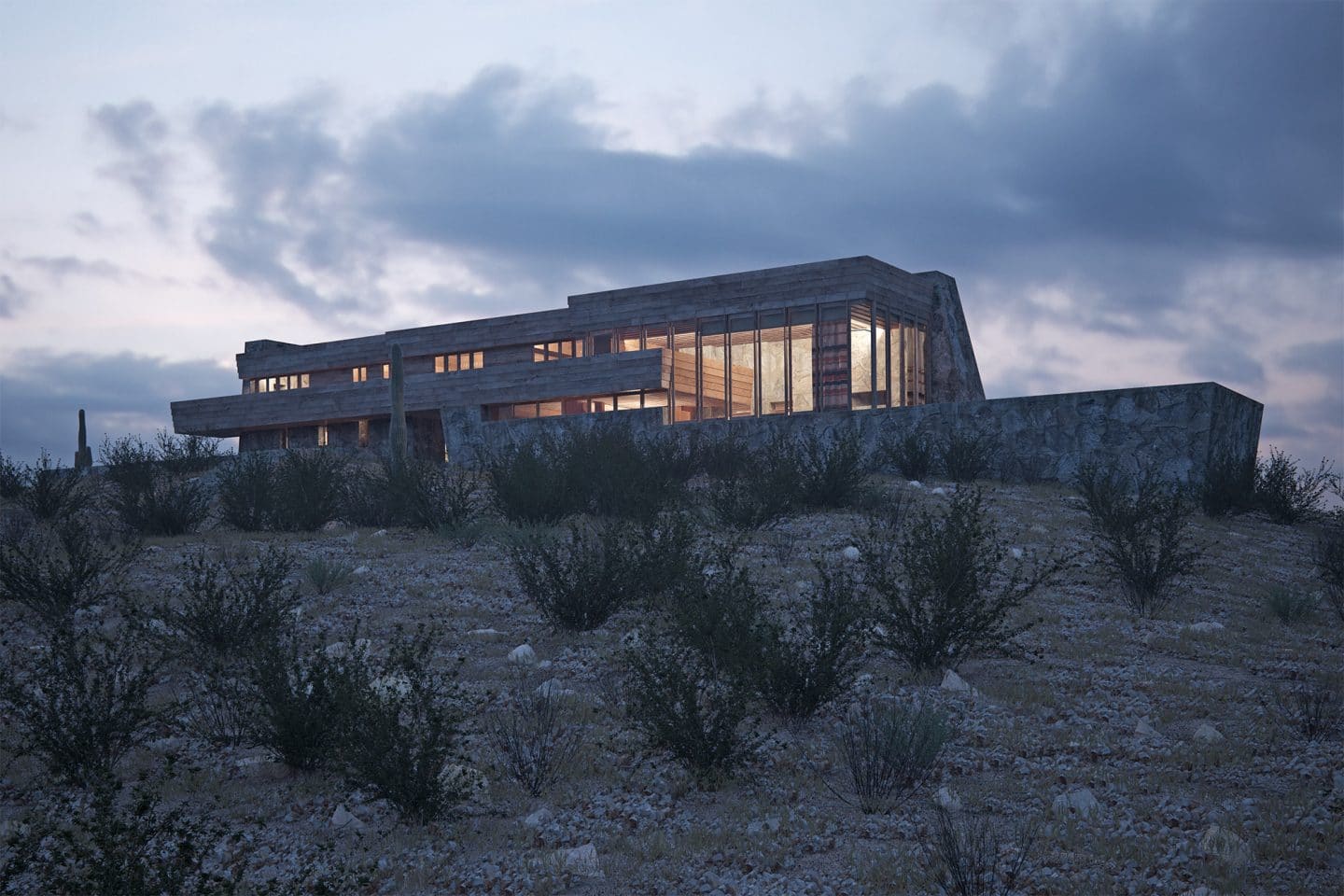
But one lover of Wright’s work has gone well beyond speculation, creating faithful, photorealistic 3D renderings of these nonexistent structures, a few of which you can see at the site of the Frank Lloyd Wright Foundation.
Notably, the digital artist paying such painstaking homage to this most American of all architects hails from Spain. David Romero is the creator of the site Hooked on the Past, a showcase of his various architectural renderings.
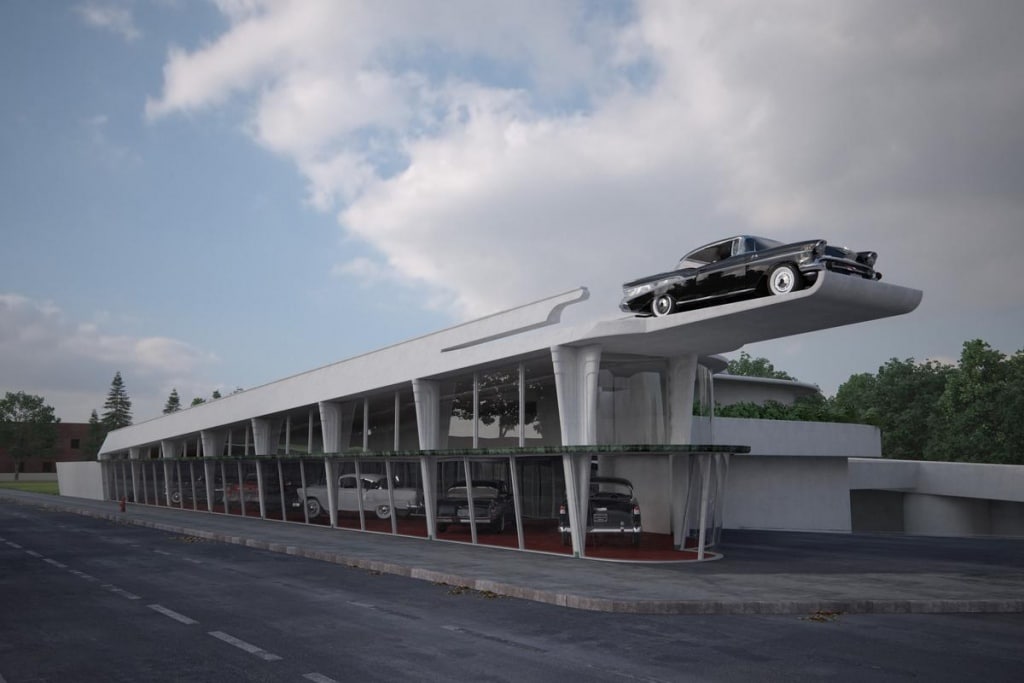
“The project started in 2018, when […]
|
|
|
|