|
Digest of new articles at openculture.com, your source for the best cultural and educational resources on the web ͏ ͏ ͏ ͏ ͏ ͏ ͏ ͏ ͏ ͏ ͏ ͏ ͏ ͏ ͏ ͏ ͏ ͏ ͏ ͏ ͏ ͏ ͏ ͏ ͏ ͏ ͏ ͏ ͏ ͏ ͏ ͏ ͏ ͏ ͏ ͏ ͏ ͏ ͏ ͏ ͏ ͏ ͏ ͏ ͏ ͏ ͏ ͏ ͏ ͏ ͏ ͏ ͏ ͏ ͏ ͏ ͏ ͏ ͏ ͏ ͏ ͏ ͏ ͏ ͏ ͏ ͏ ͏ ͏ ͏ ͏ ͏ ͏ ͏ ͏ ͏ ͏ ͏ ͏ ͏ ͏ ͏ ͏ ͏ ͏ ͏ ͏
|
|
The films of Hayao Miyazaki’s Studio Ghibli have won immense worldwide acclaim, in large part because they so fully inhabit their medium. Their characters, their stories, their worlds: all can come fully to life only in animation. Still, it’s true that some of their material did originate in other forms. The pre-Ghibli breakout feature Nausicaä of the Valley of the Wind, for instance, began as a comic book written and drawn by Miyazaki (who at first laid down the condition that it not be adapted for the screen). Four years later, by the time of My Neighbor Totoro, the nature of Ghibli’s visions had become inseparable from that of animation itself.
Now, almost three and a half decades after Totoro‘s original release, the production of a stage version is well underway. Playbill‘s Raven Brunner reports that the show “will open in London’s West End at The Barbican theatre for a 15-week engagement October 8-January 21, 2023.
The production will be presented by the Royal Shakespeare Company and executive producer Joe Hisaishi.” Japan’s most famous film composer, Hisaishi scored Totoro as […]
|
|
|
|
|
What can you do with graphic design skills? More and more, it seems, as emerging technologies drive new apps, software, and games. New design challenges are everywhere, from human-machine interfaces, to 3D modeling in video games and animated films, to re-imagining classic designs in print and on screen. In addition to traditional jobs like art director, graphic designer, production artist, and animator, the past few years have seen a sharp rise in demand for User Experience (UX) and User Interface (UI) designers, roles that require a variety of different creative and technical skill sets.
You could get a four-year degree in design to work in one of these fields, or you could take a Coursera Specialization and be one step closer. Coursera has met the demand for new job skills and tech education by partnering with top arts institutions and universities to offer online courses at low cost. All of these courses grant certificates that show potential employers you’re ready to put your learning to use. If careers in art and […]
|
|
|
|
|
Is “flow state” the new mindfulness? The phrase has gained a lot of currency lately. You may have heard it spoken of in rarified terms that sound like you have to be a full-time artist, professional athlete, or Albert Einstein to access it. On the other hand, we have award-winning journalist, human performance expert, and Flow Research Collective founder Steven Kotler explaining in a video that we featured recently how to achieve a flow state on command. So, does flow require a little or a lot of us? It requires, first and foremost, a shift in consciousness.
In the field of positive psychology, flow is most associated with theorist Mihaly Csikszentmihalyi, whose Creativity: Flow the Psychology of Discovery and Invention provided key contemporary insights into the idea. For Csikszentmihalyi, directing our activity toward material notions of security sets us up for disappointment. Flow states are best understood as actualized creativity we can manifest in almost any conditions: we can be “happy, or miserable, regardless of what is actually happening ‘outside,’ just by changing the contents of consciousness,” […]
|
|
|
When they finally get those kinks worked out of the time machine and we can take a tourist trip back to Rome—having signed the non-intervention paperwork, of course—we’re going to need someone to guide us. I propose that should be Garrett Ryan, host of the Told In Stone YouTube channel, PhD in Greek and Roman History, and author of Naked Statues, Fat Gladiators, and War Elephants: Frequently Asked Questions about the Ancient Greeks and Romans. He has made it his job to answer the everyday questions about these two ancient cultures that most historians pass over. But these are the questions we’re going to need as tourists if we think we’re going to go party in Ancient Rome.
Because invariably somebody in our tourist group is going to ask “where’s the bars and nightclubs?” Fair question. Ryan has the answers, all told in the video above.
Much like Las Vegas or Dubai, the real partying is happening at the elite levels, among the idle rich who could afford day long banquets, extravagant activities such as live lion hunts, and import […]
|
When they finally get those kinks worked out of the time machine and we can take a tourist trip back to Rome—having signed the non-intervention paperwork, of course—we’re going to need someone to guide us. I propose that should be Garrett Ryan, host of the Told In Stone YouTube channel, PhD in Greek and Roman History, and author of Naked Statues, Fat Gladiators, and War Elephants: Frequently Asked Questions about the Ancient Greeks and Romans. He has made it his job to answer the everyday questions about these two ancient cultures that most historians pass over. But these are the questions we’re going to need as tourists if we think we’re going to go party in Ancient Rome.
Because invariably somebody in our tourist group is going to ask “where’s the bars and nightclubs?” Fair question. Ryan has the answers, all told in the video above.
Much like Las Vegas or Dubai, the real partying is happening at the elite levels, among the idle rich who could afford day long banquets, extravagant activities such as live lion hunts, and import […]
|
|
|
|
|
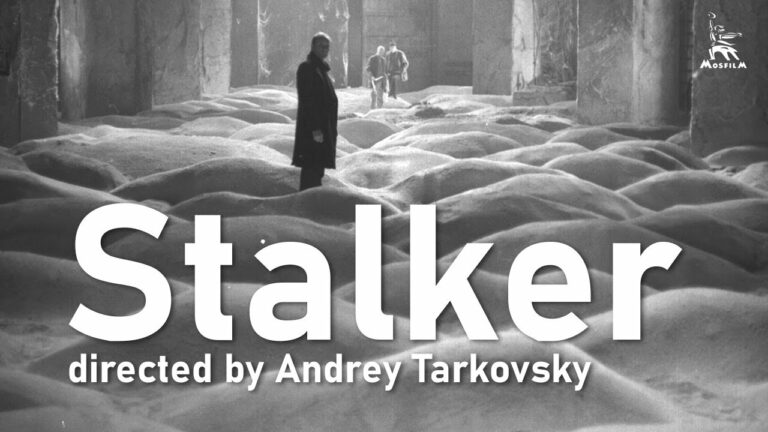
Andrei Tarkovsky understood cinema in a way no filmmaker had before — and, quite possibly, in a way no filmmaker has since. That impression is reinforced by any of his films, five of which are available to watch free on Youtube. You’ll find them on the Youtube channel of Mosfilm, which was once the Soviet Union’s biggest film studio. It was for Mosfilm that Tarkovsky directed his debut feature Ivan’s Childhood in 1962. Based on a folkloric war story by Soviet writer Vladimir Bogomolov, the film had already been made by another young director but rejected by the studio. Tarkovsky’s version both satisfied the higher-ups and, with its international success, introduced the world to his own distinctive cinematic vision.
“My discovery of Tarkovsky’s first film was like a miracle. Suddenly, I found myself standing at the door of a room the keys of which had, until then, never been given to me.” These are the words of Ingmar Bergman, to whom Tarkovsky would much later pay tribute with his final film, The Sacrifice, produced in Bergman’s homeland of Sweden.
But in […]
|
|
|
|