|
Digest of new articles at openculture.com, your source for the best cultural and educational resources on the web ͏ ͏ ͏ ͏ ͏ ͏ ͏ ͏ ͏ ͏ ͏ ͏ ͏ ͏ ͏ ͏ ͏ ͏ ͏ ͏ ͏ ͏ ͏ ͏ ͏ ͏ ͏ ͏ ͏ ͏ ͏ ͏ ͏ ͏ ͏ ͏ ͏ ͏ ͏ ͏ ͏ ͏ ͏ ͏ ͏ ͏ ͏ ͏ ͏ ͏ ͏ ͏ ͏ ͏ ͏ ͏ ͏ ͏ ͏ ͏ ͏ ͏ ͏ ͏ ͏ ͏ ͏ ͏ ͏ ͏ ͏ ͏ ͏ ͏ ͏ ͏ ͏ ͏ ͏ ͏ ͏ ͏ ͏ ͏ ͏ ͏ ͏
|
|
We should probably not look to science to have cherished beliefs confirmed. As scientific understanding of the world has progressed over the centuries, it has brought on a loss of humans’ status as privileged beings at the center of the universe whose task is to subdue and conquer nature. (The stubborn persistence of those attitudes among the powerful has not served the species well.) We are not special, but we are still responsible, we have learned — maybe totally responsible for our lives on this planet. The methods of science do not lend themselves to soothing existential anxiety.
But what about the most cherished, and likely ancient, of human beliefs: faith in an afterlife? Ideas of an underworld, or heaven, or hell have animated human culture since its earliest origins. There is no society in the world where we will not find some belief in an afterlife existing comfortably alongside life’s most mundane events. Is it a harmful idea? Is there any real evidence to support it? And which version of an afterlife — if such a thing existed — […]
|
|
|
|
|
The Spanish filmmaker Eugenio Monesma has dedicated his life to capturing the traditions of his homeland and its surrounding areas. He began his career by first taking up a Super-8 camera at age 25 back in the nineteen-seventies, and in the decades since, his mission has taken him to the furthest corners of Spain and beyond in search of ever-older ways to preserve in detail. This places his work in the tradition of the anthropological or ethnographic documentary. But in a still-unconventional move in his field, he’s united the old with the new by creating his own Youtube channel on which to make his documentaries free to watch around the world.
Launched in 2020, Monesma’s channel has become a surprising hit. At the top of the post you can watch its most popular video, his short 1997 documentary on the making of combs from animal horns — which, as of this writing, has racked up nearly 8.5 million views. This happens to be one of the productions that took him beyond Spain’s borders, if only just: to the French village […]
|
|
|
|
|
Image by Louis Panassié, via Wikimedia Commons
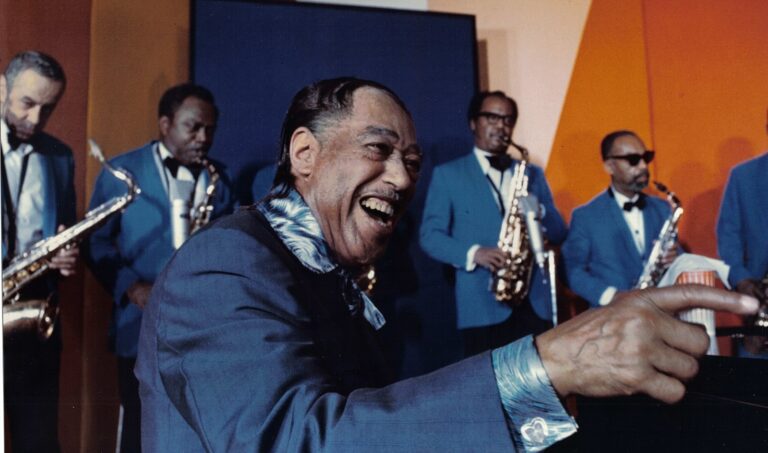
Duke Ellington has been commemorated in a variety of forms: statues, murals, schools, and even United States commemorative stamps and coins. In his lifetime he received a star on the Hollywood Walk of Fame, a Grammy Lifetime Achievement, a Presidential Medal of Freedom, and a Légion d’honneur. His posthumous honors even include a Special Pulitzer Prize awarded in 1999, the centennial year of his birth. 34 years earlier, in 1965, he’d been named for–but ultimately denied–a regular Pulitzer Prize for Music, a decision his appreciators are now trying to reverse.
“The jury that judged the entrants that year decided to do something different,” writes jazz critic Ted Gioia. “They recommended giving the honor to Duke Ellington for the ‘vitality and originality of his total productivity’ over the course of more than forty years.” This broke from tradition in that the Pulitzer Prize for Music usually honors a single work: in 1945 it went to Aaron Copland for his ballet Appalachian Spring; in 1958 it […]
|
|
|
|
|
Everyone has been agog over the first photos from the James Webb telescope, and for good reason. “These images,” Rivka Galchin writes at The New Yorker, “carry news about the early universe, the birth and death of stars, the collision of galaxies, and the atmosphere of exoplanets.” They’re also “very, very pretty,” she writes, comparing them to Vermeer.
The clarity and levels of detailed information about the earliest galaxies have even astonished astronomers, whose work has advanced rapidly alongside the growth of the photographic medium. It was an astronomer, in fact – Johann Heinrich von Madler – who first coined the word “photography” in 1839. “Astronomers quickly embraced the use of photographic plates because of their good resolution and the ability to make much larger images,” APS Physics News notes.
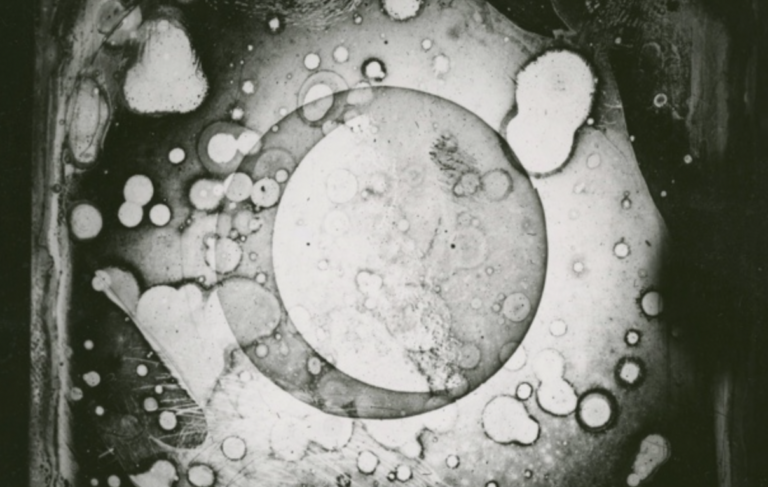
Astrophotography properly began in 1840, when John William Draper, a British-born chemist and doctor, took the image above from the roof of the New York University observatory, credited as the first daguerreotype of the Moon. Daguerre himself might have taken […]
|
|
|
|
|
Birds are the original musicians. This, at least, is a premise of the Audubon Society’s Birdsong Project, “a movement inspiring bird conservation through art.” There could thus be no more natural art form in which to celebrate our fine feathered (and in many cases, now endangered) friends than music, which the Birdsong Project has commissioned for its first release, and in no small quantity. They’ve so far put out the first two volumes of For the Birds, which in its totality will involve “more than 220 music artists, actors, literary figures, and visual artists, all coming together to celebrate the joy birds bring to our lives” — and remind us of “the environmental threats we all face.”
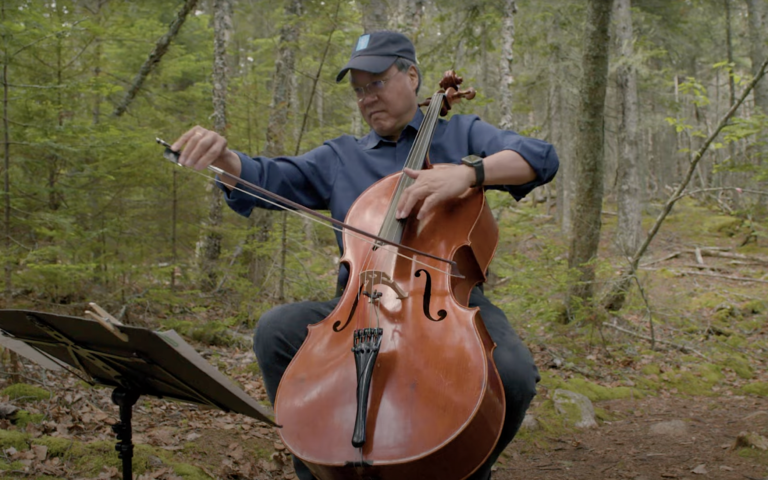
Those contributors include Yo-Yo Ma, Elvis Costello, and Beck, whose work on For the Birds you can hear in the videos in this post. And in the case of Yo-Yo Ma, who performs a piece called “In the Gale” (by composer Anna Clyne), you can see him play not in a concert hall but out in the midst of […]
|
|
|
|