|
Digest of new articles at openculture.com, your source for the best cultural and educational resources on the web ͏ ͏ ͏ ͏ ͏ ͏ ͏ ͏ ͏ ͏ ͏ ͏ ͏ ͏ ͏ ͏ ͏ ͏ ͏ ͏ ͏ ͏ ͏ ͏ ͏ ͏ ͏ ͏ ͏ ͏ ͏ ͏ ͏ ͏ ͏ ͏ ͏ ͏ ͏ ͏ ͏ ͏ ͏ ͏ ͏ ͏ ͏ ͏ ͏ ͏ ͏ ͏ ͏ ͏ ͏ ͏ ͏ ͏ ͏ ͏ ͏ ͏ ͏ ͏ ͏ ͏ ͏ ͏ ͏ ͏ ͏ ͏ ͏ ͏ ͏ ͏ ͏ ͏ ͏ ͏ ͏ ͏ ͏ ͏ ͏ ͏ ͏
|
|
Image by Bernd Schwabe, via Wikimedia Commons
At least when I was in grade school, we learned the very basics of how the Third Reich came to power in the early 1930s. Paramilitary gangs terrorizing the opposition, the incompetence and opportunism of German conservatives, the Reichstag Fire. And we learned about the critical importance of propaganda, the deliberate misinforming of the public in order to sway opinions en masse and achieve popular support (or at least the appearance of it). While Minister of Propaganda Joseph Goebbels purged Jewish and leftist artists and writers, he built a massive media infrastructure that played, writes PBS, “probably the most important role in creating an atmosphere in Germany that made it possible for the Nazis to commit terrible atrocities against Jews, homosexuals, and other minorities.”
How did the minority party of Hitler and Goebbels take over and break the will of the German people so thoroughly that they would allow and participate in mass murder? Post-war scholars of totalitarianism like Theodor Adorno and Hannah […]
|
|
|
|
|
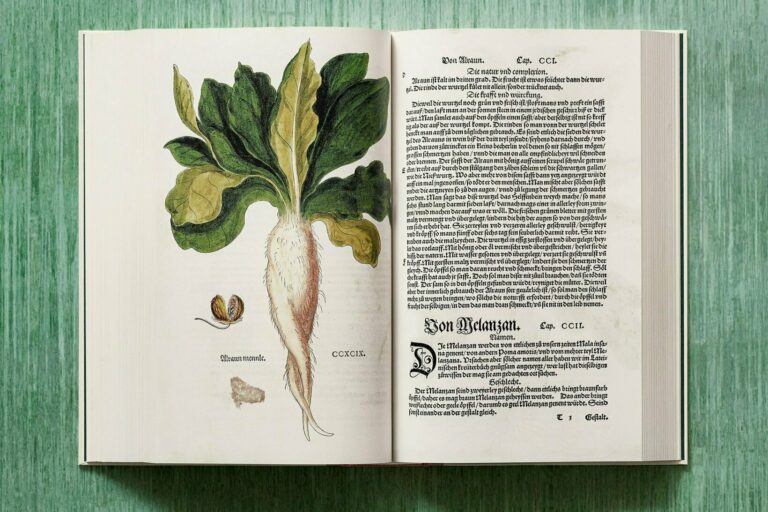
We’ve all have heard of the fuchsia, a flower (or genus of flowering plant) native to Central and South America but now grown far and wide. Though even the least botanically literate among us know it, we may have occasional trouble spelling its name. The key is to remember who the fuchsia was named for: Leonhart Fuchs, a German physician and botanist of the sixteenth century. More than 450 years after his death, Fuchs is remembered as not just the namesake of a flower, but as the author of an enormous book detailing the varieties of plants and their medicinal uses. His was a landmark achievement in the form known as the herbal, examples of which we’ve featured here on Open Culture from ninth- and eighteenth-century England.

But De Historia Stirpium Commentarii Insignes, as this work was known upon its initial 1542 publication in Latin, has worn uncommonly well through the ages. Or rather, Fuchs’ personal, hand-colored original has, coming down to us in […]
|
|
|
|
|
This week’s Nakedly Examined Music podcast features the Grammy-winning singer-songwriter Paula Cole. After backing Peter Gabriel in the early 90s on his Secret World tour, she had major hits with “I Don’t Want to Wait” (later the theme song of Dawson’s Creek) and “Where Have All the Cowboys Gone.” She has released ten studio albums since 1994.
On this podcast, you’ll hear four full songs with discussions of their details: “Blues in Gray” from Revolution (2019), “Father” from 7 (2015), and “Hush, Hush, Hush” from This Fire (1996), plus “Steal Away/Hidden in Plain Sight” from American Quilt (2021). Intro: “I Don’t Want to Wait,” also from This Fire. For more, see paulacole.com.
After her hit-making, her style took a rather sharp turn with the 1999 Amen album; here’s “I Believe in Love,” a disco tune from that. Her Revolution album has some much more […]
|
|
|
|
|
Image bySociety for Culture, Art and International Cooperation Adligat, via Wikimedia Commons
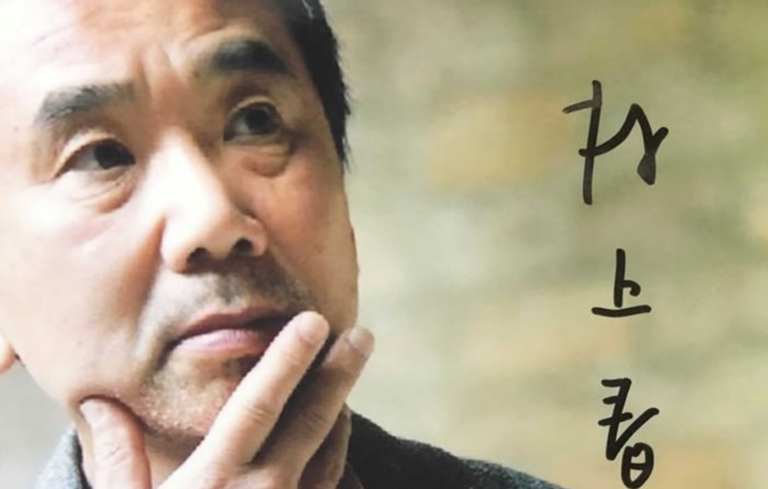
You could say that Haruki Murakami is a Japanese writer. And given that he was born in Japan to Japanese parents, grew up in Japan, and lives in Japan still today, you’d have geography, culture, and biology on your side. Yet Alfred Birnbaum, one of Murakami’s own English translators, has called him “an American writer who happens to write in Japanese.” To understand how this could be requires a consideration of not just Murakami’s writing, but the writers whose books inspired him. Take the hard-boiled novelist Raymond Chandler, whose The Long Goodbye appears on the list of Murakami’s five favorite books just posted at Literary Hub.
“I have translated all the novels of Raymond Chandler,” Murakami once said. “I like his style so much. I have read The Long Goodbye five or six times.” He must have read it for the first time in Kobe, where he grew up in the 1950s and 60s, and whose bookstores offered an abundance of […]
|
|
|
|
|
Image via Wikimedia Commons
You may have come into contact at some point with Tracey Emin’s My Bed, an art installation that reproduces her private space during a time when she spent four days as a shut-in in 1998, “heartbroken”: the bed’s unmade, the bedside strewn with cigarettes, moccasins, a bottle of booze, food, and “what appears to be a sixteen year old condom”…. If you were savvy enough to be Tracey Emin in 1998—and none of us were—you would have sold that messy room for over four million dollars last year at a Christie’s auction. I doubt another buyer of that caliber will come along for a knock-off, but this doesn’t mean the messes we make while slobbing around our own homes are without their own, intangible, value.
Those messes, in fact, may be seedbeds of creativity, confirming a cliché as persistent as the one about doctors’ handwriting, and perhaps as accurate. It seems a messy desk, room, or studio may genuinely be a mark of genius at work. Albert […]
|
|
|
|